
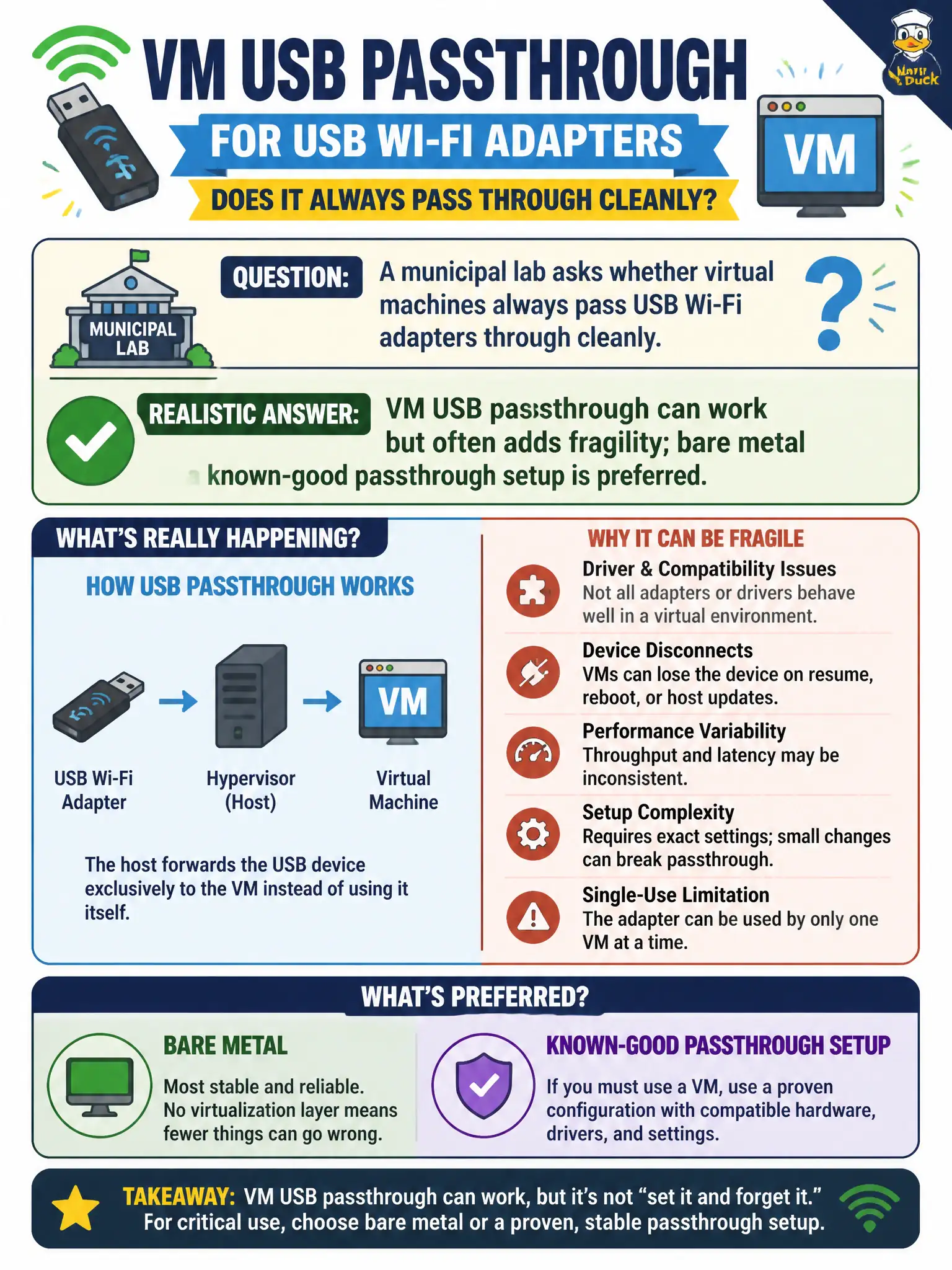
A municipal lab asks whether virtual machines always pass USB Wi-Fi adapters through cleanly. What is the realistic answer?
Select an answer to reveal the explanation.
Short Explanation
USB Wi-Fi in a VM is like running a mic through three extension cords—it can work, then suddenly crackle. Passthrough helps, but timing and reset quirks show up. Many teams prefer bare metal or a battle-tested passthrough recipe for timed labs.
Full Explanation
Virtual-machine USB passthrough can present a Wi-Fi adapter to a guest, and some civic labs run that way successfully, but the realistic answer is caution: passthrough often adds fragility—device resets, exclusive host binding issues, timing glitches, and inconsistent monitor/injection behavior compared with bare metal. Preferred practice for serious municipal WLAN assessment tooling is bare metal or a known-good, previously validated passthrough setup rather than assuming every hypervisor path is identical to native hardware. Claiming USB Wi-Fi passthrough is guaranteed identical to bare metal on every hypervisor fails by concept: implementations differ and wireless timing/monitor workloads are sensitive. Saying VMs cannot use USB devices at all so labs must abandon VMs fails by concept: passthrough exists and can work; the issue is reliability, not absolute impossibility. Asserting passthrough problems disappear if guest and host wallpapers match fails by concept: cosmetics do not affect USB device enumeration or RF stack behavior. Exam caveat: exam and engagement environments may specify bare-metal expectations—do not discover passthrough breakage for the first time during a timed county assessment window. Operational check: if a VM must be used, validate the exact adapter under the engagement guest image: create monitor mode, capture a known lab AP, test allowed injection, and document any reset quirks; otherwise provision a bare-metal assessment laptop for production civic work.