
A city playbook says to put the card on the target channel before injection tests. Why does that matter?
Select an answer to reveal the explanation.
Short Explanation
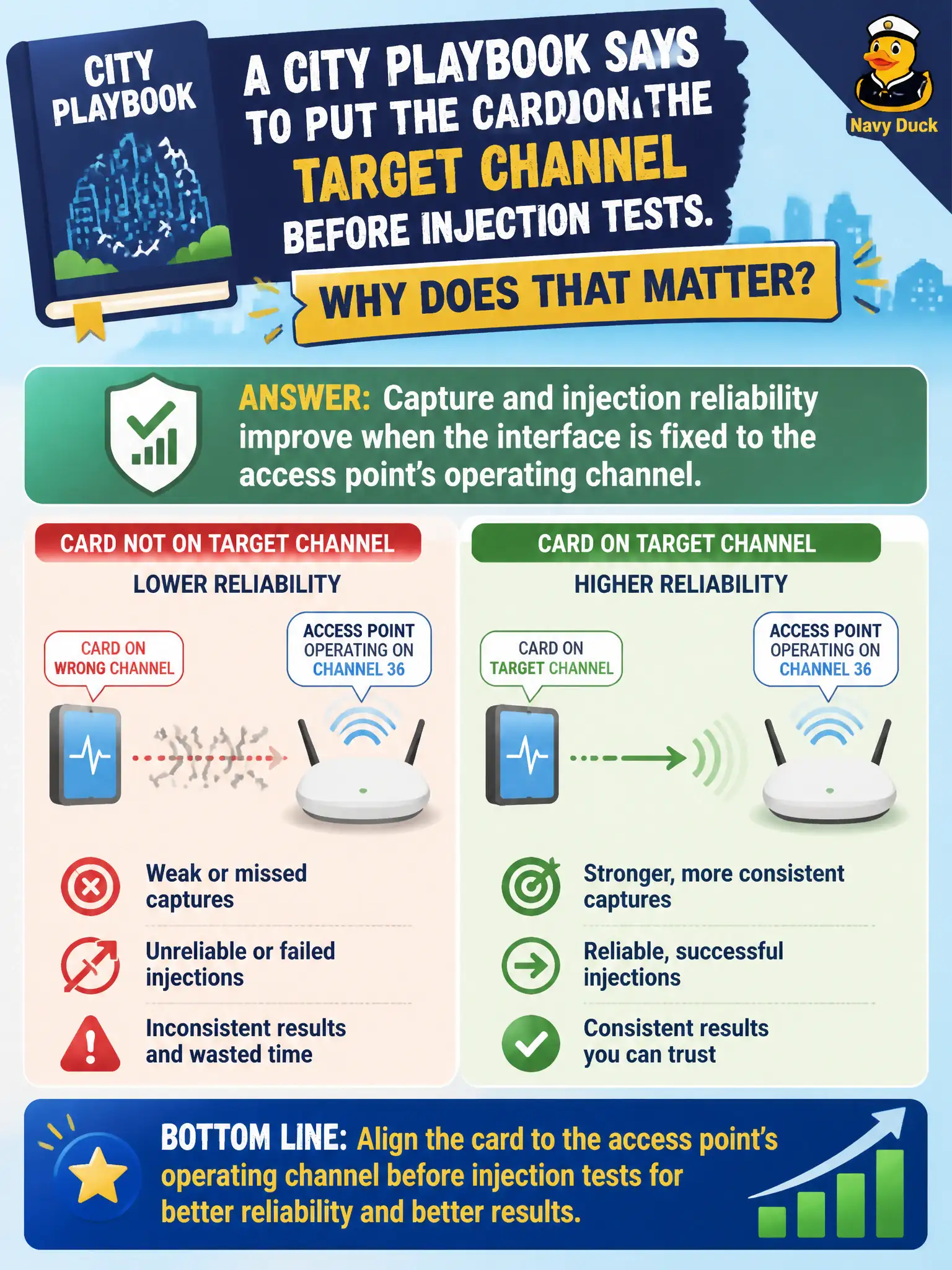
If the AP is on channel 6 and your card is sightseeing on channel 11, you are listening to the wrong street. Lock the radio to the target channel so capture and injection actually meet the frames you care about. Wandering channels make lab results flaky.
Full Explanation
Capture and injection reliability improve when the wireless interface is locked to the access point’s operating channel before tests begin. If the card is hopping or sitting on the wrong channel, frames from the target BSS are missed and injected frames never land where the municipal AP is listening. City playbooks that require channel locking before injection are enforcing basic RF geometry: be on the same channel as the authorized target. Saying injection tools ignore channel entirely and hop randomly for compliance reasons fails by concept: purposeful channel setting is required for reliable inject/capture against a known AP. Claiming channel locking applies only to wired packet brokers fails by concept: 802.11 channel is a core wireless control, not a wired SPAN concern. Asserting that setting the channel permanently disables monitor mode on all chipsets fails by concept: channel selection and monitor mode coexist; locking channel is part of normal monitor operation. Exam caveat: hopping surveys have their place for discovery, but once a target BSSID and channel are chosen for handshake or injection work, stop hopping and fix the channel under RoE. Operational check: from airodump-ng or iw, identify the civic AP’s channel, set the monitor interface to that channel, confirm beacons from the target BSSID appear steadily, then proceed with authorized injection or focused capture.