
A municipal playbook mentions that the regulatory domain affects transmit power. What should assessors understand about that setting?
Select an answer to reveal the explanation.
Short Explanation
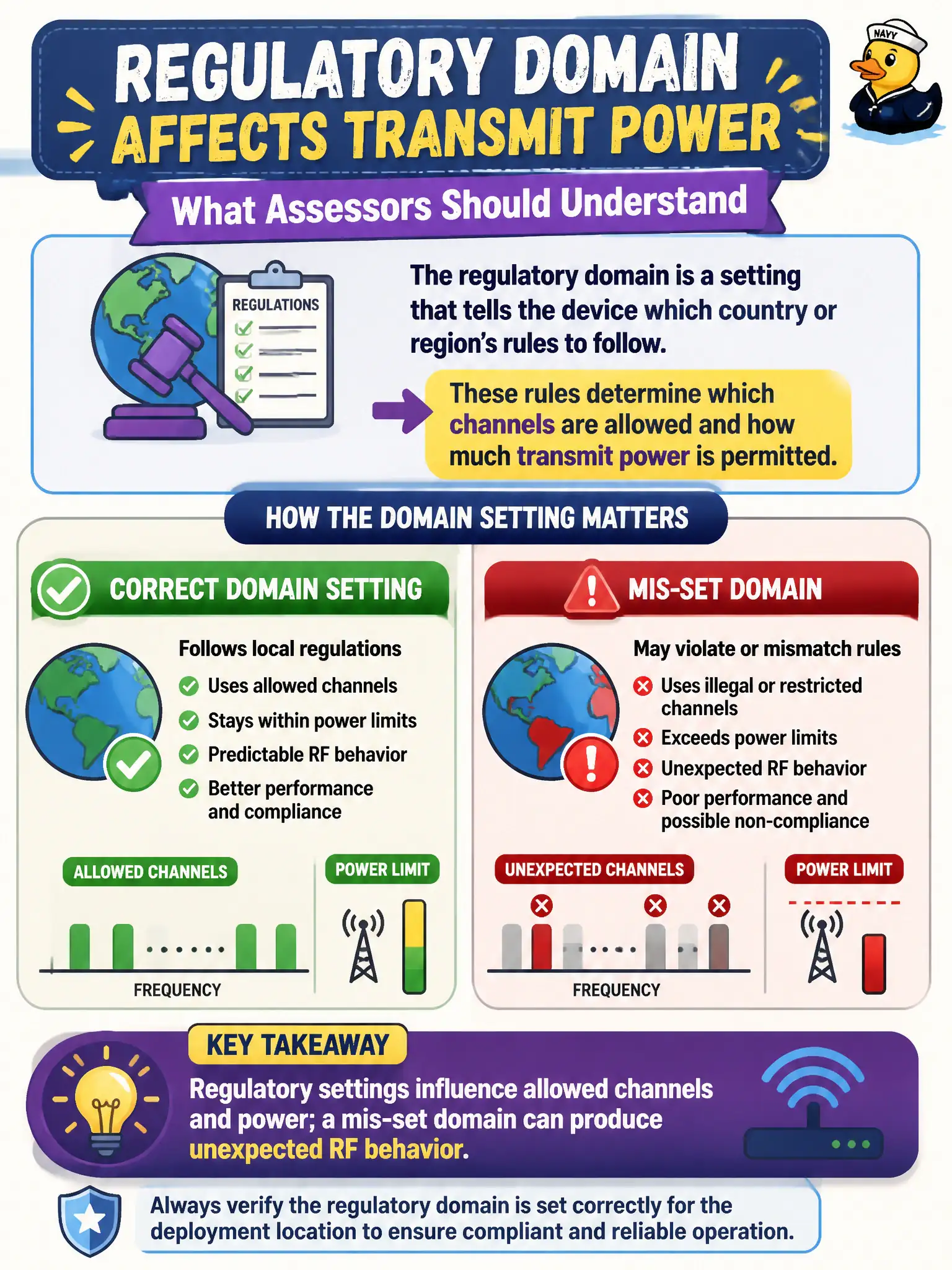
Think of regdomain like the city’s speed-limit map for radios—wrong map, wrong roads and wrong throttle. Allowed channels and power follow that region setting. Set it wrong and the card may behave in ways the playbook never planned.
Full Explanation
Regulatory domain settings on a wireless interface influence which channels are legal or enabled and what transmit power ceilings apply for that region. Municipal assessors must treat regdomain as an RF control, not a cosmetic preference: a mis-set domain can open unexpected channels, restrict needed ones, or change power behavior in ways that invalidate capture plans or create compliance risk during a county engagement. Playbooks that call out regdomain are reminding operators that RF lawfulness and tool behavior both ride on that configuration. Saying regulatory domain only changes the Kali desktop wallpaper fails by concept: wallpaper is unrelated to CRDA/regulatory policy that gates channels and power. Claiming TX power is fixed solely by USB cable length so regdomain is cosmetic fails by concept: cable length is not the regulatory control plane for channel or power masks. Asserting channel lists are globally identical and only antenna gain is regulated fails by concept: allowed channel sets and power limits differ by region, which is why domain misconfiguration produces surprising RF behavior. Exam caveat: setting a domain to unlock channels you are not authorized to use can create legal and RoE problems even if the card obeys the new mask—civic assessments stay inside both engagement scope and applicable RF rules. Operational check: before survey or injection on the municipal kit, confirm iw reg get (or equivalent) matches the authorized theater, verify the target AP channel is permitted, note reported TX power, and re-check after driver reloads that the domain did not silently reset.