
An intern proposes using a pure client-mode USB dongle for deauthentication testing in a city lab. What capability concern should be raised?
Select an answer to reveal the explanation.
Short Explanation
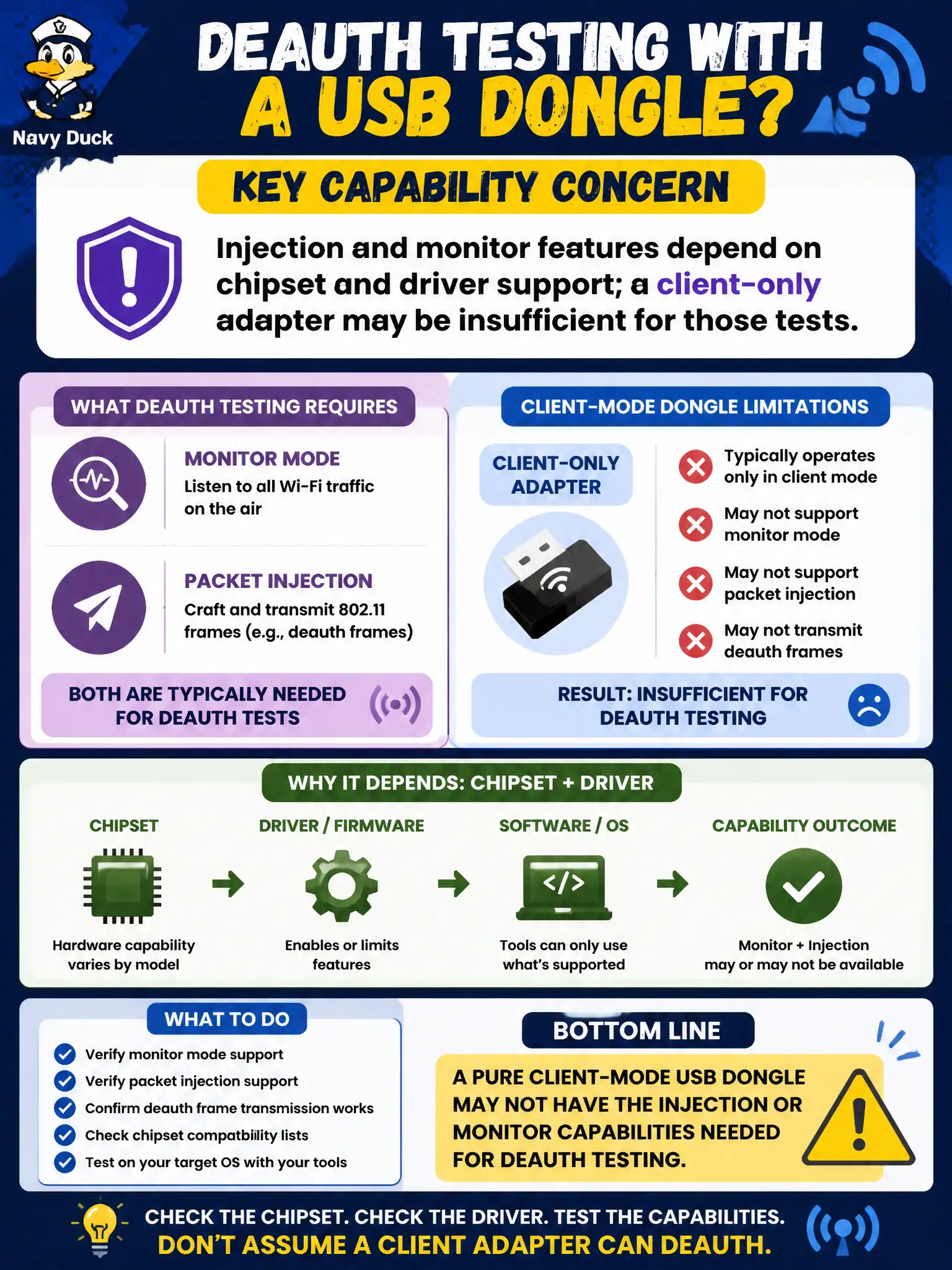
A client-only dongle is like a sedan with no tow hitch—you can drive, but you cannot pull the trailer the lab needs. Monitor and injection ride on chipset and driver support, not on plugging in any Wi-Fi stick. If the hardware cannot do those modes, the deauth test plan stalls.
Full Explanation
Deauthentication and related injection tests in a city lab are not universal USB Wi-Fi features. Monitor-mode reception and management-frame injection depend on chipset, driver, and sometimes firmware support. A pure client-mode dongle that only associates in managed mode may be perfectly fine for browsing yet insufficient for authorized deauth or injection exercises, so capability concerns must be raised before the intern’s plan consumes lab time. Civic teams select adapters known to support the required modes under their approved Linux image. Claiming any USB Wi-Fi dongle can inject management frames once NetworkManager is installed fails by concept: NetworkManager is a connection manager, not a magic unlock for injection; silicon and driver limits remain. Asserting that client-mode adapters always unlock injection after a vendor firmware update fails by concept: firmware updates do not guarantee monitor or injection features, and many client-oriented designs never expose them. Saying deauthentication tests require only managed-mode association so chipset support never matters fails by concept: deauth injection is an RF transmit/inject task that typically needs monitor or inject-capable paths, not a normal associated client session alone. Exam caveat: even with a capable chipset, RoE may forbid deauthentication on production civic SSIDs—capability does not equal authorization, and lab-only targets should be used when the playbook restricts disruptive frames. Operational check: before scheduling deauth work, verify the assigned adapter creates a stable monitor interface, confirm injection is supported with a controlled lab AP under written RoE, and document any client-only dongles as unsuitable for that test class.