
A city asks why MAC addresses appear as BSSIDs and client STAs in recon output. What is the fundamentals reason?
Select an answer to reveal the explanation.
Short Explanation
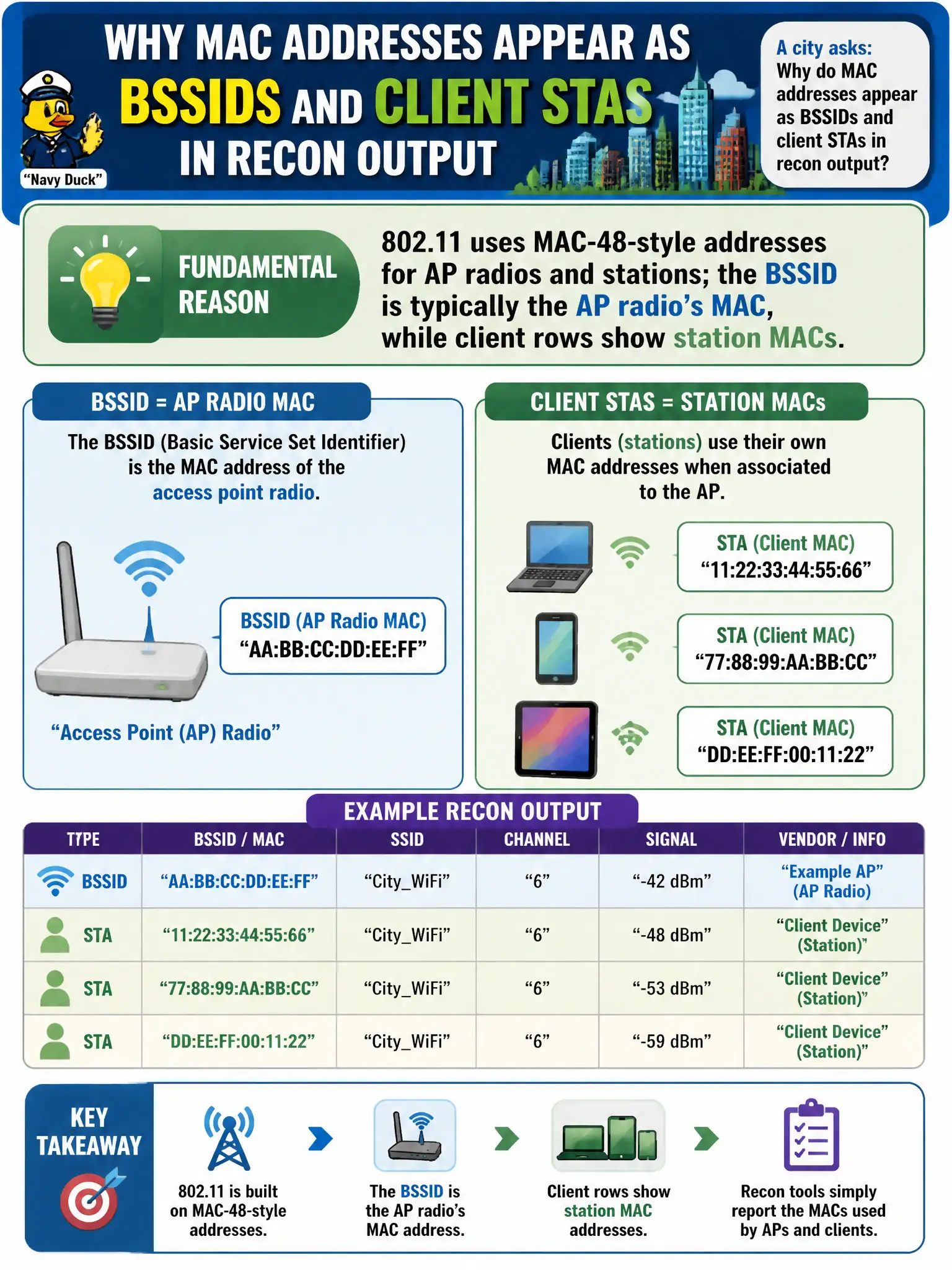
Wi-Fi still uses nametags at Layer 2. The AP’s radio MAC is usually the BSSID; phones and laptops show up as station MACs in the same dump.
Full Explanation
IEEE 802.11 addressing uses MAC-48-style addresses for access-point radios and client stations. The BSSID is typically the AP radio’s MAC address identifying the BSS, while client rows in recon tools show station MACs observed on the medium. City teams reading airodump-class output are looking at Layer-2 wireless addresses, which is why filtering rules and scope statements often name hex BSSIDs and STA MACs rather than relying on DNS labels alone. Calling those hex strings always random VPN tunnel IDs unrelated to Layer-2 addressing misplaces them into an unrelated overlay technology. Saying recon tools display only DNS names and that any MAC-looking field is a display bug denies standard wireless survey presentation used in civic assessments. Claiming BSSID fields are IPv4 addresses written in hex for municipal branding confuses Layer-2 with Layer-3 identifiers. Exam caveat: Scope and evidence should cite BSSID and STA MACs carefully under privacy and RoE rules—do not publish client MACs outside the engagement archive. Operational check: Match a listed BSSID to the authorized AP inventory MAC and confirm client STA MACs in the capture align with devices expected during the approved test window.