
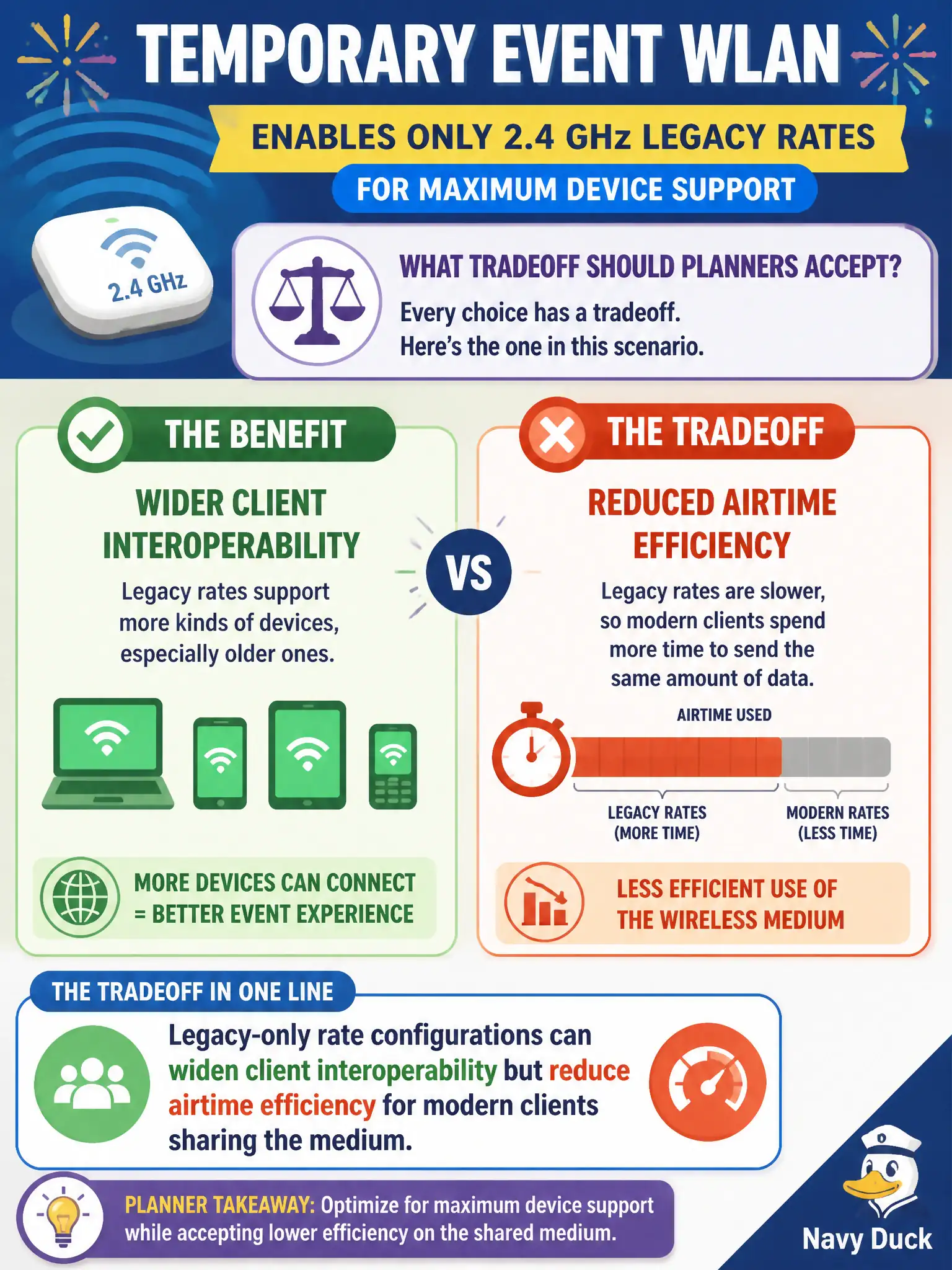
A temporary event WLAN enables only 2.4 GHz legacy rates for maximum device support. What tradeoff should planners accept?
Select an answer to reveal the explanation.
Short Explanation
Keeping the slow dance song playing so grandma’s phone can join means the whole floor moves slower. Broad support, less efficient airtime for newer gear.
Full Explanation
Enabling only 2.4 GHz legacy rates can maximize interoperability with very old clients at a temporary civic event, but it reduces airtime efficiency because slower transmissions occupy the shared medium longer. Modern clients on that BSS then wait longer even when they are capable of higher rates, so planners must accept a deliberate performance tradeoff rather than a free upgrade for every device class. Event WLAN notes should record the rate policy so later troubleshooting does not blame RF coverage alone. Claiming legacy-only mode always increases both range and modern-client throughput with no downside ignores airtime cost on a busy channel. Saying forcing legacy rates converts the SSID into WPA3-Enterprise without further configuration confuses PHY rates with authentication and key-management suites. Asserting legacy rates apply only to wired Ethernet switches and never affect Wi-Fi denies their direct impact on wireless airtime. Exam caveat: Airtime inefficiency can also make authorized captures busier and handshake collection slower on crowded event channels. Operational check: Compare throughput and medium utilization on the event SSID with legacy-only rates versus a modern rate set in a lab staging area before locking the production profile.