
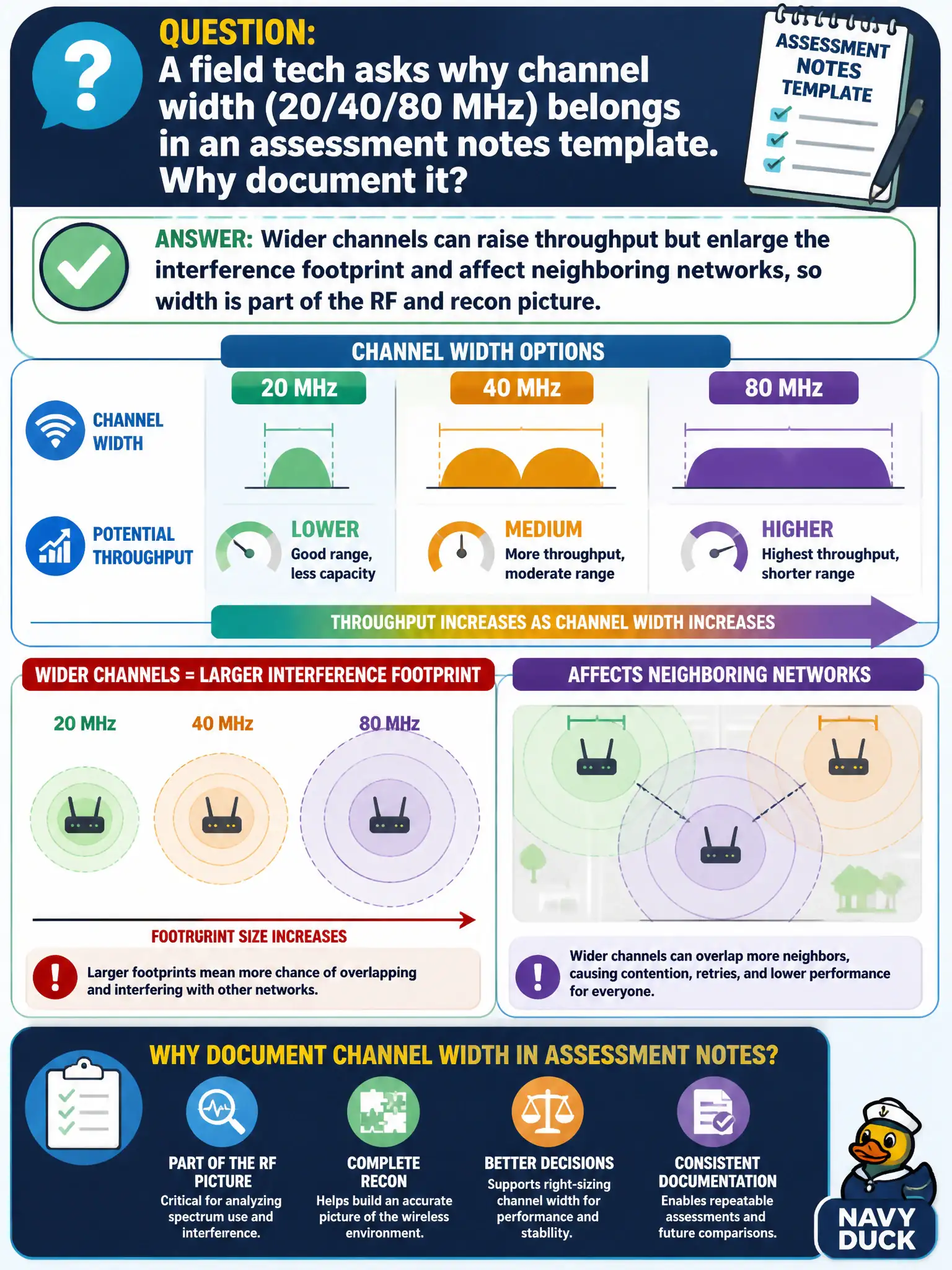
A field tech asks why channel width (20/40/80 MHz) belongs in an assessment notes template. Why document it?
Select an answer to reveal the explanation.
Short Explanation
A fat highway moves more cars but bulldozes more of the median. Wide Wi-Fi channels can boost speed yet splash into neighbors—write the width down so the picture is honest.
Full Explanation
Channel width settings in the 20/40/80/160 MHz class change how much spectrum a BSS occupies. Wider channels can increase throughput when the medium is relatively clean, but they enlarge the interference footprint, reduce how many non-overlapping channels neighbors can use, and alter what a monitor interface must cover to capture the BSS completely. Field notes for municipal assessments should therefore record width alongside primary channel and BSSID so recon judgments and capture setup remain accurate. Saying channel width only changes the SSID font size on client pickers trivializes a real RF and MAC parameter with coexistence impact. Claiming width settings are ignored by all modern clients and never appear in captures is false; HT, VHT, and HE operation elements advertise width-related capabilities that packet analysis can show. Restricting width documentation to Bluetooth-only assessments misassigns the concept away from 802.11 entirely. Exam caveat: Parking a monitor on the wrong primary channel or misunderstanding bonded wide-channel behavior can yield empty or partial captures even when the BSSID filter is correct. Operational check: For each in-scope civic BSSID, note advertised channel and width from survey output, configure the capture interface accordingly, and verify frame rates look sane before investing extended time waiting for handshakes under RoE.