
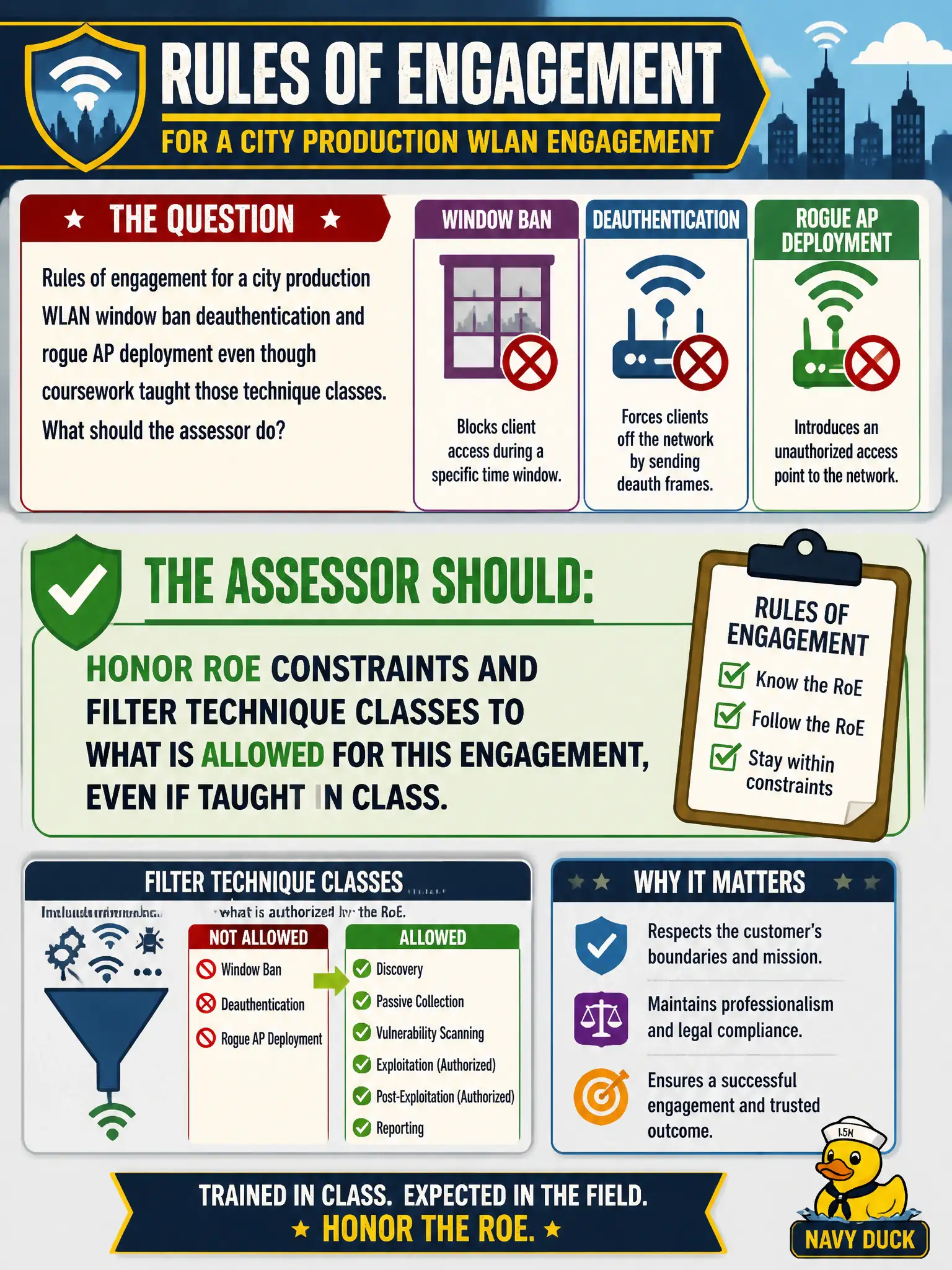
Rules of engagement for a city production WLAN window ban deauthentication and rogue AP deployment even though coursework taught those technique classes. What should the assessor do?
Select an answer to reveal the explanation.
Short Explanation
Course labs are not a hall pass for production chaos. If RoE says no deauth and no rogue APs, you do not “be thorough” by breaking that. Allowed technique classes come from the engagement contract.
Full Explanation
If rules of engagement for a city production WLAN window ban deauthentication and rogue AP deployment even though coursework taught those technique classes, the assessor must honor RoE constraints and filter technique classes to what is allowed for this engagement. Running banned techniques overnight so fewer users notice still violates authorization. Ignoring RoE because the mayor verbally said to be thorough does not override written scope. Substituting malware on endpoints because RF techniques were restricted expands into a different unauthorized domain. Exam caveat: taught capability is not automatic permission; civic production always filters through RoE. Operational check: maintain an allowed-methods checklist per engagement, brief the team before the window, and stop peers who reach for banned deauth or rogue tooling on city air. For municipal and campus engagements, keep the finding language tied to authorized scope, name the building or SSID class affected, and state the residual risk to residents or staff if the rejected option had been chosen. Re-validate after the next change window that the selected control still matches inventory, monitoring, and RoE abort criteria used by the city wireless program.