
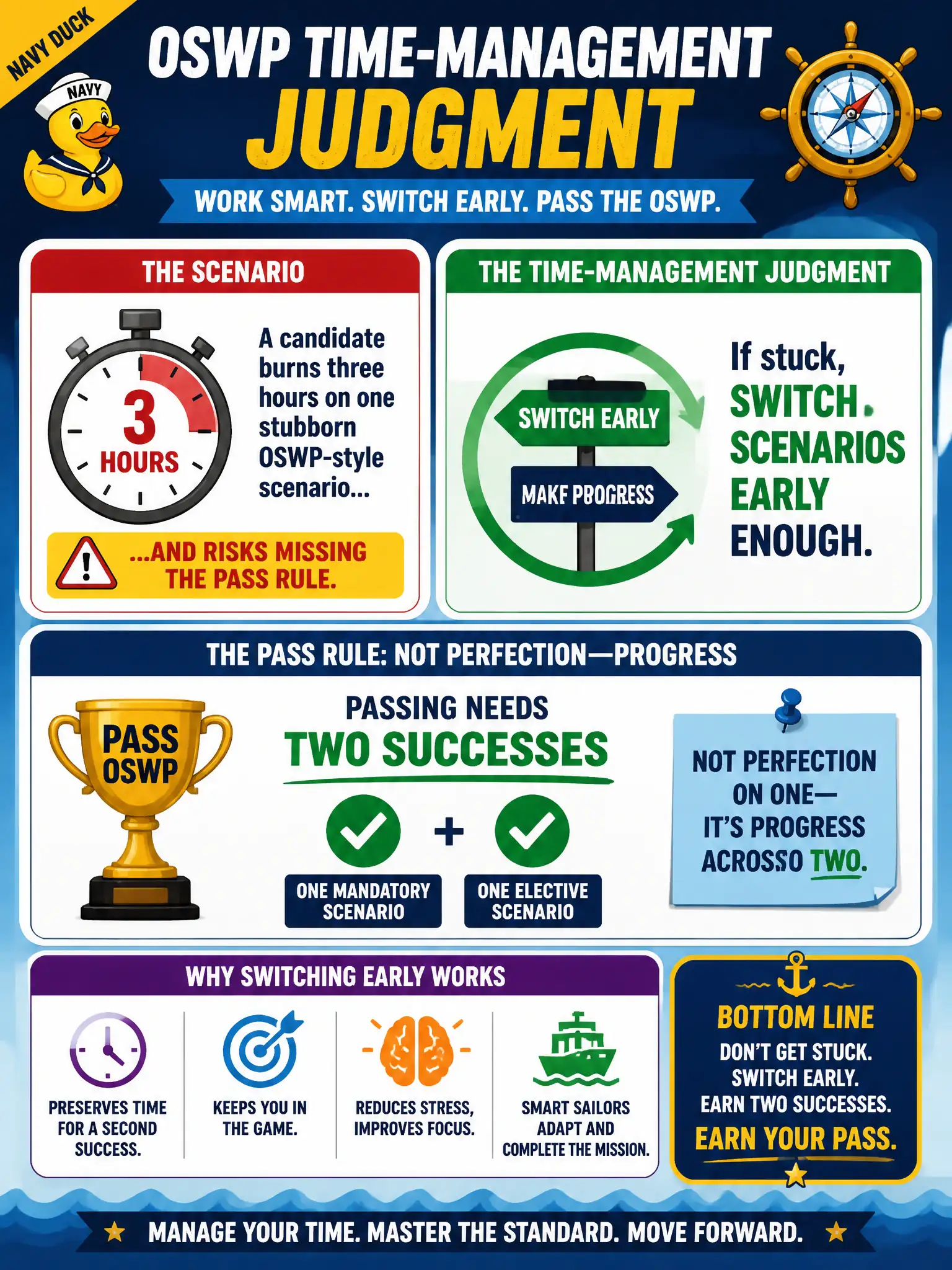
A candidate burns three hours on one stubborn OSWP-style scenario and risks missing the pass rule. What time-management judgment applies?
Select an answer to reveal the explanation.
Short Explanation
Tunnel vision on one bunker can sink the whole attempt. Pivot while the clock still loves you—two wins including mandatory beat one perfect failure. You cannot pause reality by yanking the VPN.
Full Explanation
Burning three hours on one stubborn OSWP-style scenario while risking the pass rule calls for switching scenarios early enough—passing needs two successes including mandatory, not perfection on one. Never leaving a hard scenario because perfection on one target always beats two completions is false under the pass model. Mandatory scenarios cannot be ignored merely because a hard optional looks more interesting. Extending the lab clock by pausing the VPN until the hard target falls is not a legitimate time control. Exam caveat: time boxing is an exam skill and a civic engagement skill when windows are fixed. Operational check: set a personal switch timer per scenario, move when stuck, secure mandatory progress first, and return later only if spare time remains. For municipal and campus engagements, keep the finding language tied to authorized scope, name the building or SSID class affected, and state the residual risk to residents or staff if the rejected option had been chosen. Re-validate after the next change window that the selected control still matches inventory, monitoring, and RoE abort criteria used by the city wireless program. Document the decision in the municipal engagement notes so the next assessor inherits both the technical rationale and the civic constraints that shaped it.