
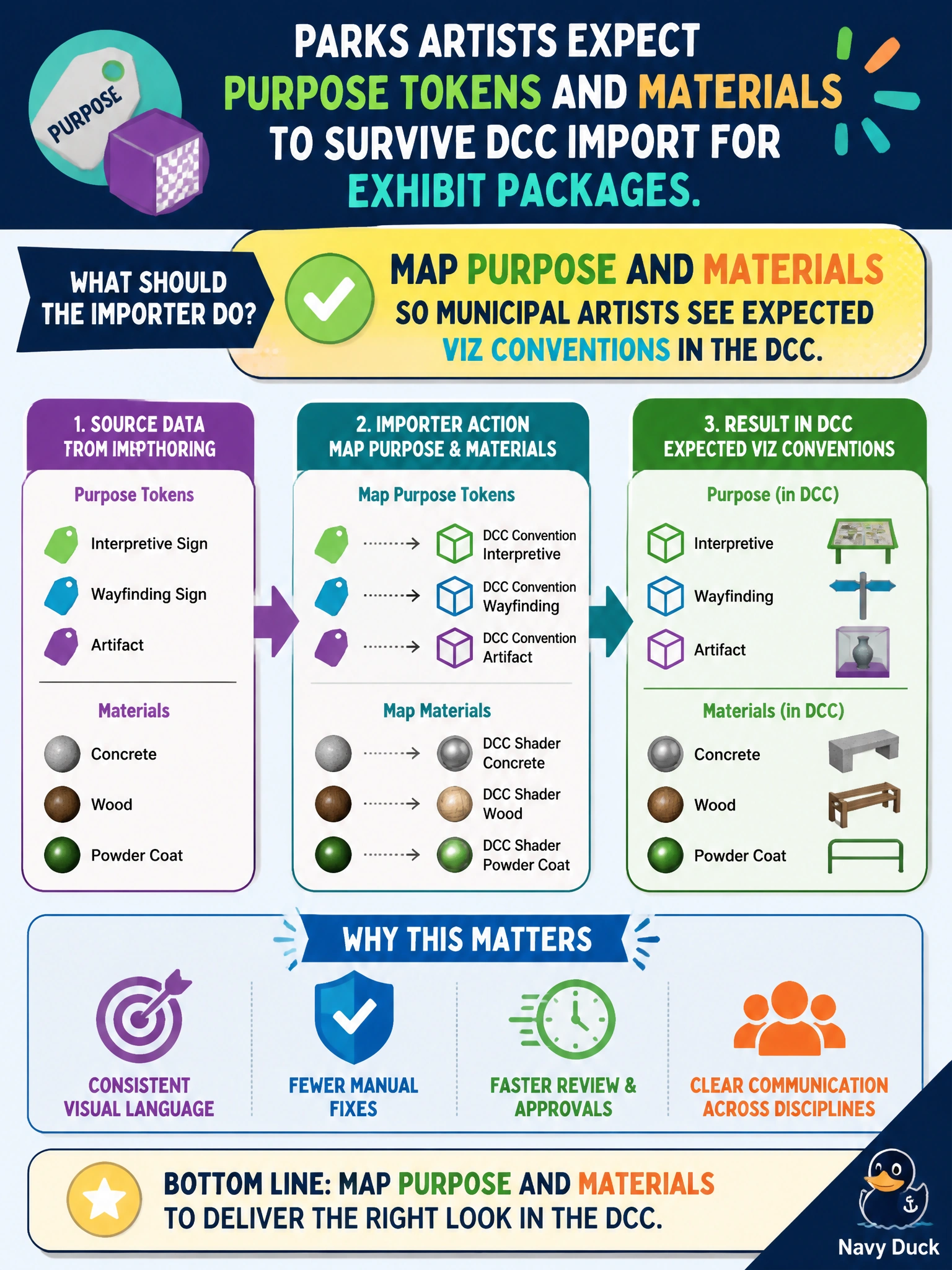
Parks artists expect purpose tokens and materials to survive DCC import for exhibit packages. What should the importer do?
Select an answer to reveal the explanation.
Short Explanation
You can think of purpose and materials as the costume and lighting cues for park exhibits. Map them on import so artists retain the viz conventions they authored.
Full Explanation
Parks exhibit packages rely on purpose tokens and material bindings as visualization conventions: purpose guides which geometry appears in each visualization context, while materials define how surfaces look in municipal viewers and DCCs. Mapping purpose and materials on import preserves those expected civic conventions for artists. Dropping all purpose and material bindings to simplify the scenegraph deletes the conventions authored for the exhibits. Converting each purpose token and material into a plain string field discards its type and schema; for materials, this breaks UsdShade semantics and prevents proper binding and shading. Replacing purpose with random displayName values corrupts purpose intent and naming, creating misleading labels without restoring visualization behavior. Exam caveat: mapping need not reproduce bit-identical DCC material graphs in every renderer; it must faithfully preserve USD purpose and material meaning for municipal visualization workflows. Over-mapping into proprietary-only looks can reduce portability when the exhibit returns to the city twin viewer. Practical check: import an exhibit package with known purpose tokens and bound materials, verify purpose visibility and material assignments against the USD source in the DCC, make an artist-style material or purpose edit, export, and confirm the twin retains coherent purpose and UsdShade bindings for parks review.