
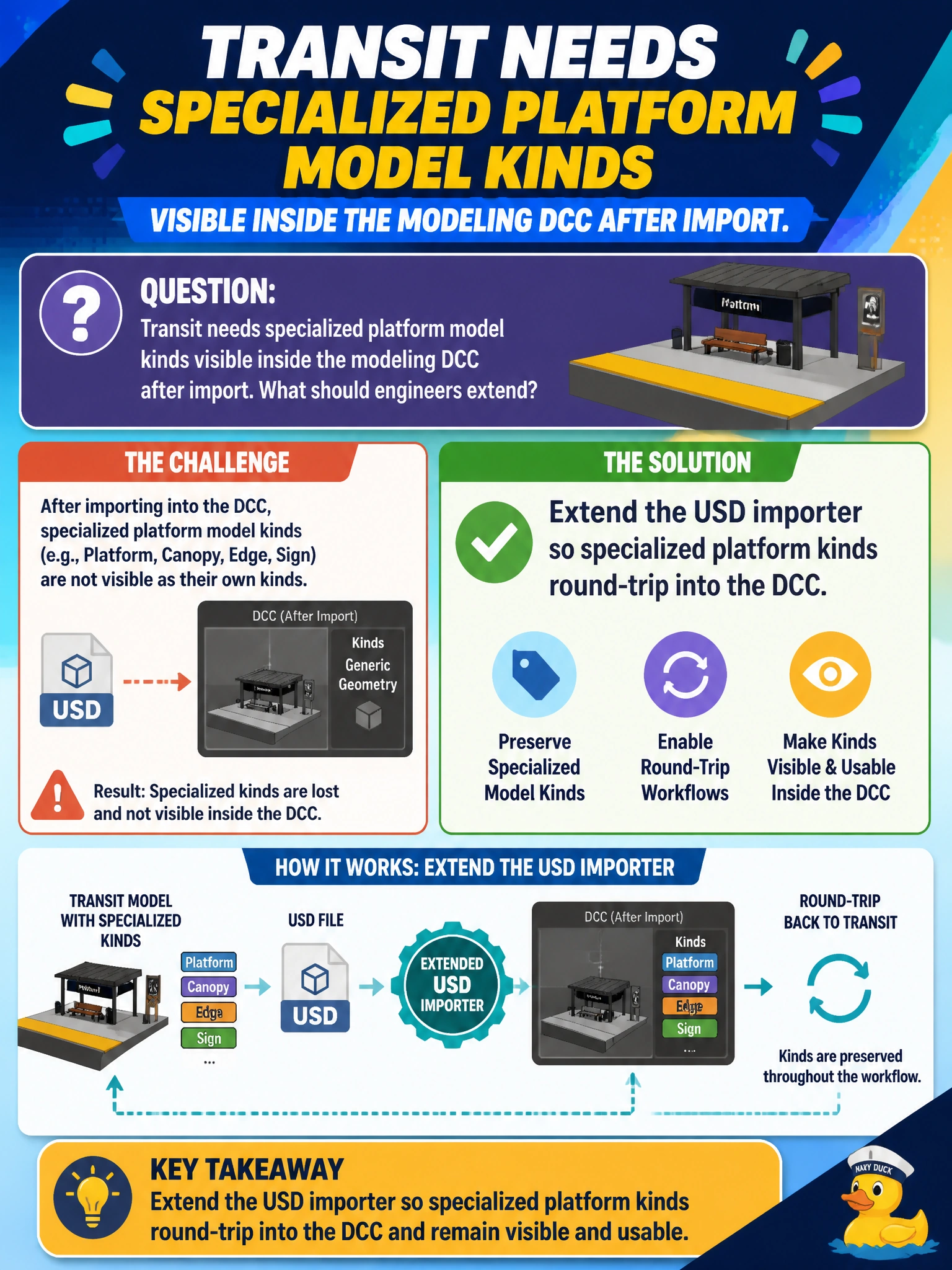
Transit needs specialized platform model kinds visible inside the modeling DCC after import. What should engineers extend?
Select an answer to reveal the explanation.
Short Explanation
Platform kinds are like station codes—if the importer drops them, the DCC forgets what kind of stop it loaded. Extend the USD importer so specialized civic kinds survive.
Full Explanation
Transit platforms often use specialized model kinds—typed civic conventions that tell pipelines and viewers what sort of stop, platform edge, or furniture family was authored. Engineers must extend the USD importer so those specialized platform kinds round-trip into the modeling DCC; otherwise the DCC loads anonymous geometry and loses the municipal kind vocabulary teams rely on for filters, validators, and packaging rules.
Extending only the office printer driver queue has no relationship to USD scenegraph kinds. Screenshot naming conventions on a shared drive are documentation hygiene, not importer semantics. GPU overclock profiles on artist laptops affect local performance, not whether specialized platform kinds survive import.
Exam caveat: supporting specialized kinds usually means recognizing custom schemas, type names, or kind metadata the city defined—not inventing incompatible DCC-only types that cannot export back to USD. Round-trip fidelity both ways is the operational goal for transit packaging that still validates kinds after artists edit in the DCC.
Operational check: author or obtain a platform asset tagged with the specialized civic kind, import it through the extended USD importer, confirm the DCC exposes the expected platform kind, make a trivial edit, export, and inspect the USD to ensure the specialized kind remains intact for downstream transit packaging and twin composition.