
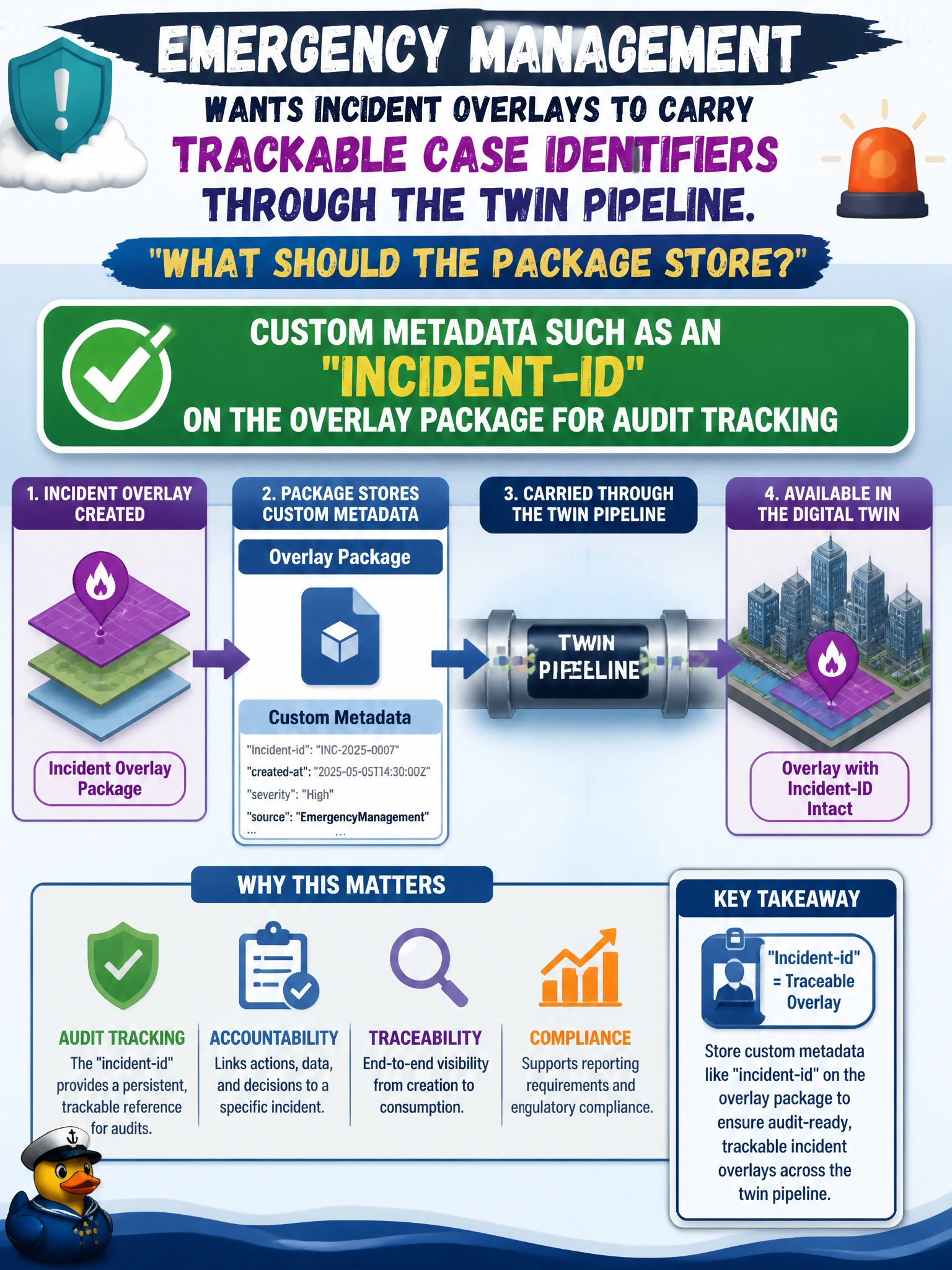
Emergency management wants incident overlays to carry trackable case identifiers through the twin pipeline. What should the package store?
Select an answer to reveal the explanation.
Short Explanation
Think of a barcode on a storm crate: without an incident-id, you can’t help auditors follow the overlay later. Add custom metadata to the package so you can track cases through the twin pipeline.
Full Explanation
Emergency management overlay packages in a municipal digital twin must remain auditable after leaving the authoring workstation. Custom metadata such as an incident-id attaches a durable operational key to the USD payload, allowing downstream twin stages, composition consumers, and compliance reviews to correlate geometry with the case that justified publishing it. The identifier travels with the package through the pipeline instead of relying on external knowledge. Anonymous mesh face counts describe geometry density, not which emergency case produced the overlay; without an operational identifier, visually similar flood or traffic overlays cannot be distinguished in an after-action review. GPU driver strings identify a rendering host, not a civic case, and can change when IT refreshes machines. Screenshot filenames are presentation artifacts outside USD metadata semantics and can be renamed, duplicated, or discarded without updating the stage. Exam caveat: custom metadata must follow package and schema conventions; an undocumented free-text field can break importers even when the incident-id belongs on the package. Prefer namespaced or guideline-documented fields. Practical check: inspect the packaged metadata, using a USD text dump if needed, confirm the incident-id matches the emergency case record, then compose the overlay into a staging twin and verify audit tooling retrieves that identifier without relying on chat logs or desktop folders.