
Airport lookdev round-trips materials between a DCC and OpenUSD. What should documented pipeline rules clarify?
Select an answer to reveal the explanation.
Short Explanation
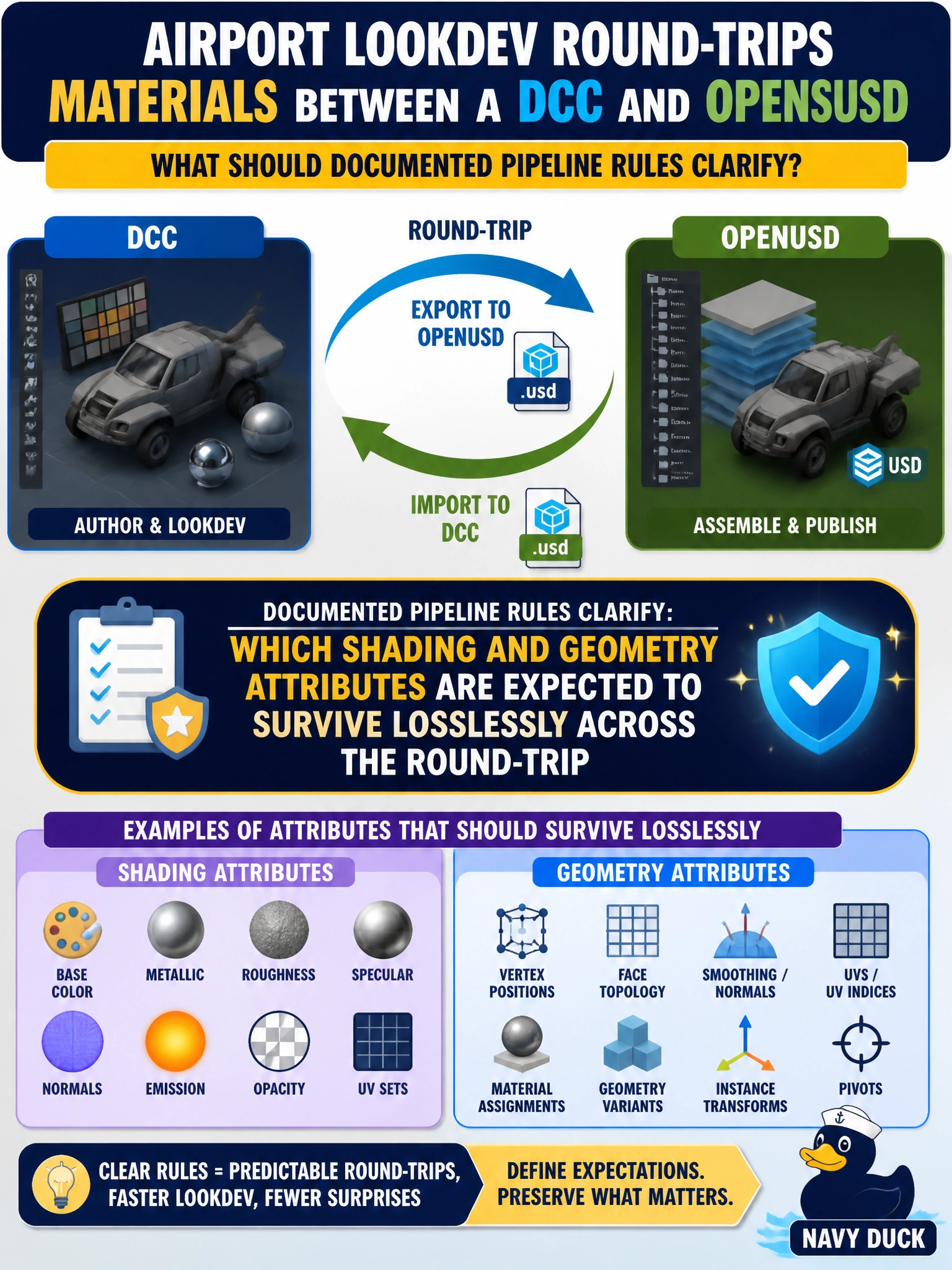
Write down what must survive the lookdev hop—diffuse, normals, the works. Silent material dropouts are how terminals look wrong on publish day.
Full Explanation
Airport lookdev round-trips of materials between a DCC and OpenUSD should clarify in documented pipeline rules which shading and geometry attributes are expected to survive losslessly across the round-trip. Explicit survival lists (for example diffuse/albedo, normals, roughness, UV sets, material bindings) set enforceable expectations and prevent silent look regression on terminals and airside assets.
That all materials may be dropped without notice on every return to USD fails by concept: silent material dropouts destroy lookdev intent and publish-day appearance. That undocumented silent conversion is preferable to written lossless expectations fails because undocumented conversion cannot be tested or gated. That round-trips should invent new material networks with no mapping back fails because unmapped reinvention breaks continuity with prior USD material identities.
Exam caveat: lookdev pipeline questions reward written lossless contracts over silent drops or reinvention. Operational check: publish an attribute-survival matrix, round-trip a known terminal material, diff USD material networks before/after, and fail CI if required shading/geometry attributes disappear or networks are remapped without documentation.