
Transit artists edit platform furniture in a DCC and must return clean packages to USD. What should the round-trip design prioritize?
Select an answer to reveal the explanation.
Short Explanation
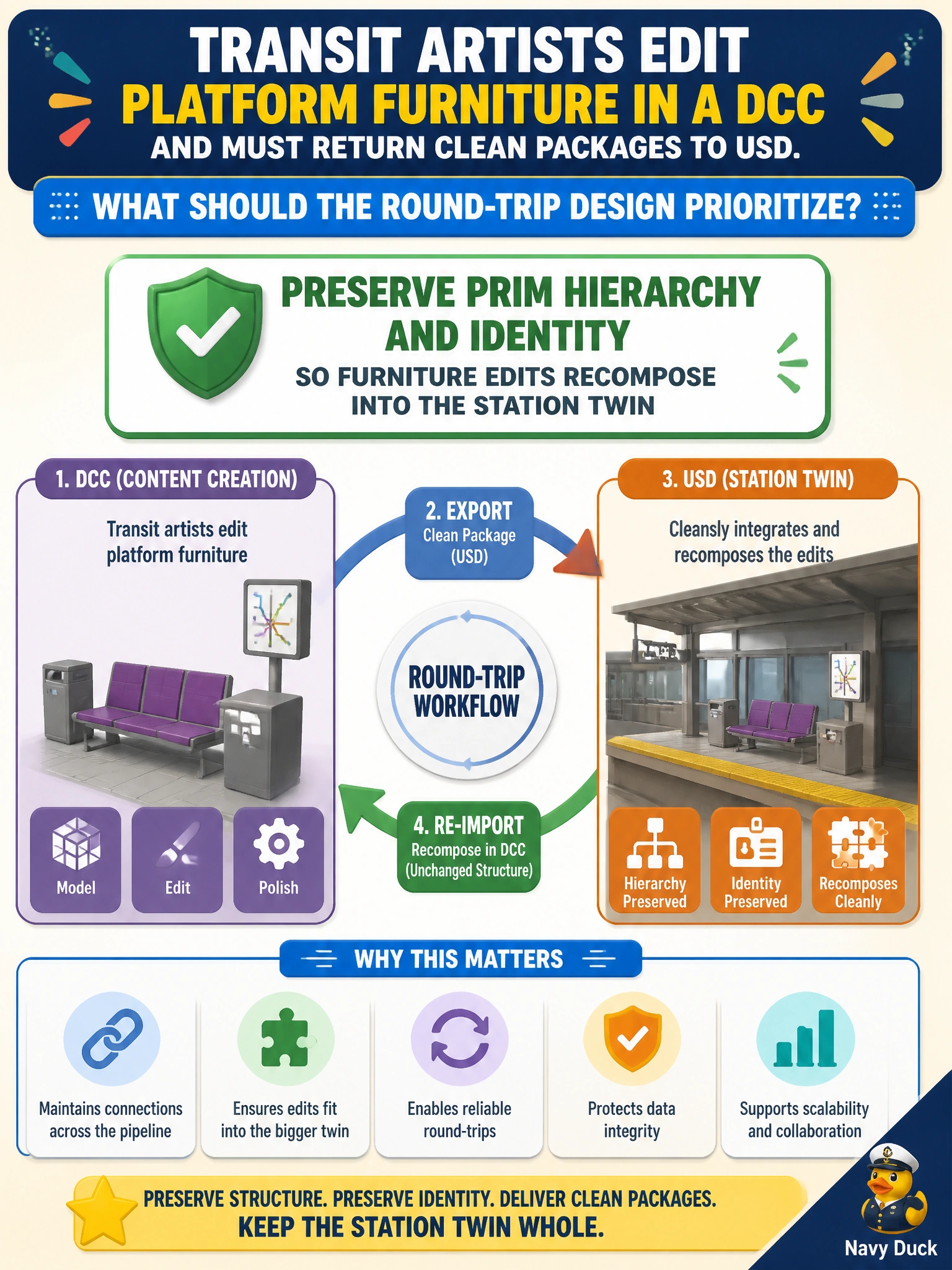
Furniture edits only help if the station still recognizes the benches. Keep hierarchy and identity stable across the DCC round-trip.
Full Explanation
Transit artists editing platform furniture in a DCC and returning clean packages to USD should prioritize preserving prim hierarchy and identity so furniture edits recompose into the station twin. Stable identity lets references, payloads, variants, and bindings find the same benches, signs, and shelters after export; hierarchy preservation keeps station organization intact for consumers and automation. Without that stability, every “successful” DCC export becomes a merge problem.
Allowing the DCC to invent new root names on every export without mapping fails by concept: new roots break recomposition into the known station namespace and orphan prior opinions. Flattening identity away so USD consumers cannot find prior furniture prims fails because lost identity makes incremental furniture updates unmergeable and defeats package reuse. Skipping validation of returned packages because DCC exports are always lossless fails because DCC round-trips are not guaranteed lossless without explicit checks on paths, hierarchy, and materials.
Exam caveat: round-trip design centers identity and hierarchy stability plus validation—not blind trust that DCC export is lossless or that reinvented roots will “just work.” Operational check: lock root and hierarchy mapping rules for furniture packages, export from the DCC, validate returned packages for expected prim paths and kinds, recompose into the station twin, confirm prior bindings still land, and fail the job if roots were reinvented, identity flattened, or validation was skipped.