
Transit authors package conventions for station platforms. Which asset-structure documentation topic is most useful for teams?
Select an answer to reveal the explanation.
Short Explanation
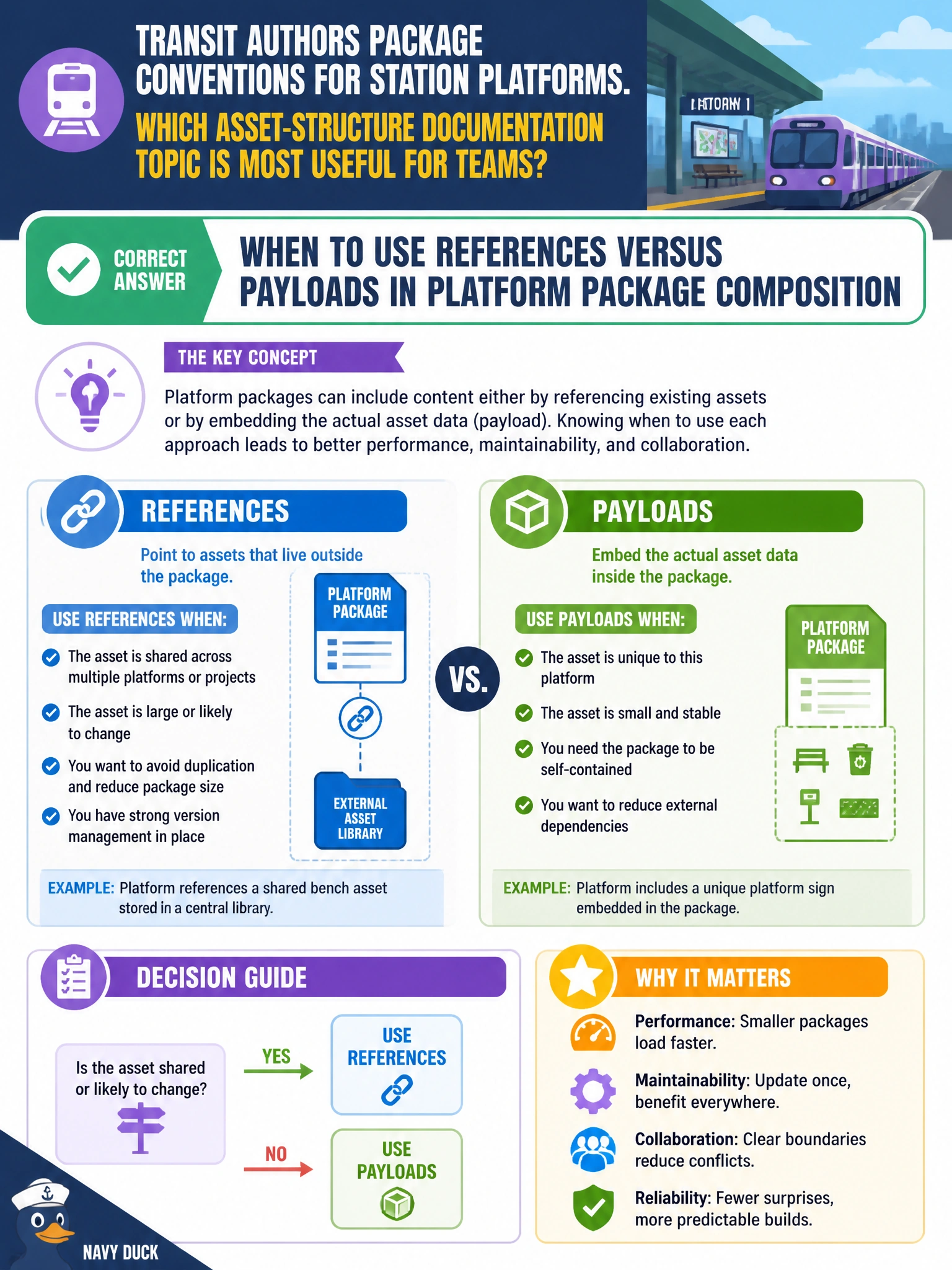
Platform packages need a clear story on references versus payloads. Flatten-everything or never-document rules just make the station twin harder to share.
Full Explanation
Transit authors documenting package conventions for station platforms should prioritize when to use references versus payloads in platform package composition. References keep composition explicit and typically load with the referencer’s needs; payloads deliberately defer heavy or optional content. Clear guidance lets platform teams share stations without forcing every consumer to load every mesh always—or flattening away the modular structure that makes stations maintainable.
A mandate that every platform must be one flattened anonymous layer only fails by concept: anonymous flatten destroys reusable structure and identity across stations. A ban on documenting payload deferral so artists load everything always fails because it removes a core OpenUSD performance/composition tool and harms large station twins. Guidance that asset paths may be free-form prose sentences fails because paths must be resolvable identifiers, not narrative text.
Exam caveat: distractors push flatten-everything, never-defer, or non-path “paths”—all anti-patterns for scalable station packaging. Operational check: document reference-versus-payload decision rules for platforms, apply them to a sample station (structure via references, heavy set-dressing via payloads), open with payloads unloaded then loaded, and confirm consumers can find documented entry points without prose paths or forced anonymous flats.