
Parks prepares collaborative plaza packages for multiple vendors. What should asset structure guidelines capture?
Select an answer to reveal the explanation.
Short Explanation
Vendor plaza packs stay sane when naming and layer roles are written down. Tribal knowledge and rename-as-you-go habits break the next handoff.
Full Explanation
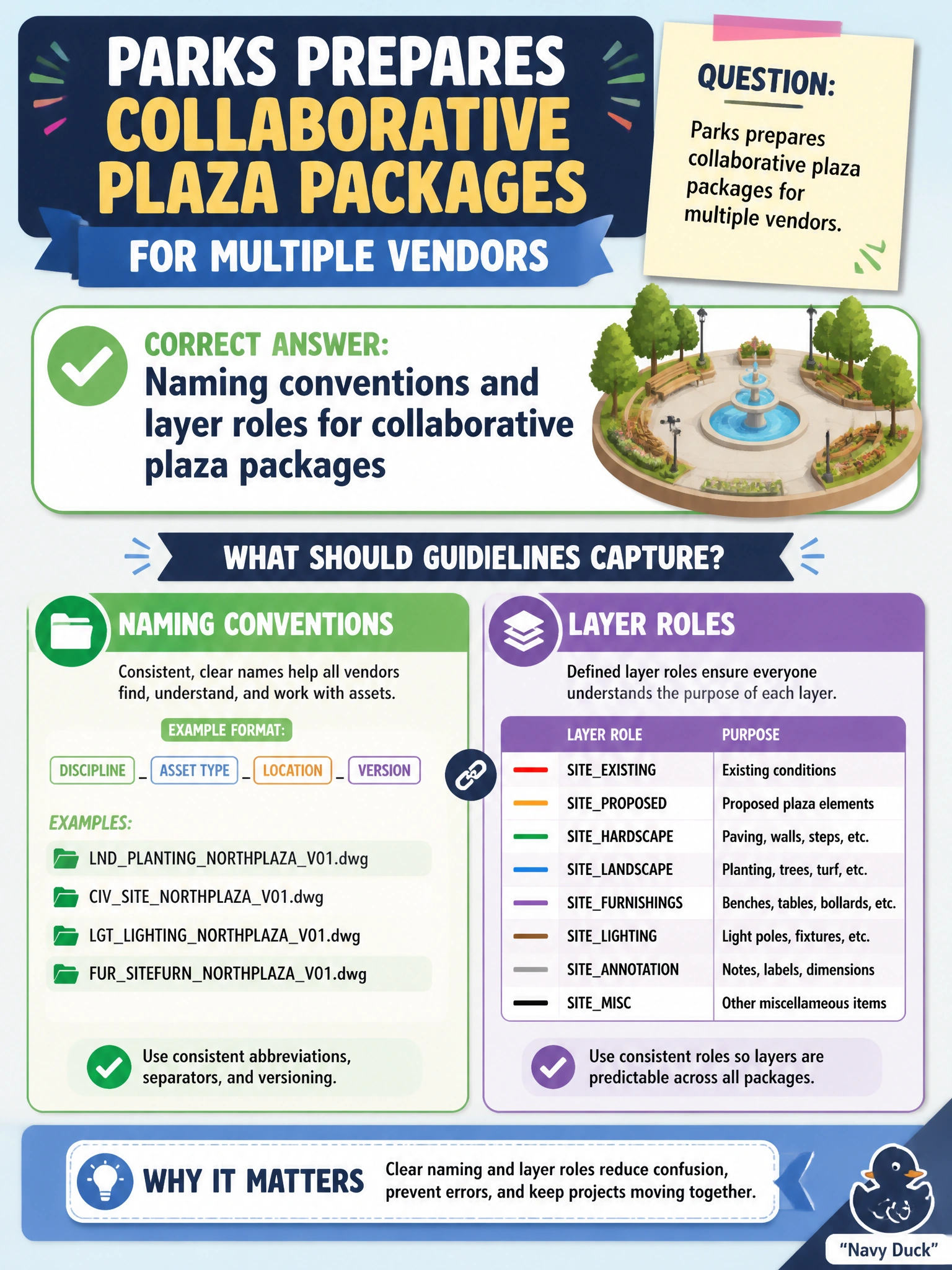
Parks preparing collaborative plaza packages for multiple vendors needs asset structure guidelines that capture naming conventions and layer roles. Explicit names and roles (contribution, override, localization, materials) keep handoffs coherent: each vendor knows where to author, what not to rename, and which layer wins for which concern. Written structure is how multi-party OpenUSD stays municipal-grade rather than tribal.
A policy that vendors may rename prims arbitrarily each handoff fails by concept: renames break references, payloads, and downstream bindings across the plaza. A rule that layer roles remain unspoken tribal knowledge fails because unspoken roles do not survive staff or vendor turnover. Instructions to omit folder layout because tools will invent paths fails because invented layouts diverge per tool and break shared resolution conventions.
Exam caveat: collaboration items target governance of names and layers, not hope that tools invent structure. Operational check: publish naming and layer-role tables for plaza packages, validate vendor drops against forbidden rename patterns and required folders, and reject handoffs that rely on tribal role knowledge or omit layout.