
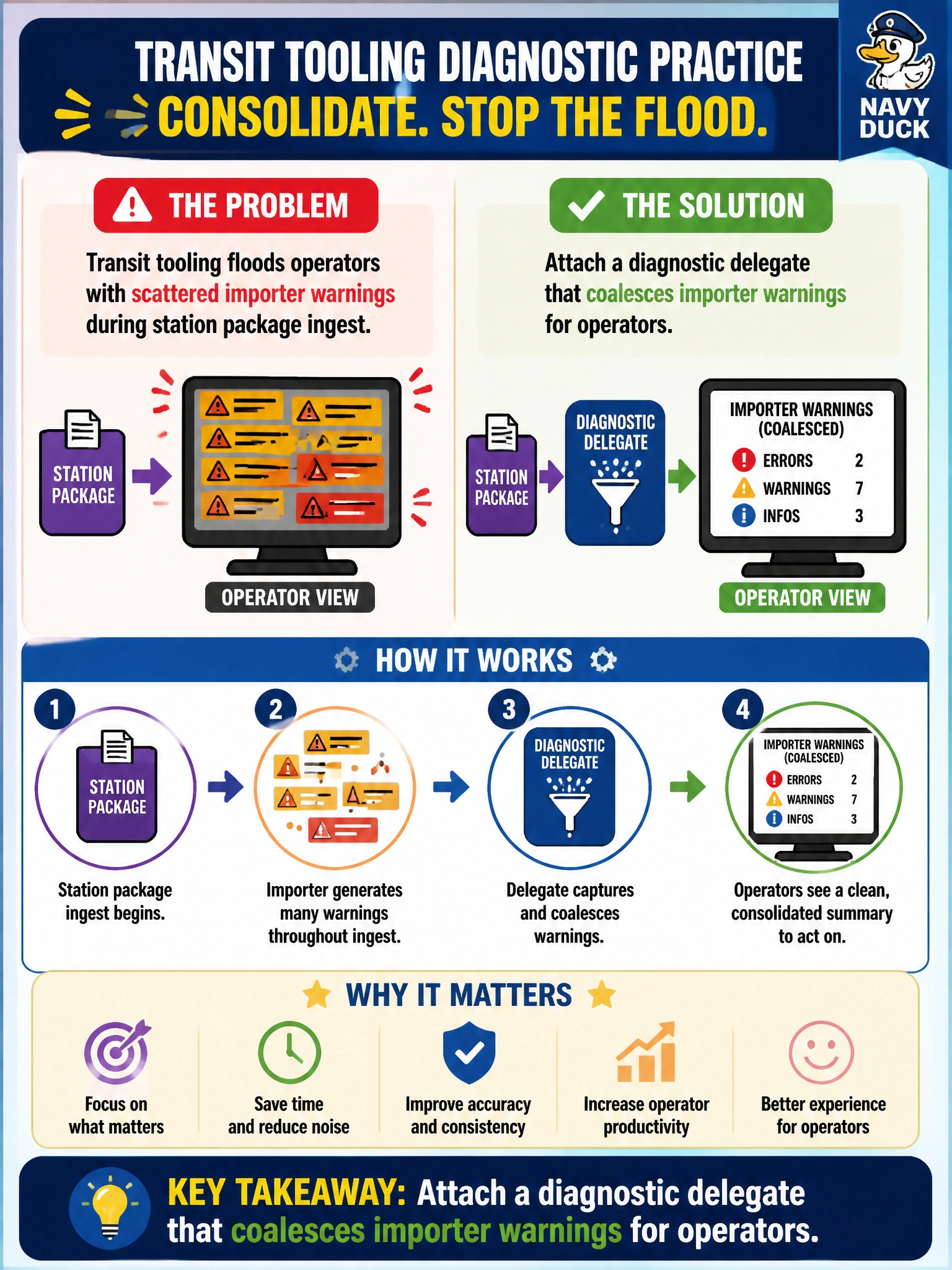
Transit tooling floods operators with scattered importer warnings during station package ingest. What diagnostic practice consolidates that feedback?
Select an answer to reveal the explanation.
Short Explanation
Importer noise is easier when one diagnostic delegate gathers the warnings. Do not invent WARN meshes or mute the whole composition stack to stay quiet.
Full Explanation
Transit tooling that floods operators with scattered importer warnings during station package ingest needs a diagnostic delegate that coalesces those warnings into an operator-friendly stream. Diagnostic delegates sit in the USD diagnostic path so importers can report, filter, and aggregate notices centrally—reducing console noise while preserving the signal operators need to fix bad station packages. Consolidation improves triage without changing composition strength or inventing geometry as a message bus.
Disabling all Tf notices so warnings never reach the transit console fails by concept: silence removes operator visibility into real ingest defects and trades short-term quiet for undetected corrupt stations. Encoding each warning as a new mesh prim named WARN in every station fails because diagnostics are not geometry; littering the stage with WARN meshes pollutes hierarchy, breaks downstream consumers, and does not coalesce warnings for humans. Muting every stronger layer so weaker importer opinions always win fails because layer muting changes composition strength and authored opinions—it is not a diagnostic aggregation strategy and can hide authoritative municipal data.
Exam caveat: NCP-OUSD separates diagnostic plumbing (delegates, notices, Trace) from composition edits (mute, strength) and from content hacks (encoding messages as prims). Operational check: attach or configure a diagnostic delegate on the ingest tool, run a known-noisy station import, verify warnings coalesce into a reviewable report or console channel, confirm critical errors still surface, and leave composition layer strength untouched unless a separate strength task requires it.