
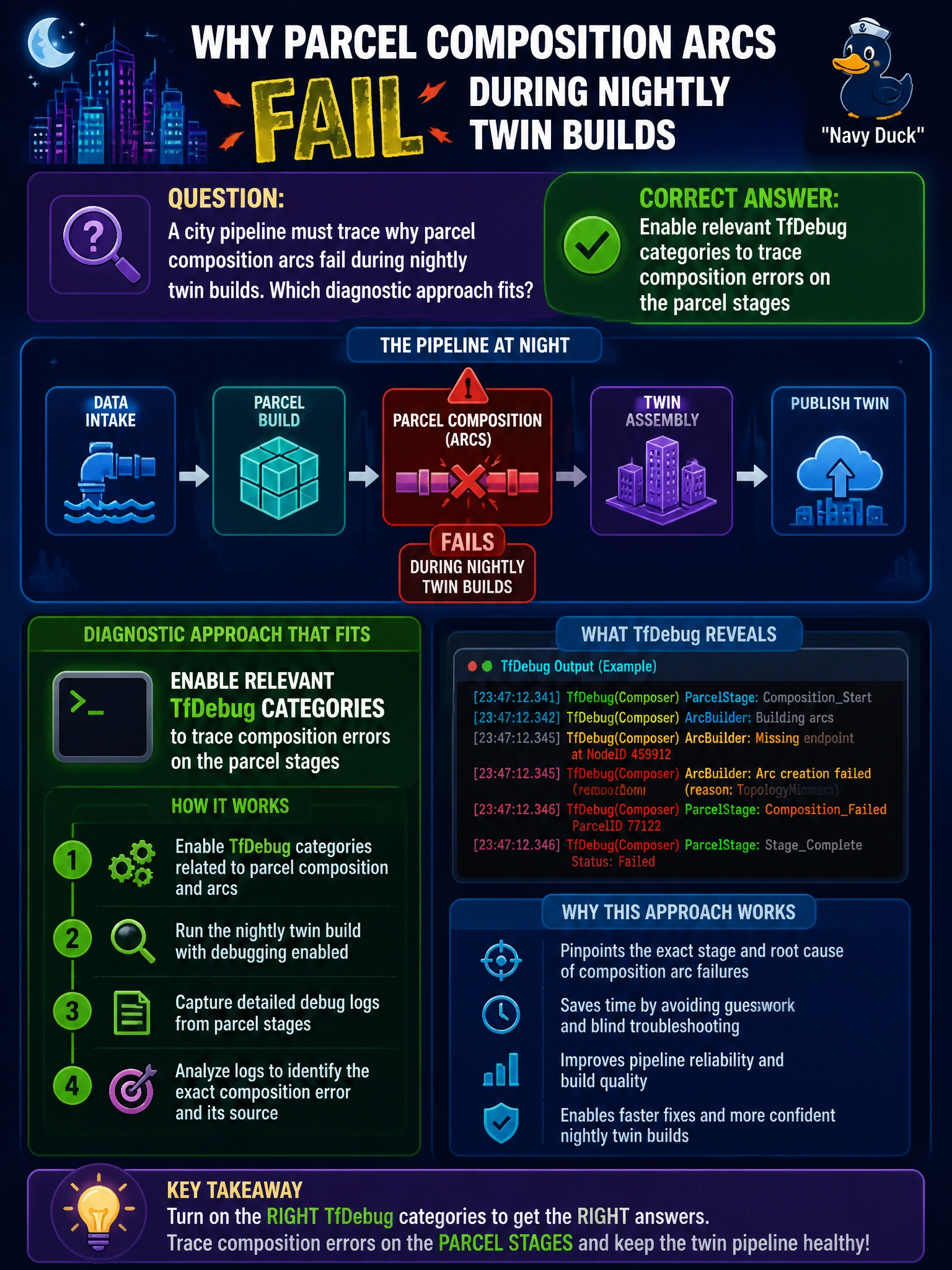
A city pipeline must trace why parcel composition arcs fail during nightly twin builds. Which diagnostic approach fits?
Select an answer to reveal the explanation.
Short Explanation
When parcel arcs misbehave, turn on the TfDebug flashlights that talk about composition. Sticky notes and flattening everything just hide the trail.
Full Explanation
When a city pipeline must learn why parcel composition arcs fail during nightly twin builds, the appropriate diagnostic approach is to enable relevant TfDebug categories that trace composition errors on the parcel stages. TfDebug can surface Pcp/composition, layering, and related failures with enough detail to show which arcs, layers, or asset paths break during the automated build. That turns opaque nightly red builds into actionable logs without destroying the stage structure you need to keep diagnosing.
Deleting all sublayers so parcel failures cannot appear in logs fails by concept: removing evidence hides symptoms and can break legitimate composition rather than explaining why arcs fail. Replacing Trace scopes with handwritten sticky notes on the render farm fails because informal offline notes are not correlated, machine-readable diagnostics and cannot capture runtime composition stack behavior across parcel stages. Force-flattening every night solely to hide unresolved asset paths fails because flattening papers over unresolved references instead of fixing them, loses deferred-load structure, and still leaves the underlying path/arc defects untraced.
Exam caveat: candidates often “fix” diagnostics by deleting layers, flattening everything, or abandoning instrumentation—moves that silence failures without teaching composition root cause. Operational check: enable the composition-related TfDebug categories for a representative failing parcel stage, reproduce the nightly compose, capture which arc or layer stack entry fails, confirm unresolved paths or strength conflicts in the log, then remediate the specific layer/arc and re-run with diagnostics still available for regression.