
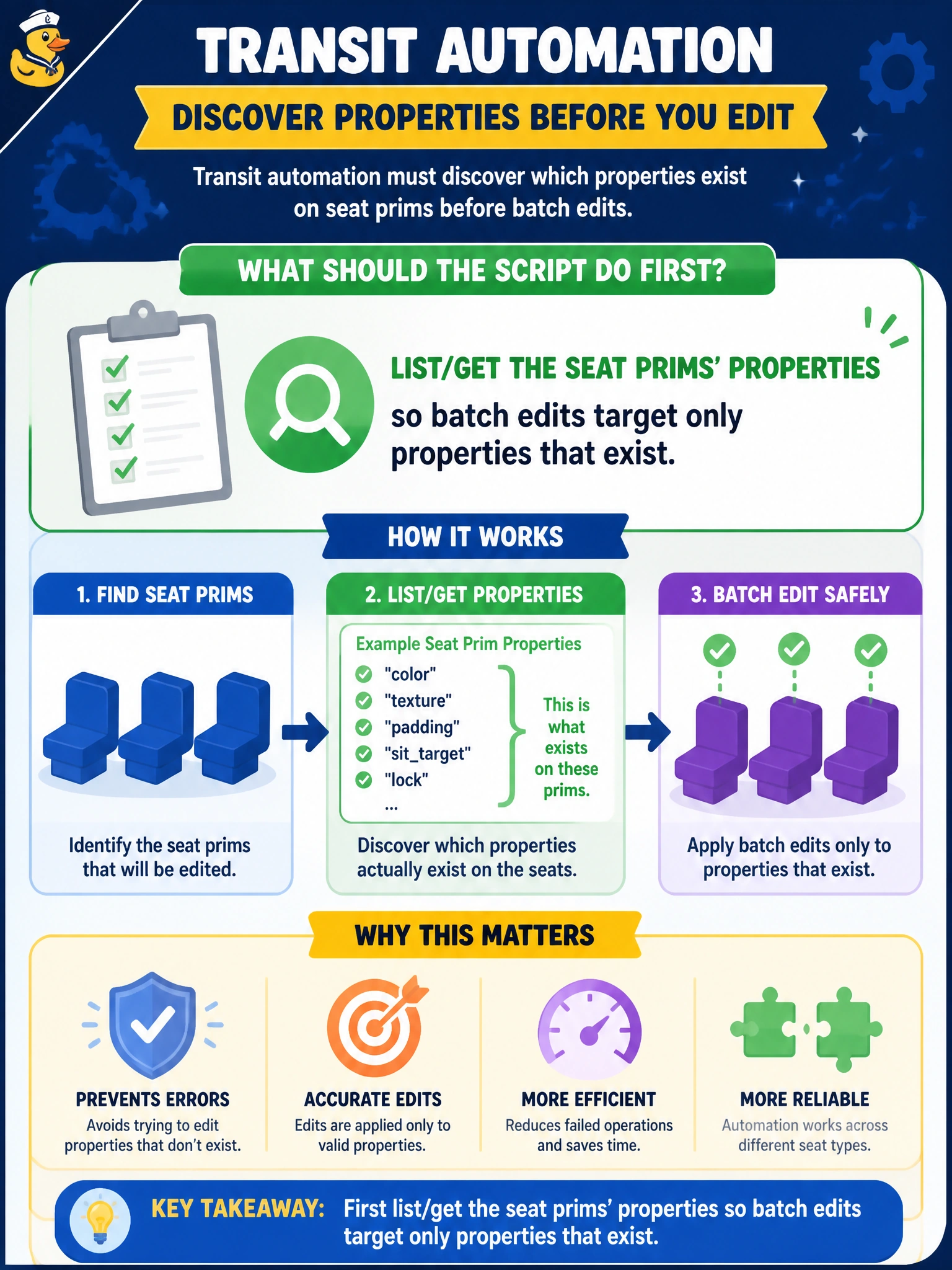
Transit automation must discover which properties exist on seat prims before batch edits. What should the script do first?
Select an answer to reveal the explanation.
Short Explanation
Before batch-editing seats, ask the prim what properties it has. Discovery first, edits second. Guessing private schemas is how you paint the wrong knobs.
Full Explanation
Transit automation that batch-edits seat prims must first discover which properties exist on those prims by listing or getting their properties. Discovery-before-edit prevents writing to missing names, respects schema variation across car classes, and keeps batch jobs from inventing silent overs on the wrong attributes. USD APIs that enumerate properties are the safe entry point for municipal automation.
Applying random overrides to every guessed attribute name pollutes layers and can break materials or transforms unrelated to seats. Flattening the stage and discarding property names destroys the map needed for targeted edits. Assuming every seat shares an undocumented private schema fails as soon as a new vendor car or LOD lands without that schema.
Exam caveat: listing properties may return composed property names; still filter to the edit target you intend to author into. Multi-apply schemas can add properties—re-list after schema apply if your pipeline uses that pattern.
Operational check: run a dry-run script that lists seat prim properties on a sample car, diff against the expected edit set, then apply batch edits only to intersecting names and spot-check a composed stage afterward for unintended overs.