
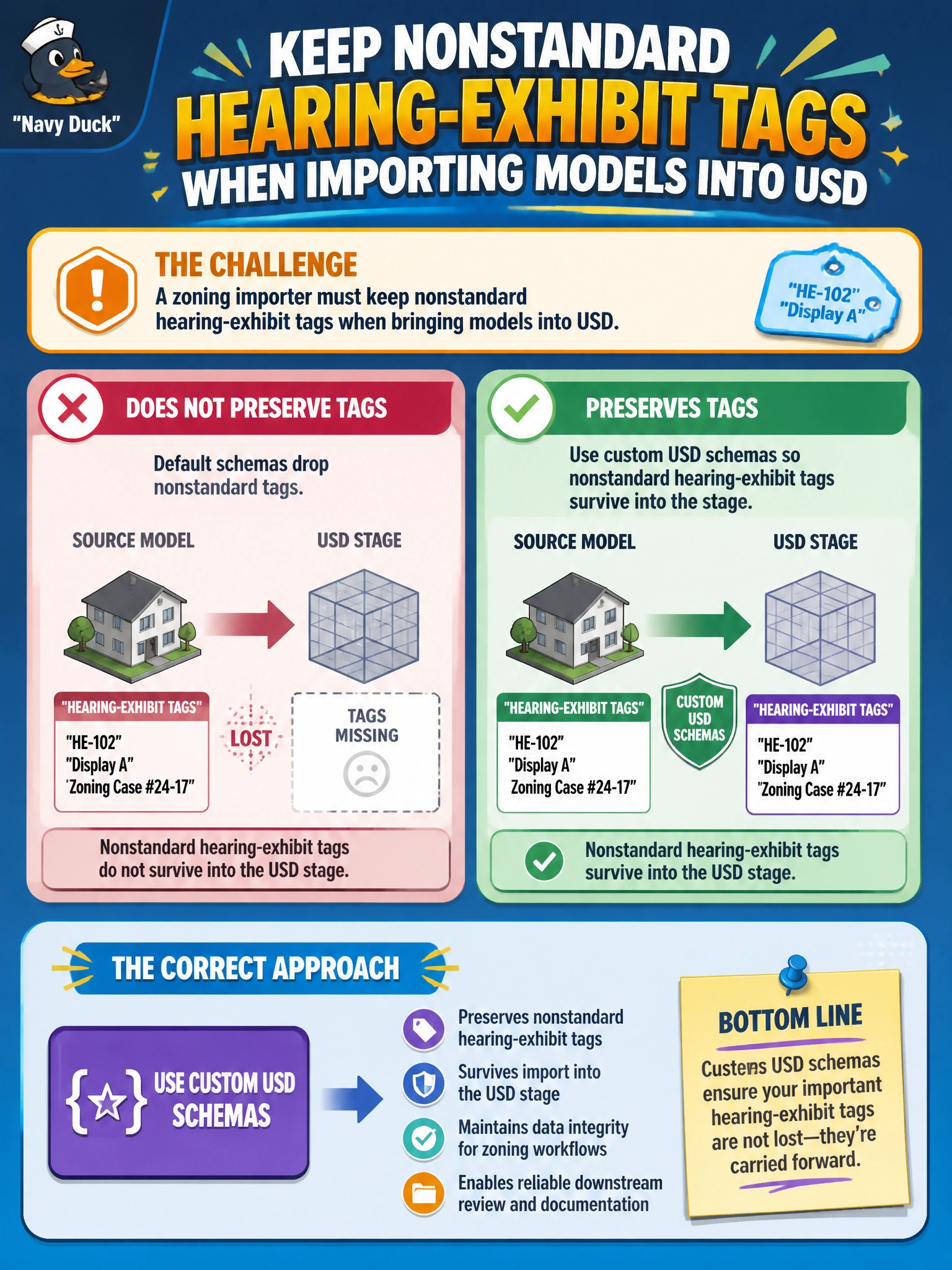
A zoning importer must keep nonstandard hearing-exhibit tags when bringing models into USD. Which approach supports those attributes?
Select an answer to reveal the explanation.
Short Explanation
You can keep hearing-exhibit tags dependable by mapping them through custom USD schemas so they survive import into the stage. That keeps the labels available without relying on later reconstruction or temporary storage.
Full Explanation
A zoning importer that must preserve nonstandard hearing-exhibit tags should use custom USD schemas, allowing the attributes to survive into the USD stage as typed, documented properties. Schema-backed fields remain queryable for exhibits, validators, and downstream hearing packages instead of disappearing at the proprietary-format boundary or being hidden in ad-hoc strings. Dropping all tags on import and recreating them from meeting minutes later invites transcription errors and breaks automation for recurring hearings. Encoding tags only as characters inside mesh point positions misuses geometry data and does not provide a proper metadata transport. Keeping each tag only in the import clipboard cache is temporary and does not write the information into the stage or its metadata, so it cannot reliably persist across workstations or build processes. Exam caveat: version and distribute custom schemas with the municipal USD pipeline so every workstation and build agent interprets the hearing-exhibit tags consistently during import and package validation. Practical check: import a model with known hearing-exhibit tags, confirm schema-backed attributes persist on the expected prims with the correct types, and run a validator that fails when required tags are missing or malformed.