
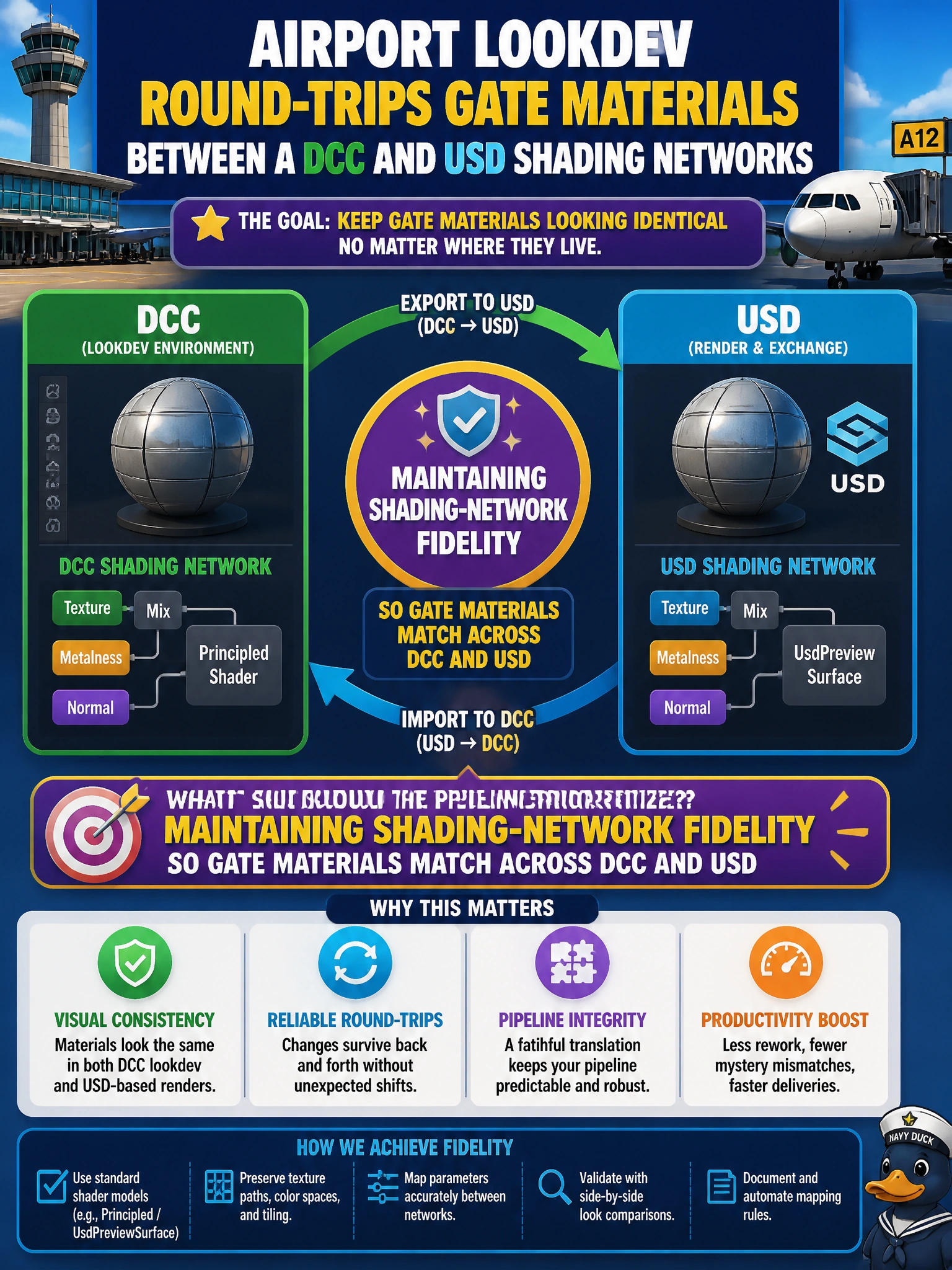
Airport lookdev round-trips gate materials between a DCC and USD shading networks. What should the pipeline prioritize?
Select an answer to reveal the explanation.
Short Explanation
Gate materials have to look the same in the DCC and in USD—think matching paint swatches. Keep shading-network fidelity at the center of the round-trip.
Full Explanation
Airport lookdev that round-trips gate materials between a DCC and USD must prioritize shading-network fidelity so materials match across environments. Gate finishes, signage materials, and safety markings only remain trustworthy if UsdShade networks and DCC graphs stay aligned within agreed tolerances for color, roughness, and texture assignments.
Dropping all UsdShade networks for untyped string colors collapses lookdev to labels without shading structure and fails visual matching. Replacing materials with displayColor on cameras misuses camera prims and abandons gate material networks entirely. Exporting materials as unrelated audio files is not a shading interchange path and severs the stage from lookdev review.
Exam caveat: Some DCC nodes will approximate in UsdShade—document acceptable bake-downs (for example, complex procedural graphs to textures) and lighting assumptions so fidelity review is objective rather than subjective “looks fine.”
Operational check: Round-trip a golden gate material set, compare network topology and rendered swatches in DCC versus USD/Hydra under a fixed lighting rig, and block release when shading fidelity falls outside airport lookdev acceptance criteria.