
Sanitation needs a new trash-can type in an existing street-furniture pointInstancer. What is the correct content-aggregation step?
Select an answer to reveal the explanation.
Short Explanation
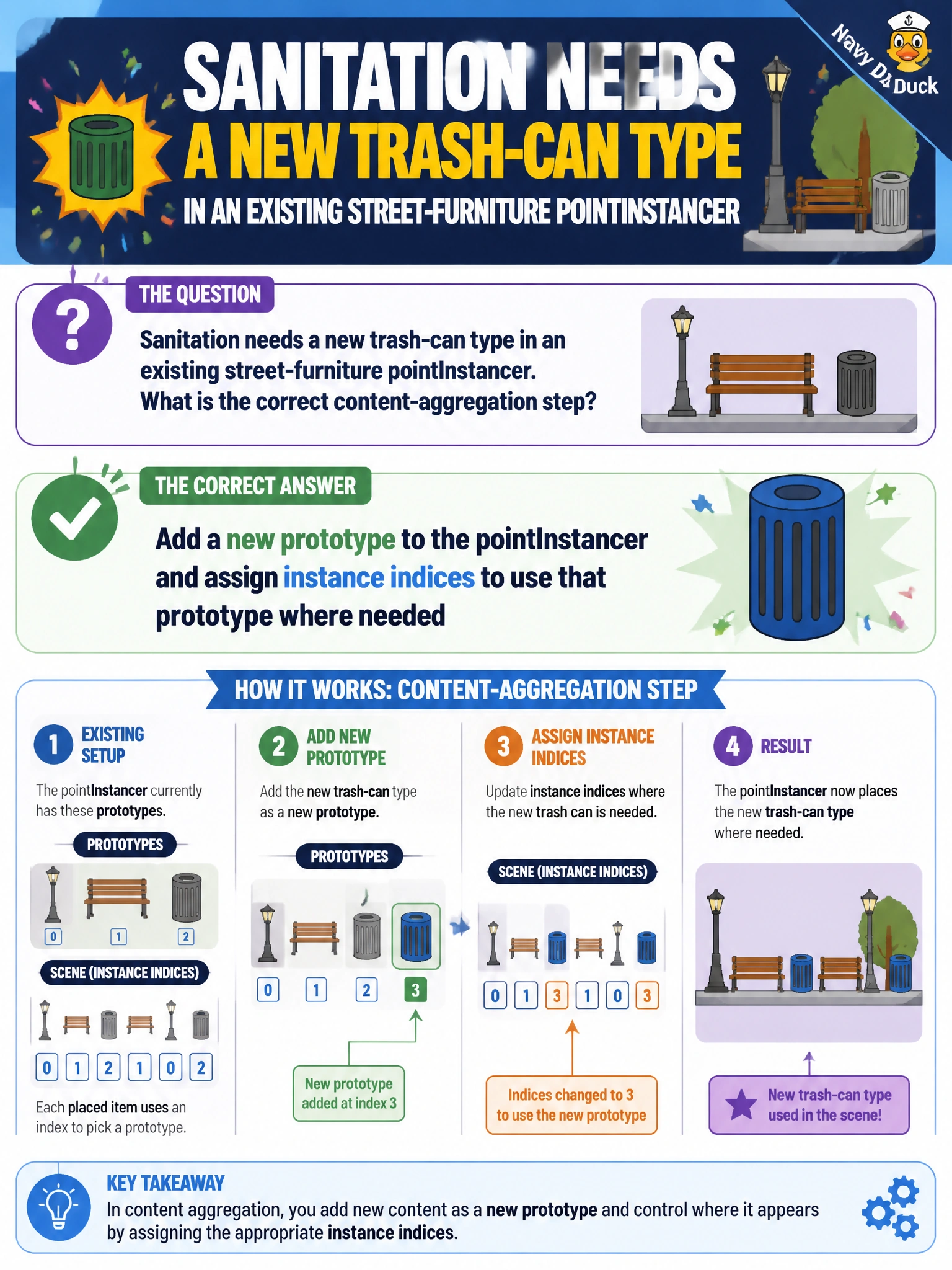
A pointInstancer is a catalog of prototypes plus a list of which spots use which catalog item. Adding a trash-can type means putting a new prototype on the shelf, then pointing some instance indices at it. You don’t rebuild downtown just to add one can style.
Full Explanation
UsdGeomPointInstancer aggregates many instances from a prototype list plus per-instance arrays (indices, transforms, and related data). Sanitation adding a new trash-can type to an existing street-furniture pointInstancer must add a new prototype and assign instance indices to use that prototype where needed. That is incremental content aggregation: extend the catalog, then point selected instances at the new catalog entry—without rebuilding downtown as unique meshes.
Replacing the entire downtown stage with unique meshes for every can destroys instancer scalability. Adding the can only as a muted sublayer opinion with no prototype index never makes instances selectable for that type. Animating trash cans exclusively through specializes without a prototype bypasses PointInstancer aggregation and does not add a prototype-backed instance type.
Exam caveat: prototype order matters—indices refer into the prototype list; inserting prototypes may require remapping existing indices. Operational check: append the new can prototype, map the intended instance indices (and parallel arrays) to that prototype index, recompose, and confirm only those instances show the new can while others remain unchanged. If indices are stale, fix the arrays before blaming materials or LIVERPS.