
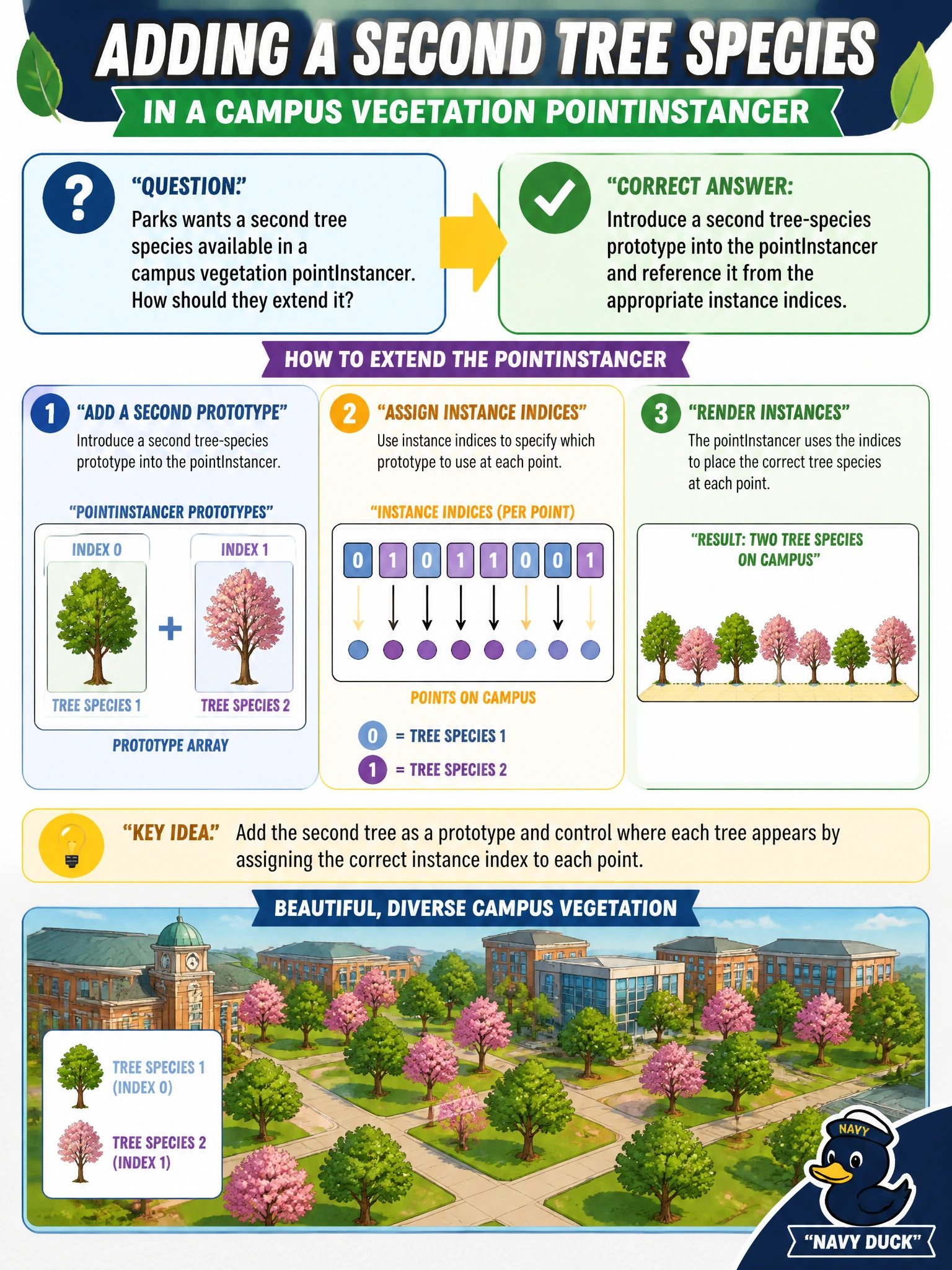
Parks wants a second tree species available in a campus vegetation pointInstancer. How should they extend it?
Select an answer to reveal the explanation.
Short Explanation
Two species means two prototypes on the instancer—like two stamps in a park ranger’s kit. Add the new tree prototype, then stamp it where those instances should grow. Recoloring the old prototype isn’t a second species.
Full Explanation
PointInstancers support multiple prototypes for heterogeneous instance sets. Parks extending a campus vegetation instancer with a second tree species should introduce a second tree-species prototype and reference it from the appropriate instance indices. Two species means two prototypes; selected instances then stamp the correct species without deleting the instancer or faking a species via color alone.
Deleting the pointInstancer and referencing each tree as a payload-only camera abandons instancing and misuses cameras as content stand-ins. Storing the second species only in displayColor on the first prototype does not create a second species—it recolors the first. Using defaultPrim changes alone cannot create new tree geometry or prototypes.
Exam caveat: ensure prototype roots and protocols match what the instancer expects (including any nested references) so the second species actually draws. Operational check: add the species prototype, assign indices for the new trees, validate parallel arrays stay aligned, and view the campus stage to confirm mixed species. If all trees still look identical, indices likely still point at prototype 0—repair indexing rather than painting displayColor as a workaround.