
Permitting wants applicants and reviewers to work simultaneously without stomping each other. Which split unblocks that workflow?
Select an answer to reveal the explanation.
Short Explanation
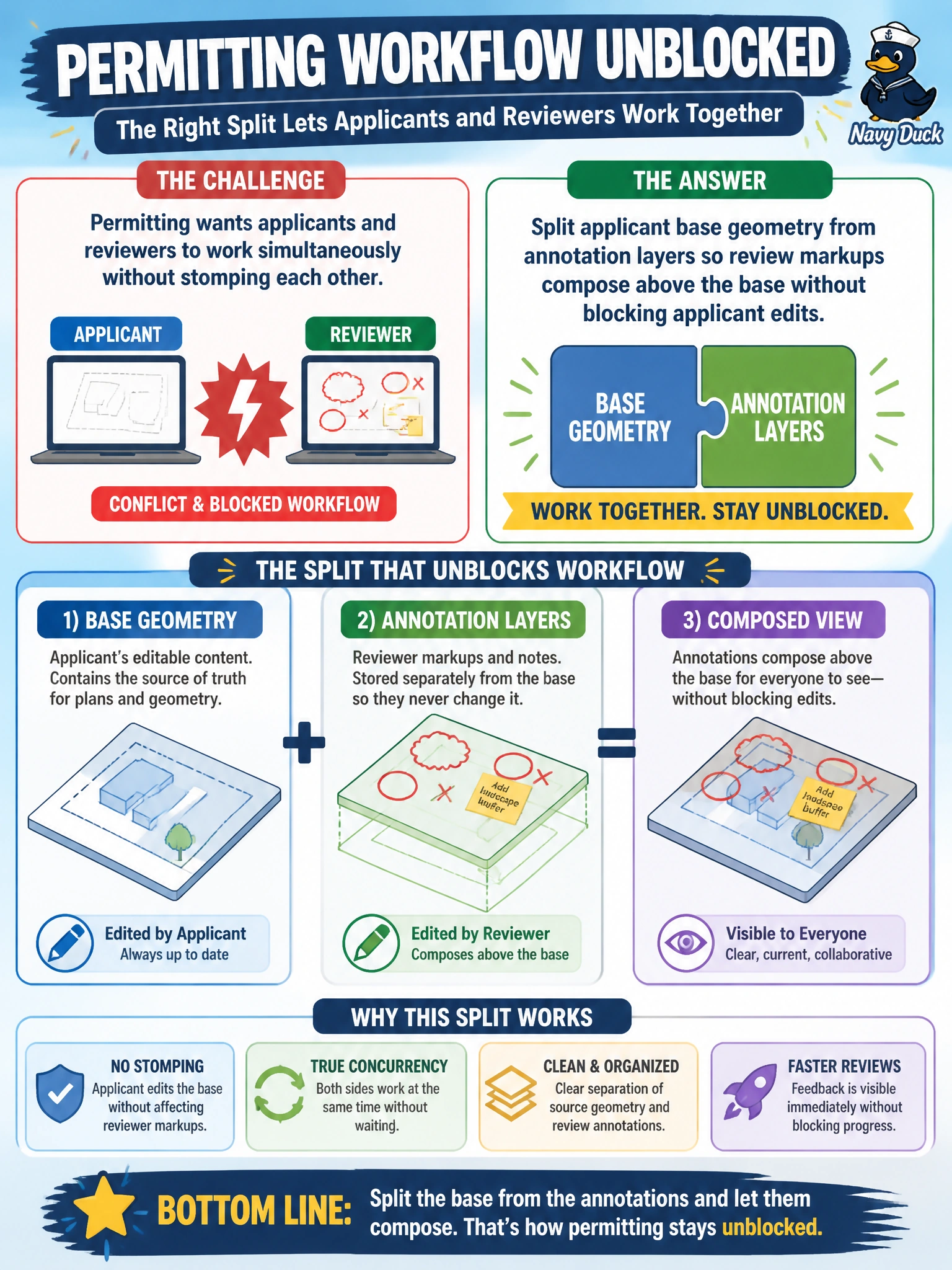
Keep the applicant’s building model on one clipboard and the review sticky notes on another that sits on top. Split base geometry from annotation layers so both sides can move at once. Mixing markups into the base is how simultaneous review turns into a fistfight.
Full Explanation
Permitting unblocks simultaneous applicant and reviewer work by splitting applicant base geometry from annotation layers so review markups compose above the base without blocking applicant edits. Base and markup then have different owners and lifecycles: applicants continue geometry work while reviewers author overs in annotation layers. Composition keeps markups visible without baking them into the applicant’s authoritative model.
Baking reviewer annotations into the applicant base geometry layer permanently couples unrelated workflows and causes stomping. Deleting the applicant base whenever annotations are added destroys the submission. Storing annotations only in a vendor film color script outside USD abandons structured, composable review data in the municipal twin.
Exam caveat: annotation layers still need contribution and appropriate strength so markups appear above base opinions—split alone is not enough if layers are muted or weaker than intended. Operational check: place base geometry and annotations in separate contributing layers; have applicant and reviewer edit at once; confirm markups show on the composed stage without rewriting base prims, and that removing the annotation layer clears markups without deleting the building. That validates the simultaneous-review split.