
Transit inherits a mega station file that stalls concurrent structure, systems, and finish edits. How should leads remodel it for collaborative workstreams?
Select an answer to reveal the explanation.
Short Explanation
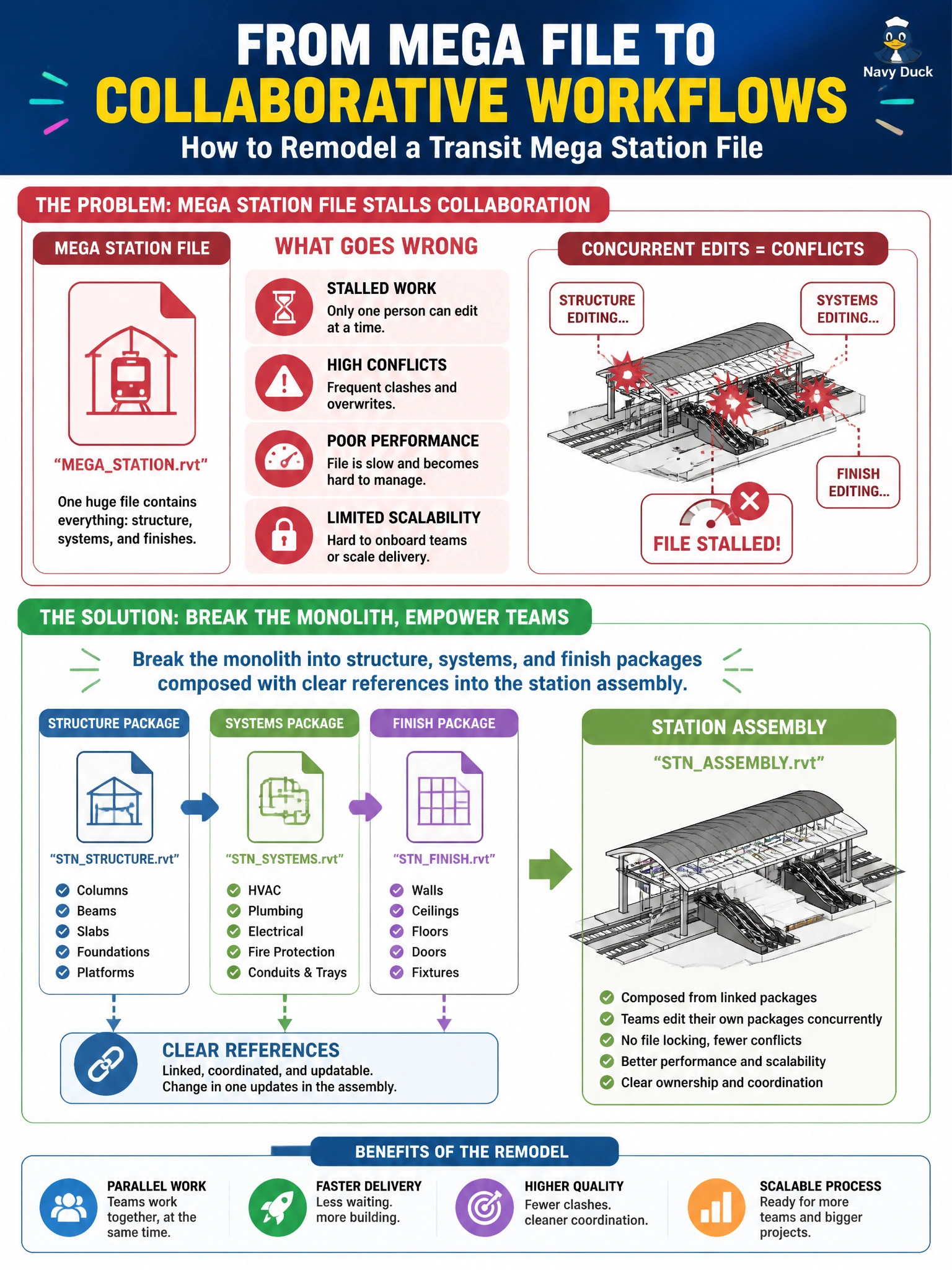
A mega station file is a traffic jam at one gate. Carve it into structure, systems, and finish packages that reference back into the assembly—like separate construction trades with a shared site. Clear packages beat one immovable crate.
Full Explanation
Transit should remodel a mega station file that stalls concurrent structure, systems, and finish edits by breaking the monolith into structure, systems, and finish packages composed with clear references into the station assembly. Modular packages with explicit composition enable parallel trade workstreams while preserving a single integrated station stage for review. Clear references beat one immovable file that serializes every edit.
Inlining every system as duplicated mesh copies inside one root layer recreates the monolith and inflates data. Forbidding references so each department maintains an unrelated disconnected stage loses the integrated station twin. Using a single payload with no departmental boundaries defers loading but does not create collaborative ownership surfaces for concurrent edits.
Exam caveat: payloads can still wrap heavy packages after the split; payloadizing a monolith without ownership boundaries does not fix collaboration. Operational check: extract structure, systems, and finish into referenced packages; open the assembly; confirm each department’s edit target is its package; run a concurrent edit test and verify the composed station updates without exclusive checkout of a single mega file. Document reference entry points so new authors do not re-flatten the station.