
Emergency management wants incident overlays that can disappear after an event while the durable city base remains. Which design fits?
Select an answer to reveal the explanation.
Short Explanation
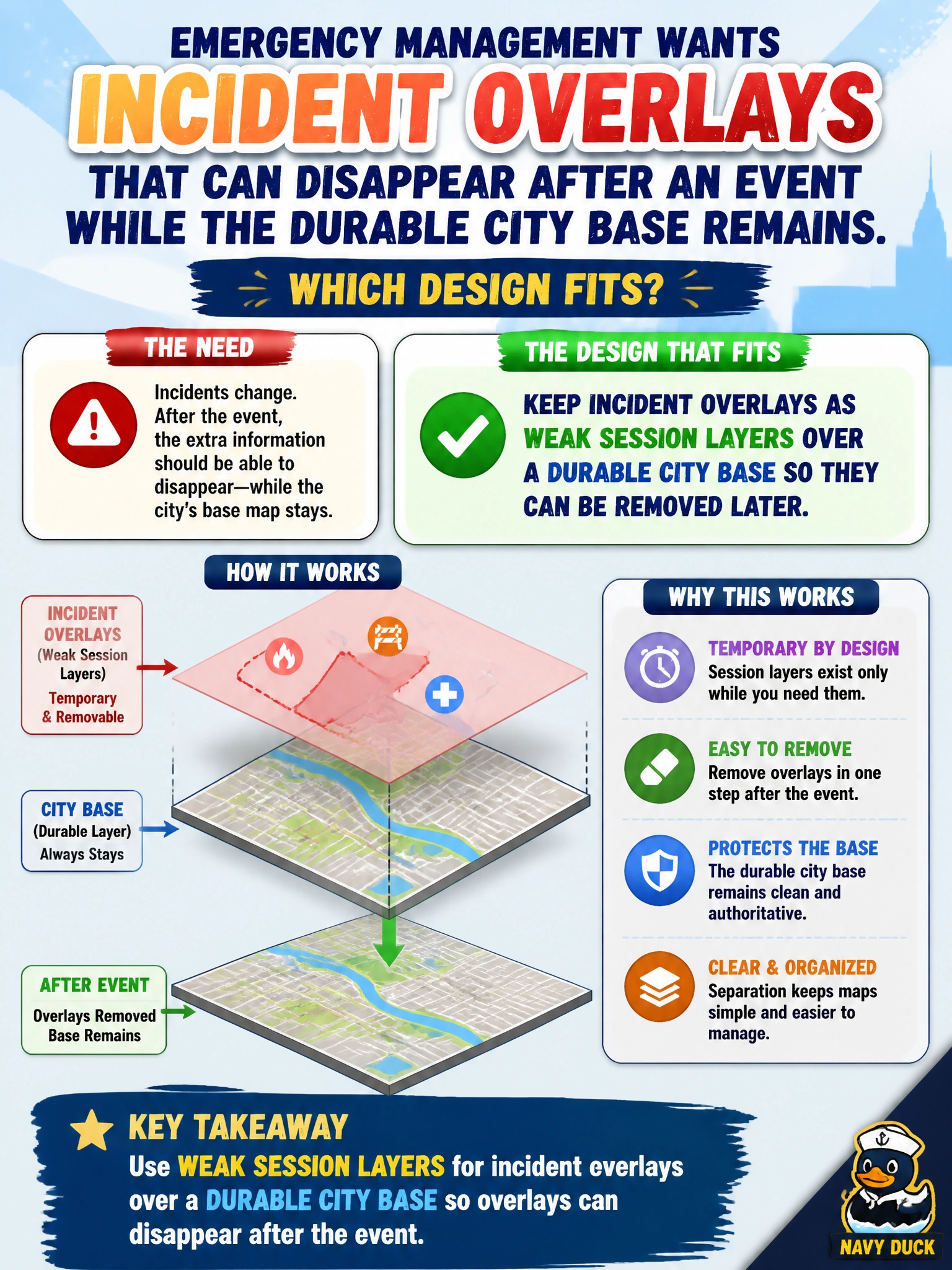
Incidents are temporary weather maps taped over the permanent city atlas. Weak session layers peel off; baking into the base leaves storm debris in the twin forever.
Full Explanation
Temporary incident content must be removable without rewriting the durable city base. Emergency management that wants incident overlays that can disappear after an event while the durable city base remains should keep incident overlays as weak session layers over a durable city base so they can be removed later. Weak session overlays contribute ephemeral ops graphics for the event window, then peel away so the permanent twin stays clean for normal municipal operations.
Baking incident geometry permanently into the city base each time fails conceptually: incidents become permanent debris in the twin and complicate post-event cleanup. Replacing the city base with the incident layer as the new defaultPrim forever fails because a temporary overlay must not become the city’s permanent root identity. Storing incidents only as screenshots in the stage customData fails because screenshots are not interactive composed overlay geometry for ops coordination.
Exam caveat: removable incident ops → weak session overlays over durable base; bake/replace-base/screenshots fail the design. Operational check: during an event, enable the incident session layer and confirm overlays appear; after the event, remove/mute that layer and verify the durable city base is unchanged with no baked incident geometry left behind.