
A new hire on the transit GIS team needs a plain-language map of LIVERPS strength order. Which statement is correct?
Select an answer to reveal the explanation.
Short Explanation
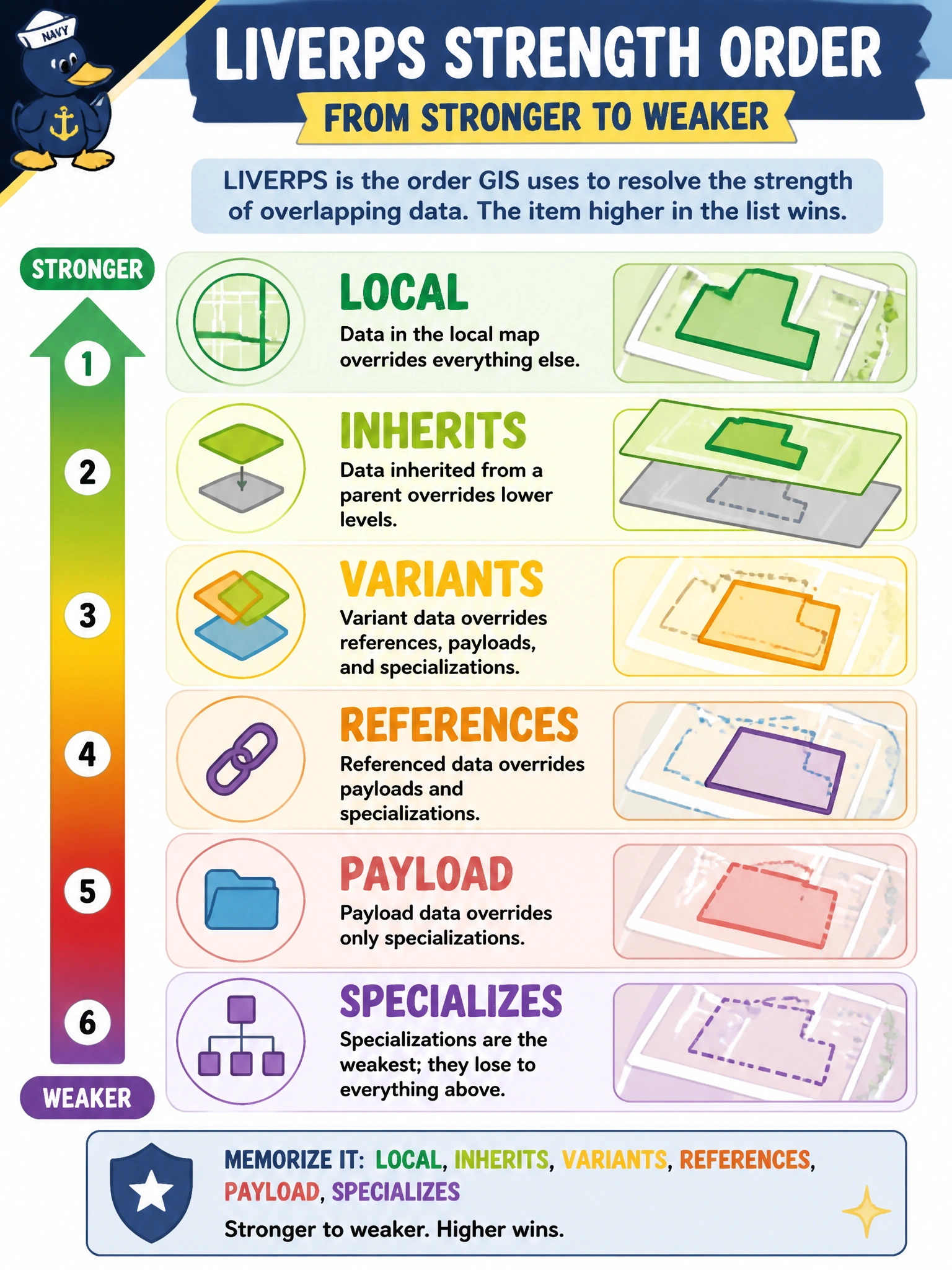
LIVERPS is the strength ladder—Local on top, then Inherits, Variants, References, Payload, Specializes down the rungs. It’s not alphabetical filenames, and payloads don’t magically beat local opinions.
Full Explanation
LIVERPS is the fixed OpenUSD composition strength ordering from stronger to weaker: Local, Inherits, Variants, References, Payload, Specializes. A new hire on the transit GIS team needs that plain-language map: Local opinions outrank Inherits, which outrank Variants, then References, then Payload, then Specializes. Municipal authors use this ladder to predict which civic opinion wins when multiple arcs contribute to the same property—essential for twins that mix local edits, references, and payloads.
Claiming LIVERPS means layers are sorted alphabetically by filename only fails by concept: filename sort is not the LIVERPS arc-strength model (layer stack order is separate from the LIVERPS arc mnemonic). Claiming Payload always beats Local because deferred content is privileged fails because Local is stronger than Payload; deferral is about loading, not supremacy over local opinions. Claiming References and payloads share identical strength with no ordering difference fails because References are stronger than Payload in LIVERPS.
Exam caveat: memorize LIVERPS order exactly; deferral myths and alphabetical filename myths are common traps. Operational check: author a local opinion and a payload opinion on the same attribute, compose, and confirm Local wins; then compare a reference opinion vs payload opinion and confirm Reference outranks Payload, matching the ladder taught to the GIS hire.