
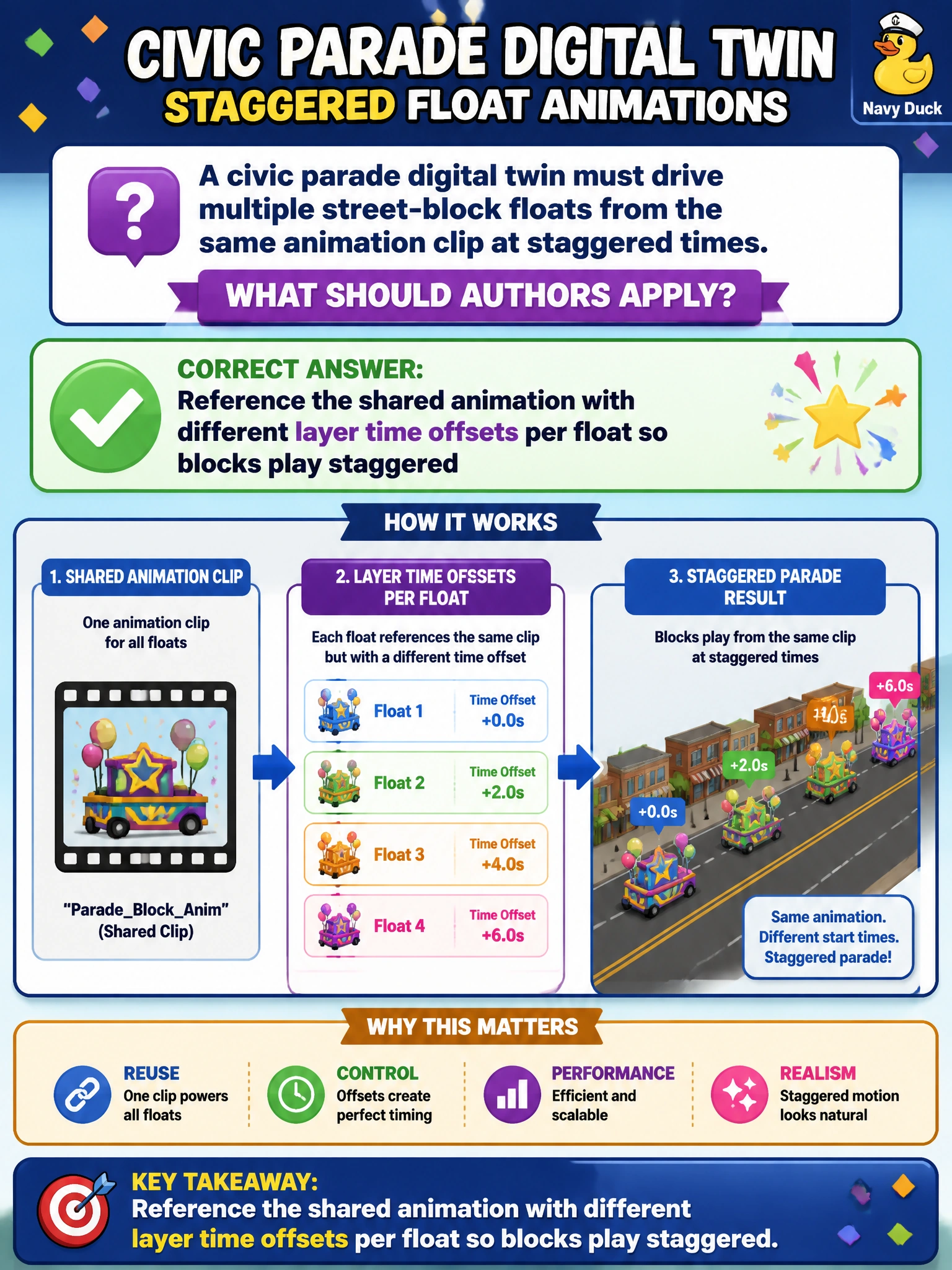
A civic parade digital twin must drive multiple street-block floats from the same animation clip at staggered times. What should authors apply?
Select an answer to reveal the explanation.
Short Explanation
Same parade dance, different starting whistles per block—that’s layer time offsets on shared references. You don’t photocopy the clip or invent morning/afternoon variants just to stagger playback.
Full Explanation
Shared animation with staggered playback is authored with layer/reference time offsets. A civic parade twin that must drive multiple street-block floats from the same animation clip at staggered times should reference the shared animation with different layer time offsets per float so blocks play staggered. One clip asset stays maintainable; each float’s reference offset shifts when that block’s performance starts on the municipal timeline.
Duplicating the clip into unique non-referenced copies with hand-edited frame numbers only in filenames fails by concept: filenames are not timeCodes, and duplicated clips multiply maintenance when the choreography changes. Muting timeCodes so all floats freeze at frame zero fails because freezing removes staggered motion entirely. Using variants named morning/afternoon instead of time offsets fails because variants select alternate opinions/sets—they are not a substitute for temporal offset of a shared clip across blocks.
Exam caveat: staggered reuse of one clip → time offsets on references/layers; variants and filename hacks are distractors. Operational check: reference one parade clip on three floats with distinct offsets, scrub the stage timeline, confirm each float starts at its intended civic cue, then edit the shared clip once and verify all floats pick up the choreography change at their offsets.