
A county assessor updates annual appraisal annotations without baking them into referenced building shells. Which arc choice best fits mutable collaborative overlays?
Select an answer to reveal the explanation.
Short Explanation
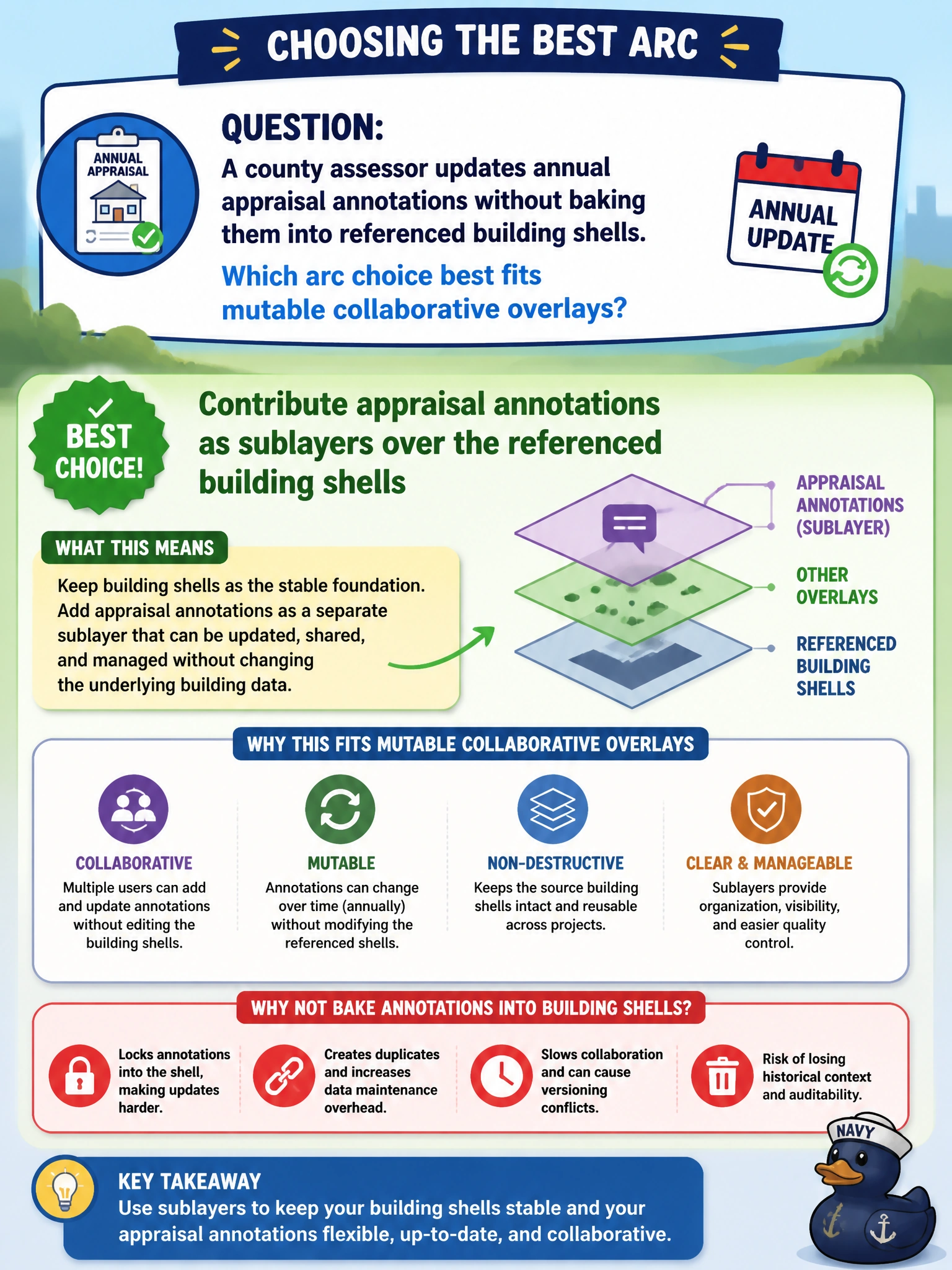
Appraisals change every year; the building geometry shouldn’t. Keep shells referenced and drop annual numbers on as sublayers—like new sticky forms on the same floor plan. Baking into the shell makes next year’s update painful.
Full Explanation
Mutable collaborative overlays should not be baked into durable referenced geometry. A county assessor updating annual appraisal annotations without baking them into referenced building shells should contribute those annotations as sublayers over the referenced building shells. Sublayers let assessor teams revise volatile fiscal opinions yearly while building shells remain reusable referenced assets across systems and years.
Baking appraisal numbers into each building reference every fiscal year fails conceptually: it couples volatile annotations to durable shells, forces mass republishing of building assets, and destroys clean separation of concerns. Replacing building shells with new proprietary formats annually fails because format churn is unrelated to overlay authorship and breaks OpenUSD interoperability. Deleting building references when appraisals change fails because appraisal updates must not destroy the geometric source of truth the twin still needs.
Exam caveat: volatile collaborative data → sublayers; durable reusable shells → references; bake/delete/format-swap are wrong levers. Operational check: ship year N appraisal as a sublayer over unchanged building references; for year N+1, swap or revise the appraisal sublayer only; confirm building shell asset versions remain stable and composed appraisal values update without re-referencing every shell.