
Emergency management always needs hydrant assets in the working set but rarely needs hazmat placards. How should payloads vs references be chosen?
Select an answer to reveal the explanation.
Short Explanation
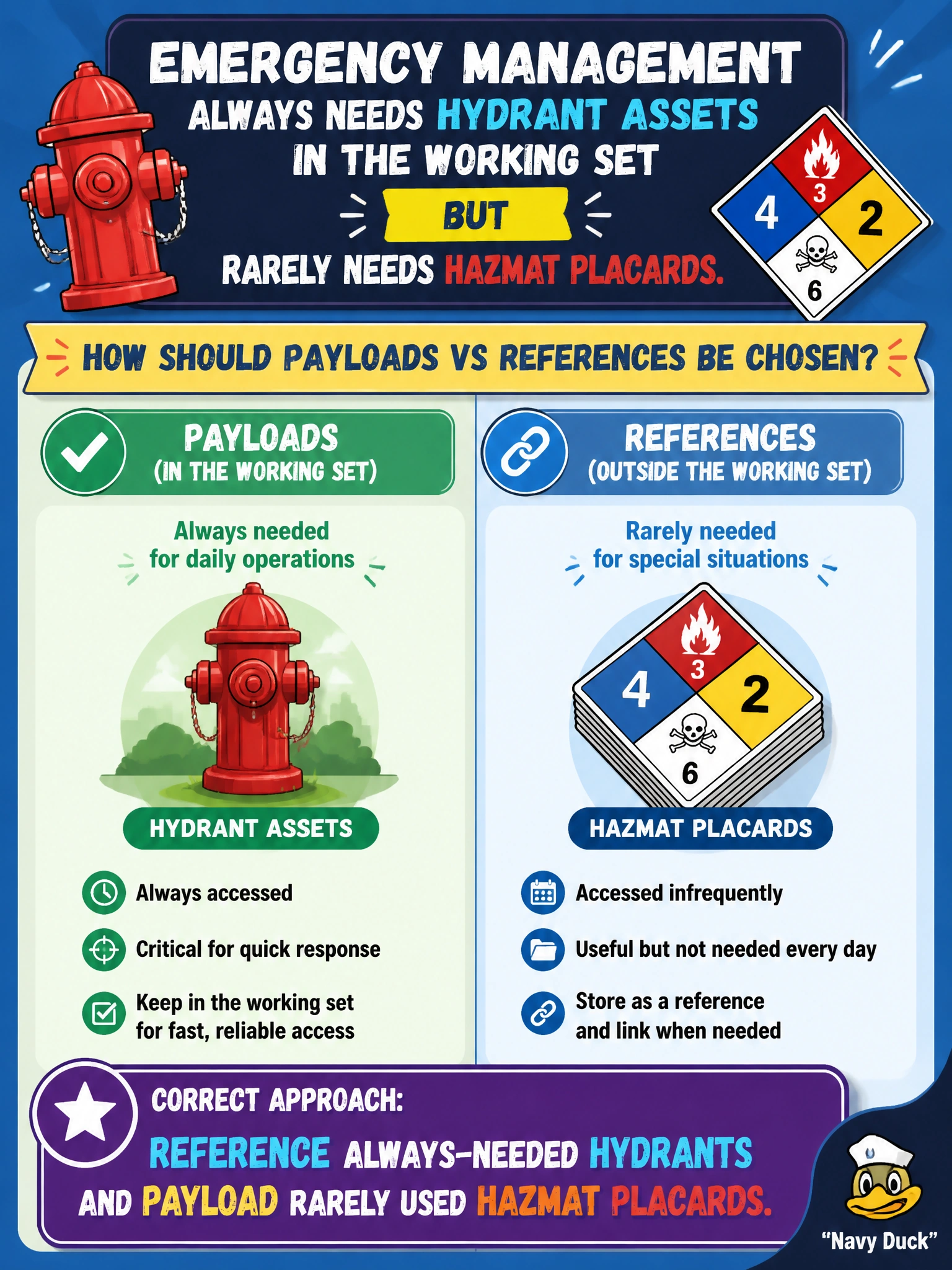
Hydrants are always on the truck—keep them referenced in the working set. Hazmat placards are the rarely opened toolbox—payload those. Swapping that policy loads the wrong stuff first on drill day.
Full Explanation
Working-set policy should drive reference vs payload choice. Emergency management that always needs hydrant assets in the working set but rarely needs hazmat placards should reference always-needed hydrants and payload rarely used hazmat placards. References keep critical hydrants composed for drills and response maps; payloads defer uncommon placard content until a scenario actually requires it, keeping cold starts lean without losing access to hazmat graphics.
Payloading hydrants and hard-referencing every hazmat placard for cold start fails by reversing priority: deferring always-needed hydrants risks missing them at open, while eagerly referencing rare placards taxes the working set. Sublayering both so working-set policy cannot differ fails because identical sublayer treatment removes the ability to distinguish always-on vs deferred civic content. Storing hydrants as variants of the placard asset to save arcs fails because variants express option sets on an asset, not working-set load policy, and couples unrelated asset families incorrectly.
Exam caveat: always-needed → reference; rarely needed/heavy → payload; variants are not a load-policy shortcut. Operational check: cold-open the emergency stage and confirm hydrants resolve without manual payload loads; confirm hazmat placards remain deferred until a drill scenario loads them; time the open and verify response maps show hydrants immediately.