
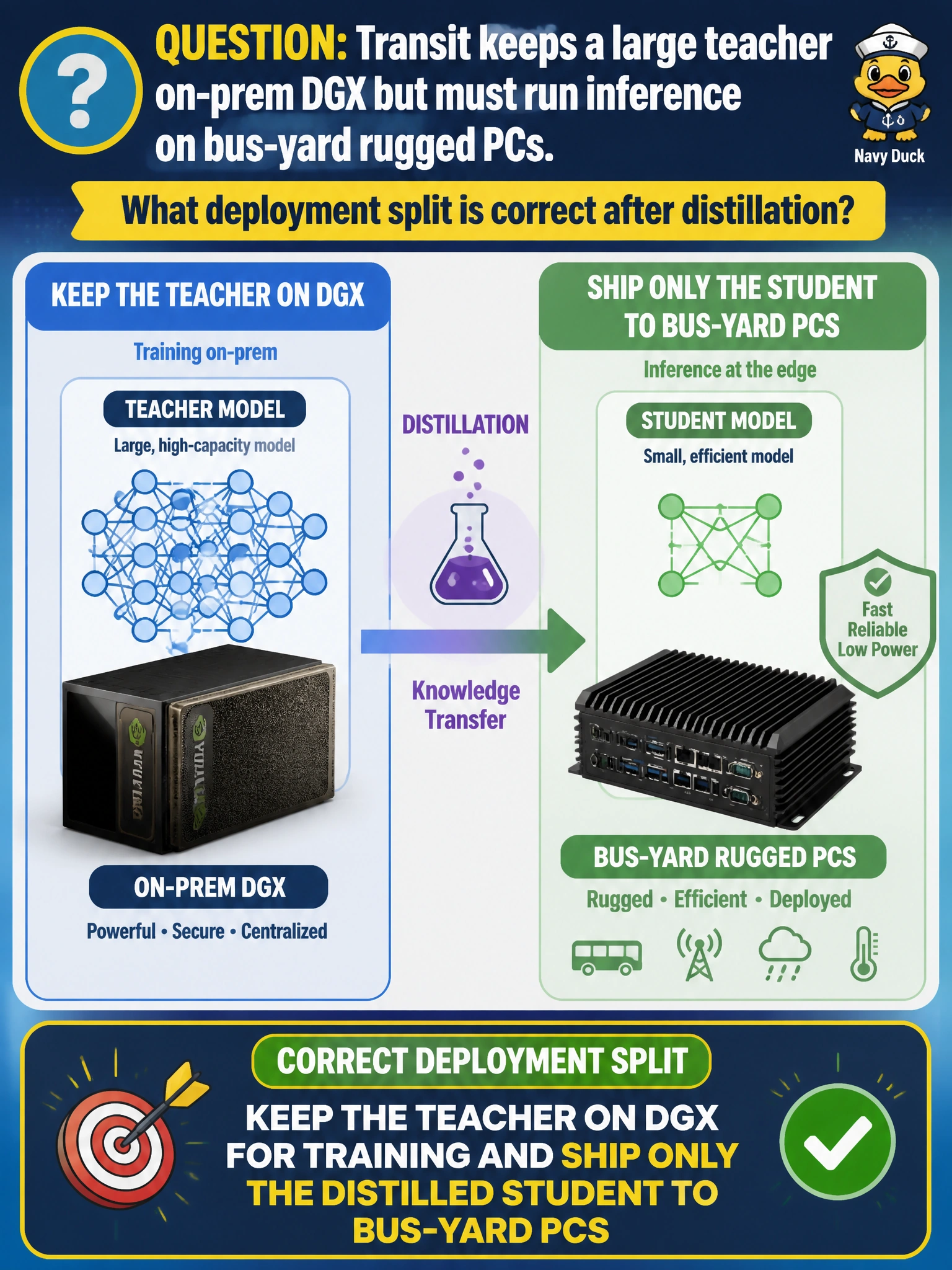
Transit keeps a large teacher on-prem DGX but must run inference on bus-yard rugged PCs. What deployment split is correct after distillation?
Select an answer to reveal the explanation.
Short Explanation
Teachers stay in the DGX classroom; students ride out to the bus yard. Distill once on-prem, then ship only the small model to rugged PCs.
Full Explanation
After distillation, deployment roles split: the large teacher remains on capable on-prem DGX resources for continued training or refresh, while only the distilled student is shipped to bus-yard rugged PCs for inference. Keeping the teacher on DGX for training and shipping only the distilled student to the bus-yard PCs matches transit operational constraints—rugged PCs lack the memory and interconnect of DGX. Requiring every rugged PC to load the full teacher weights recreates the original footprint problem distillation was meant to solve. Deleting the student and streaming teacher weights over LTE each query is bandwidth-heavy, fragile outdoors, and still expects teacher-scale compute at the edge. Running the teacher exclusively on the bus radio firmware is not a viable LLM hosting environment and confuses radio systems with model serving. Exam caveat: students drift as schedules and policies change—plan periodic redistillation or adapter refresh from the on-prem teacher rather than treating the yard PC image as permanently static. Operational check: verify yard PCs load only student checkpoints, measure offline inference success without LTE, and schedule a DGX refresh job that republishes students after GTFS or policy updates.