
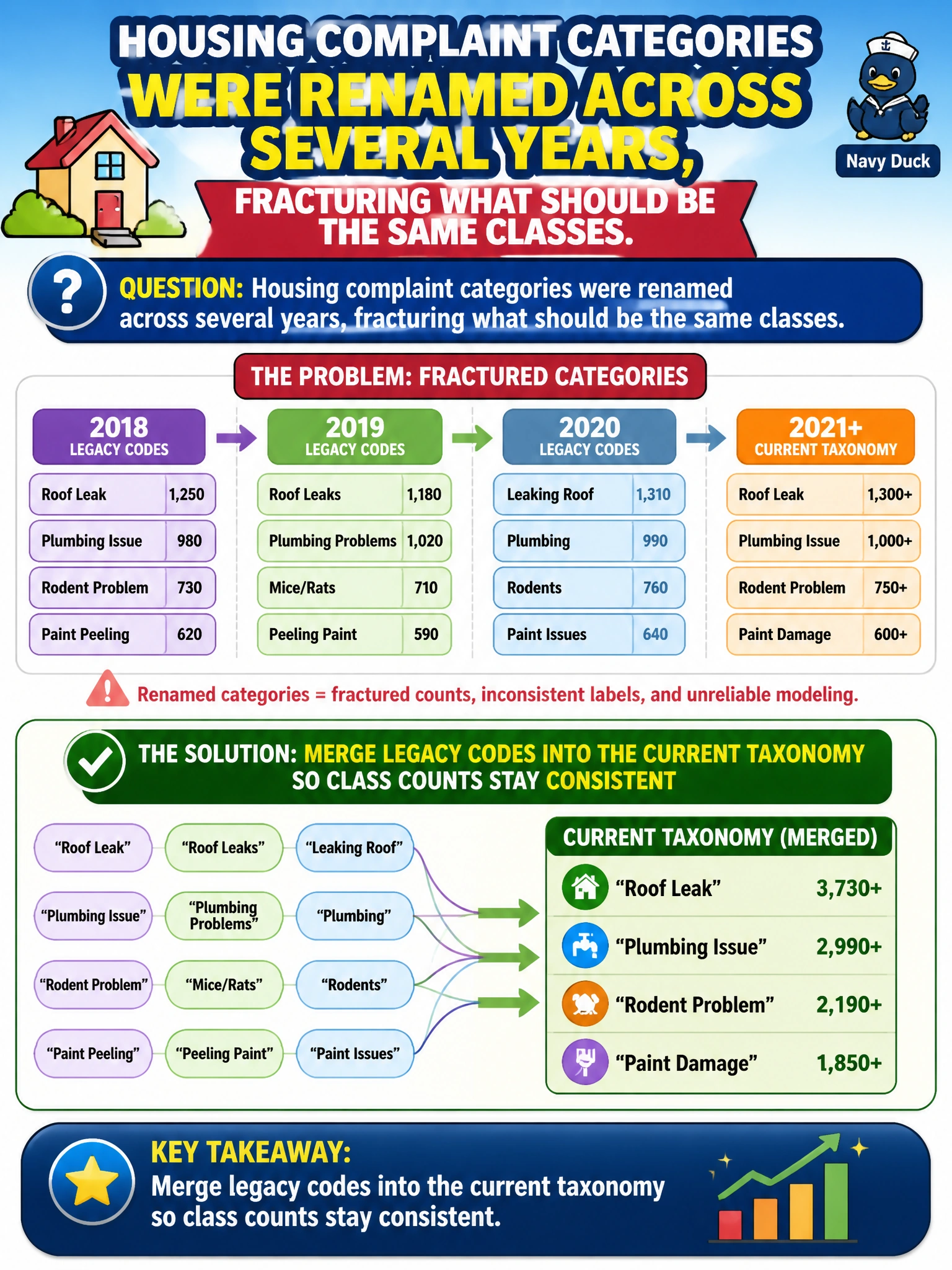
Housing complaint categories were renamed across several years, fracturing what should be the same classes. How should curators prepare the labeled set?
Select an answer to reveal the explanation.
Short Explanation
When old and new housing codes describe the same issue, you can bring them together under one current label. Merge the legacy codes into today’s taxonomy so the classes stay consistent.
Full Explanation
When housing complaint categories are renamed across years, you should merge legacy codes into the current taxonomy so class counts remain consistent. Historical labels that describe the same civic issue should map to one modeling class; otherwise, the labeled set is fractured and metrics divide signal across duplicate categories. Keeping each year’s original code as a separate label, even when definitions are identical, inflates the label space with duplicates and leaves fewer examples supporting each synonymous class. Deleting all pre-rename years removes valuable history rather than preserving older civic patterns through remapping. Randomly shuffling category strings each epoch destroys label meaning and corrupts supervised training; it does not create meaningful robustness. Exam caveat: harmonization needs a documented crosswalk reviewed by housing operations, and ambiguous legacy codes should be flagged for human remapping rather than forced into an incorrect current category. Practical check: publish the legacy-to-current crosswalk, recompute class counts after merging, confirm that formerly split synonyms share one label, and version the mapping with the dataset release.