
Housing caseworkers need a reusable prompt wrapper for eviction-resource chat that sets role, tone, and prohibited-advice boundaries. What should that template include?
Select an answer to reveal the explanation.
Short Explanation
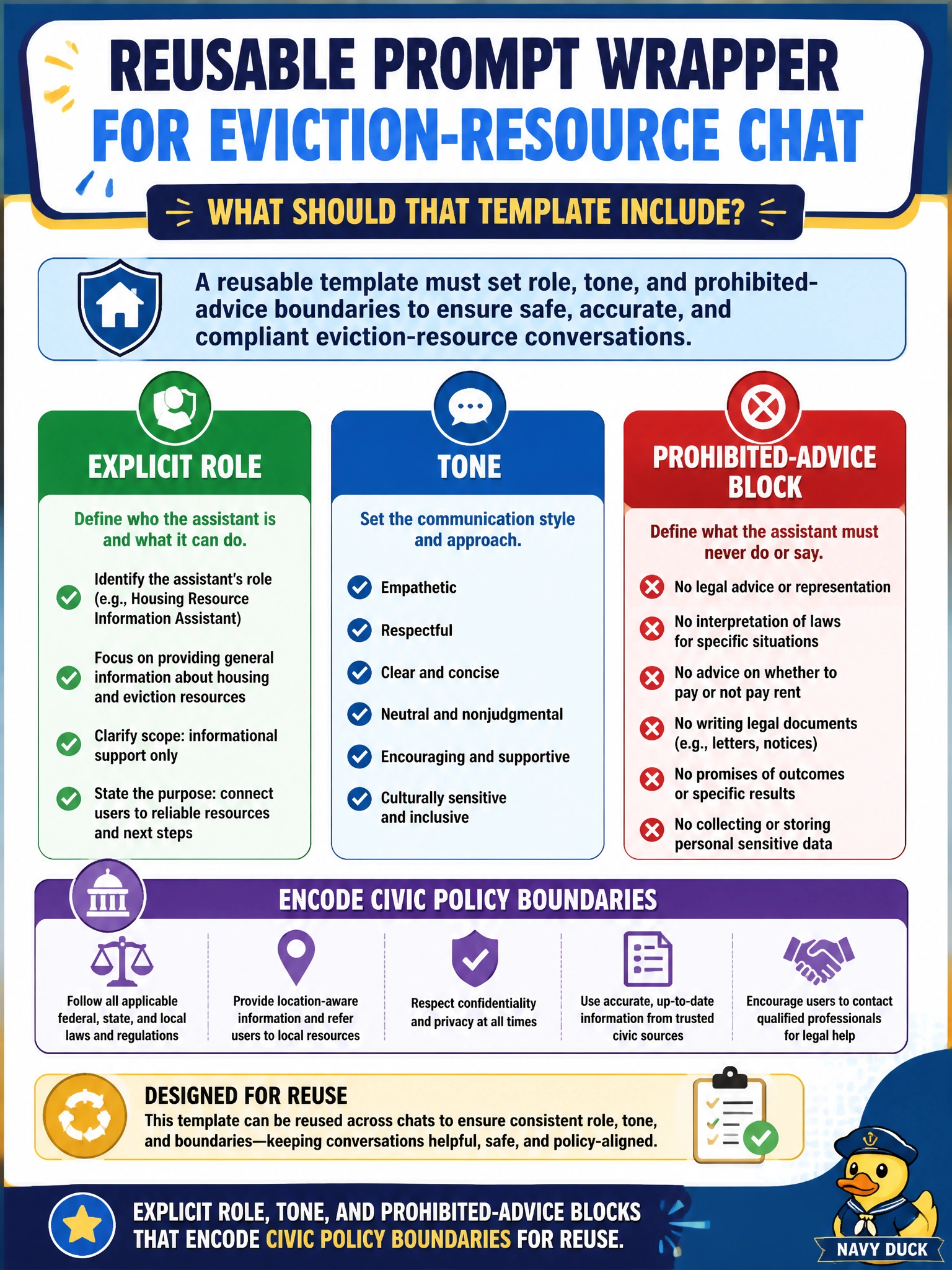
Think of the wrapper as the caseworker’s laminated cheat sheet: who the bot is, how it should sound, and what advice is off-limits. Those role, tone, and prohibited-advice blocks travel with every chat. A blank system prompt—or nudging illegal guarantees—throws the boundaries away.
Full Explanation
Housing caseworkers need a reusable prompt wrapper for eviction-resource chat that encodes who the assistant is, how it should sound, and what it must not advise. Explicit role, tone, and prohibited-advice blocks capture civic policy boundaries—directing residents to resources without implying the agency provides binding legal counsel or guarantees outcomes—and travel with every session as a stable system layer. That reuse keeps intake chats consistent across shifts and vendors. A blank user message with no system role or policy text leaves boundaries undefined and invites inconsistent, risky replies under stressful tenant circumstances. Instructing the model to offer binding legal representation the agency cannot provide creates liability and false expectations. A rule to ignore tone and invent out-of-scope financial guarantees similarly violates housing-agency policy and consumer-protection norms. Exam caveat: wrappers must stay aligned with counsel-approved scripts and be versioned when eviction law, court procedures, or local resource directories change. Operational check: red-team prompts that solicit legal representation or payment guarantees, confirm refusals plus resource referrals, review tone samples for trauma-informed civic communication, and turn prohibited-advice blocks into automated evaluation cases before each release.