
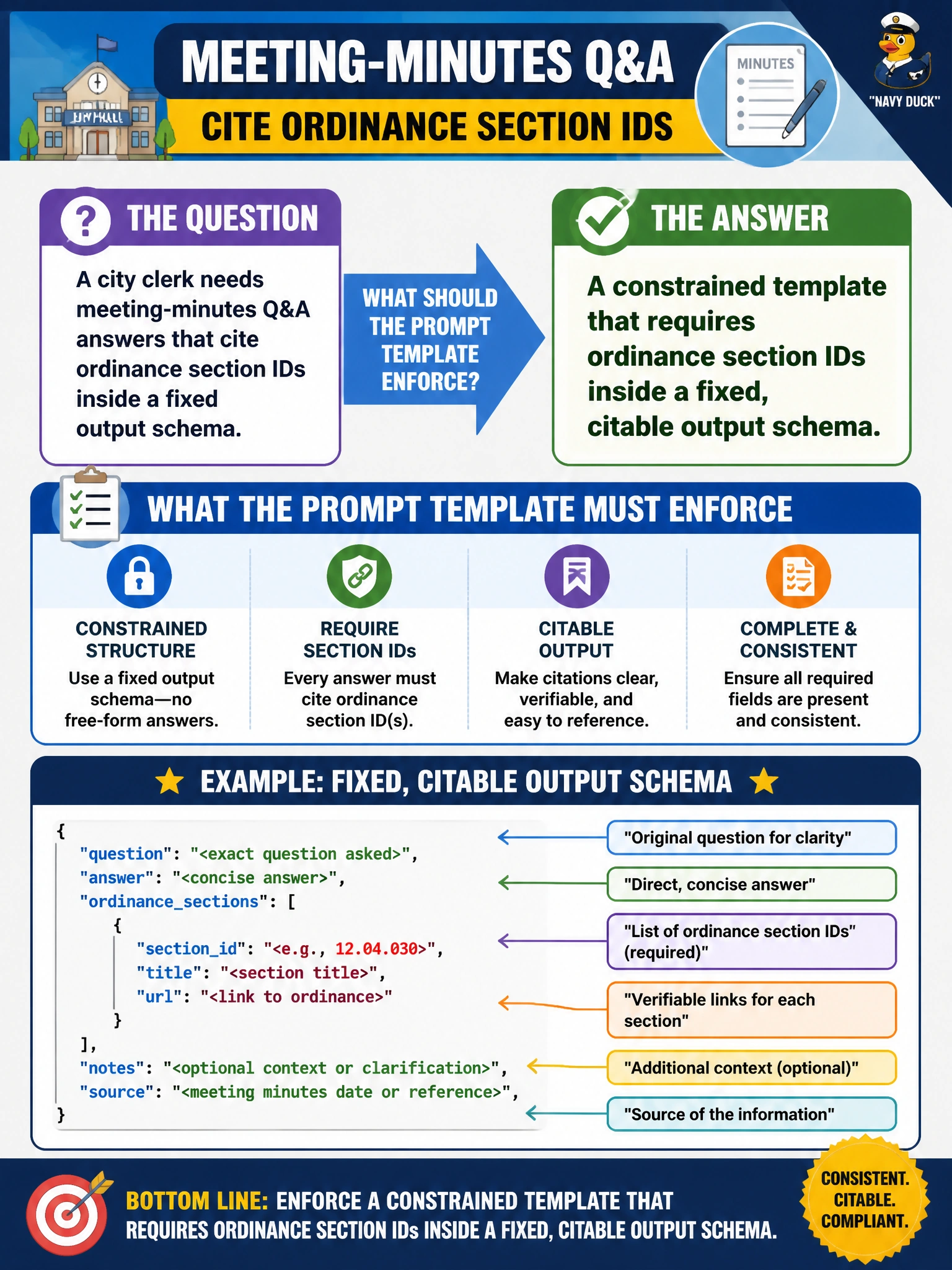
A city clerk needs meeting-minutes Q&A answers that cite ordinance section IDs inside a fixed output schema. What should the prompt template enforce?
Select an answer to reveal the explanation.
Short Explanation
You need answers clerks can verify, so use a constrained template with required fields and a place for the ordinance section ID. Free-form essays, invented ordinance numbers, and slang summaries without citation structure leave residents with guidance they can’t trace.
Full Explanation
A city clerk handling meeting-minutes Q&A should enforce a constrained prompt template with required fields and an explicit place for ordinance section IDs. It should also specify “not found” or refusal behavior when retrieval provides no citation, keeping answers auditable for municipal records, public-information requests, and later council follow-ups. The template sets the expected shape of a citable answer before heavier decoding constraints are considered. Free-form essays with no section IDs and no schema fields fail audit needs and make answers hard to verify against the code. Answers that invent ordinance numbers when none are retrieved create false legal citations and serious trust and compliance risks. Schema-free slang summaries that omit citation structure fail to provide the citable guidance residents, journalists, and attorneys may need to challenge or rely on. Exam caveat: a template is necessary but not sufficient; pair it with retrieval grounding and, optionally, constrained decoding or validators that check section ID formats against the live ordinance corpus. Practical check: automatically validate each answer against the schema, verify that cited sections exist in the ordinance index, escalate when required citation fields cannot be filled, and retain logs linking answers to retrieved chunks for records retention.