
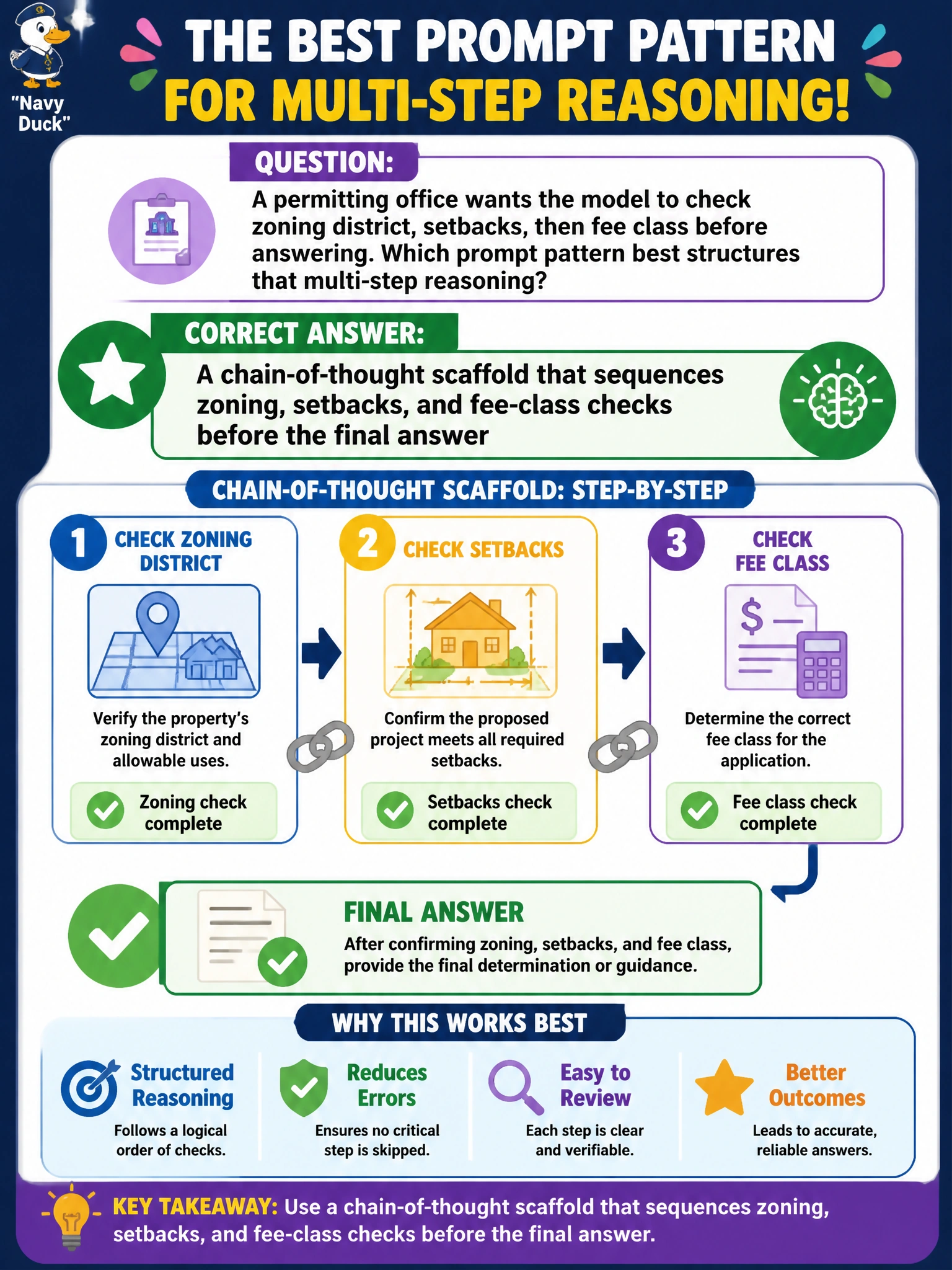
A permitting office wants the model to check zoning district, setbacks, then fee class before answering. Which prompt pattern best structures that multi-step reasoning?
Select an answer to reveal the explanation.
Short Explanation
You can treat permitting as a checklist, not a coin flip. A chain-of-thought scaffold guides the model through zoning, setbacks, and fee class before it answers. A yes/no prompt, skipping zoning, or guessing a fee from slogans can leave you with shaky guidance.
Full Explanation
Your permitting workflow requires an ordered check of zoning district, setbacks, and fee class before an answer is given. A chain-of-thought scaffold that sequences zoning first, setbacks next, and fee class last structures the model’s intermediate policy work like a counter clerk’s checklist. This helps prevent skipped prerequisites and incoherent fee guidance that can frustrate applicants. A single yes/no prompt with no intermediate checks omits the required municipal procedure and hides how the answer was reached. Forbidding mention of zoning so the model jumps straight to fees breaks the dependency order and can lead to pricing for the wrong district. Asking only for a random fee class sampled from marketing slogans is not a valid permitting method and invents charges. Exam caveat: chain-of-thought can expose sensitive reasoning in logs, so production systems may use hidden scratchpads or structured tool calls while preserving the ordered checks against GIS and fee schedules. Practical check: evaluate traces for the presence and order of zoning, setback, and fee steps; reject answers that miss a step, and align the scaffold with the official permitting SOP and fee ordinance.