
City monitoring alerts that fabric manager is inactive after image sync omitted enabling the unit. What should ops ensure?
Select an answer to reveal the explanation.
Short Explanation
Image sync that forgets to enable fabric manager leaves NVSwitch cold—bake the unit enable into the civic image. Calling inactive fabric “normal” invites the next training outage.
Full Explanation
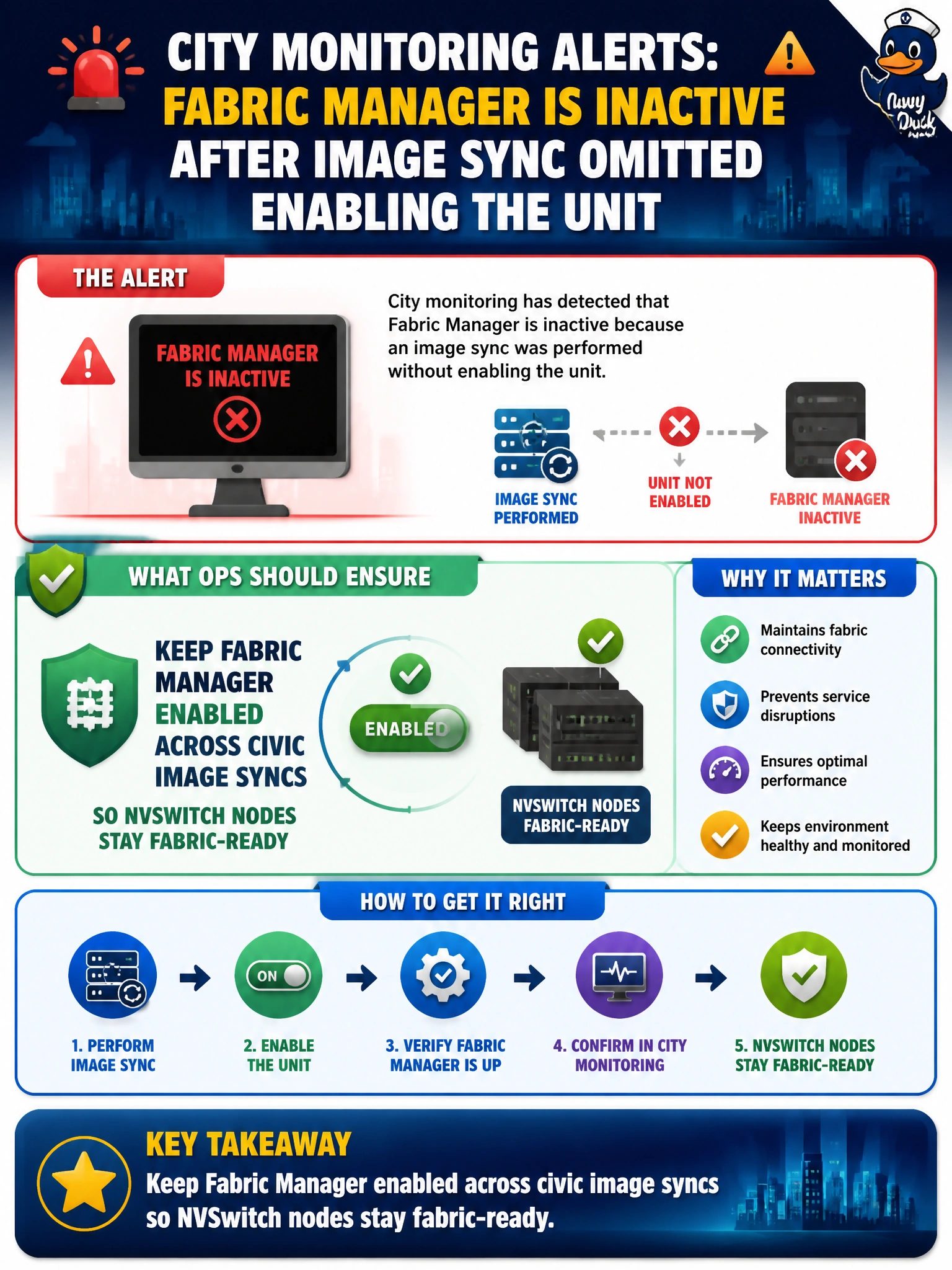
City monitoring that alerts fabric manager inactive after image sync omitted enabling the unit means ops must keep fabric manager enabled across civic image syncs so NVSwitch nodes stay fabric-ready. Golden image and BCM sync pipelines can overwrite systemd enablement; if the unit is left disabled, NVSwitch nodes boot without fabric supervision even though packages are present. Baking enablement into the image/sync post-steps prevents recurring inactive alerts.
Leaving the unit disabled after every sync to reduce boot time fails by concept: seconds of boot are not worth losing NVLink/NVSwitch readiness for dense training. Masking fabric manager permanently in the golden image fails the NVSwitch role entirely. Treating inactive fabric manager as a normal post-sync state fails operations—inactive is an alert condition on fabric nodes, not an expected steady state.
Exam caveat: package installed is not the same as unit enabled and running. Exam items often separate "present after sync" from "active on boot." Also limit enablement to NVSwitch roles so non-fabric nodes are not forced into noisy units.
Operational check: update the civic image sync playbooks to enable and start fabric manager on NVSwitch categories, re-sync a canary node, reboot, confirm the unit is enabled/active, clear the monitoring alert, and add a post-sync compliance check that fails the change if fabric manager is inactive on those nodes.