
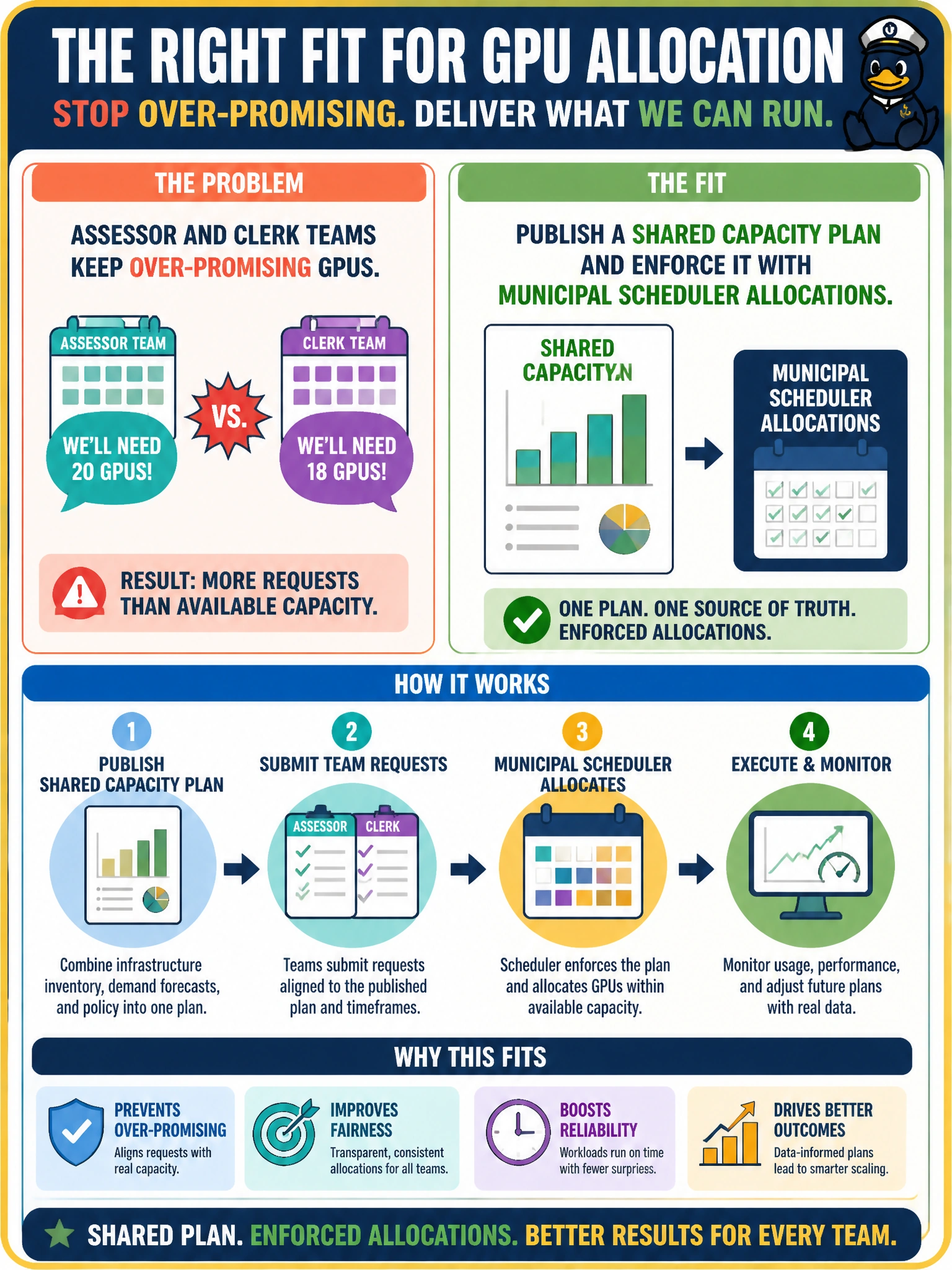
Assessor and clerk teams keep over-promising GPUs. What cross-team allocation practice fits?
Select an answer to reveal the explanation.
Short Explanation
A published capacity plan plus scheduler enforcement stops assessor and clerk over-promises—shared map, shared rules. Verbal unlimited promises are how county demos collide.
Full Explanation
Publishing a shared capacity plan and enforcing it with municipal scheduler allocations fits assessor and clerk teams that over-promise GPUs. A written plan states total GPUs, reserved shares, burst rules, and owners; Run:ai quotas, Slurm Accounts/fairshare, or Kubernetes ResourceQuotas then enforce that plan so meeting promises cannot exceed physical and policy reality.
Letting each team advertise unlimited capacity with no shared plan fails by overcommit: marketing is not inventory. Hiding cluster size so promises stay optimistic fails by transparency—concealment encourages collision. Promising GPUs verbally in meetings without binding scheduler quotas fails by enforceability: talk without quotas is how demos collide on the same devices.
Exam caveat: a published plan must match what the schedulers actually enforce. If quotas drift from the document, over-promise returns. Also distinguish guaranteed capacity from opportunistic burst so departments do not treat burst as a permanent promise.
Operational check: publish the assessor/clerk capacity plan, encode it in scheduler quotas, run a contention test where both teams submit peak asks, and show leadership that enforcement matches the published numbers.