
DGX-class civic systems should warn about fan and PSU problems before models fail loudly. What tool fits?
Select an answer to reveal the explanation.
Short Explanation
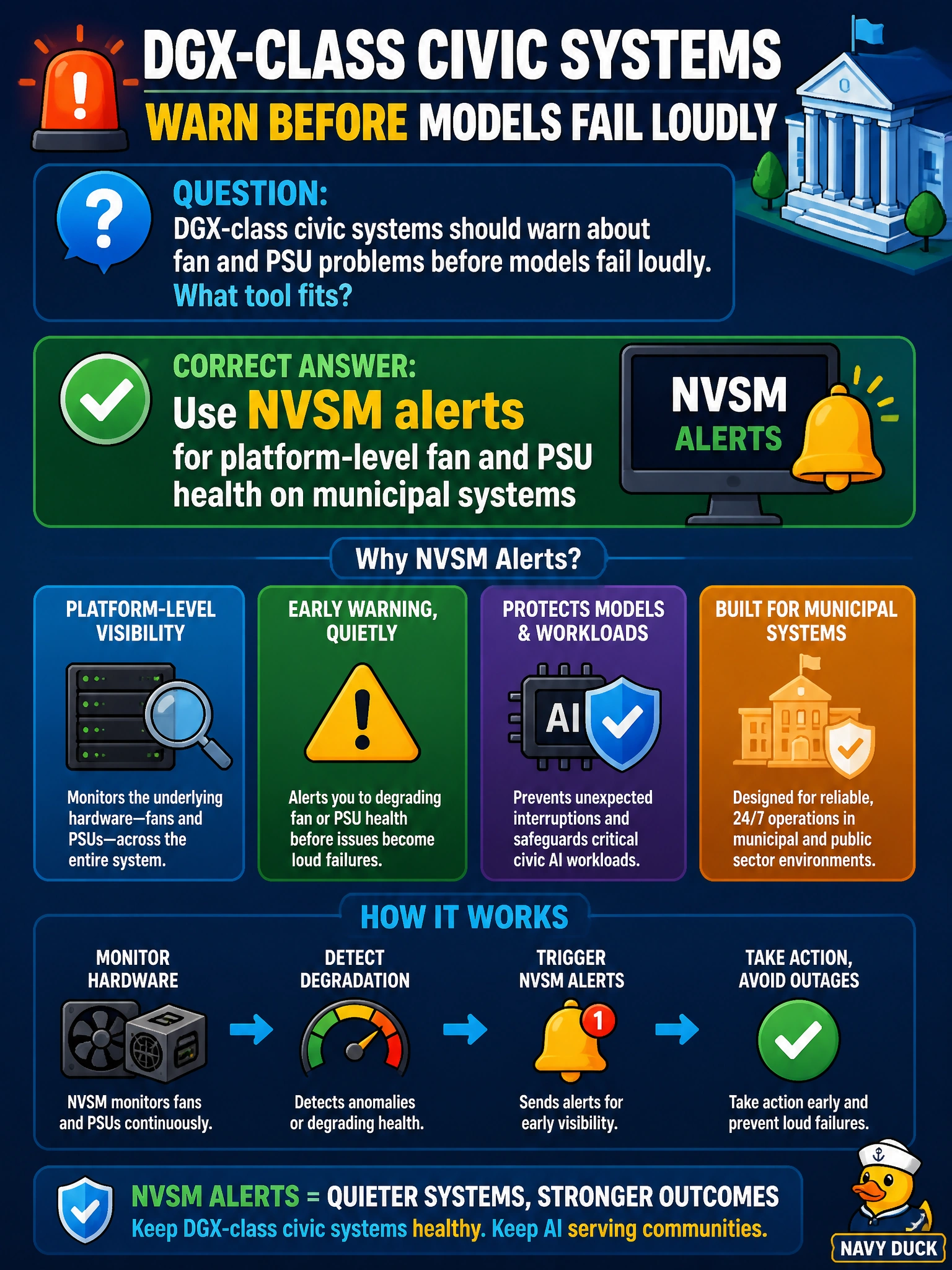
NVSM is the civic DGX smoke alarm for fans and PSUs—hear it before models scream. Waiting for user outage calls and silencing hardware alerts invite surprise failures.
Full Explanation
Using NVSM alerts for platform-level fan and PSU health on municipal systems fits DGX-class civic platforms because NVSM (NVIDIA System Management) surfaces chassis and component health—fans, power supplies, and related platform sensors—before models fail loudly in production. Early hardware alerts let operators remediate cooling or power redundancy while inference and training still have headroom, rather than learning about failures only from user outage calls.
Relying only on end users calling when inference becomes unavailable fails by detection latency: users are the worst sensor for PSU and fan degradation. Ignoring chassis sensors and watching only application latency dashboards fails by observability layering—latency is a lagging symptom of hardware stress. Disabling hardware alerting to reduce ticket noise during budget season fails by risk management: silencing NVSM hides actionable failures to optimize ticket cosmetics.
Exam caveat: NVSM is for platform/chassis management on supported NVIDIA systems; it is complementary to GPU tools like nvidia-smi and DCGM, not a replacement for application APM. Exam questions often test whether you escalate from app symptoms to platform health tooling on DGX-class gear.
Operational check: enable and route NVSM alerts into the municipal NOC, verify fan/PSU alert thresholds, simulate or review a historical alert to confirm paging paths, and document which team owns chassis remediation versus GPU software issues.