
Parks needs a seasonal computer-vision retrain on a predictable cadence. How should Run:ai training be scheduled?
Select an answer to reveal the explanation.
Short Explanation
Recurring Run:ai training is the parks calendar reminder for seasonal CV—spring shows up on schedule. Staff memory and forever-running GPU hogs miss the season.
Full Explanation
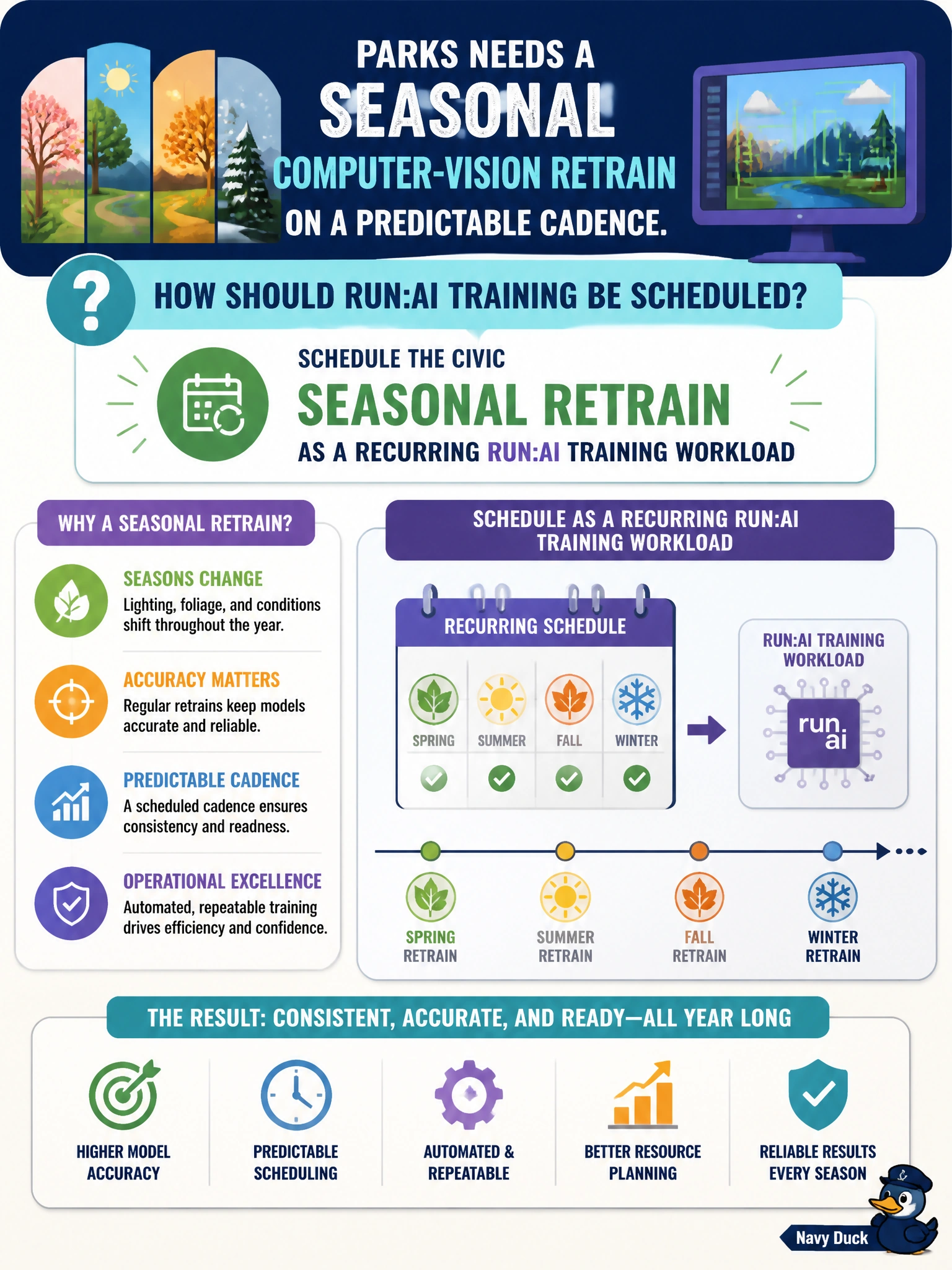
Scheduling the civic seasonal retrain as a recurring Run:ai training workload fits parks computer-vision needs because seasonal cadence is a scheduling problem, not a heroic memory problem. Recurring workloads (cron-like or scheduled Run:ai jobs) launch the CV retrain on a predictable calendar—before peak park season, after major landscape changes, or on an agreed municipal cycle—so models stay current without waiting for someone to remember spring.
Relying on staff memory to relaunch trains fails by operational reliability concept: tribal knowledge does not survive vacations or staff turnover. Scheduling only one forever-running train that never stops consuming GPUs fails by resource lifecycle concept—continuous exclusive consumption wastes capacity between seasons and blocks peers. Deleting the parks project after each season so quotas reset by accident fails by tenancy hygiene: destroying projects is not a scheduler and loses history, credentials, and policy continuity.
Exam caveat: recurring does not mean unconstrained always-on GPU hold. The job should run for the seasonal window, complete or stop, and release GPUs. Distinguish scheduled recurrence from a zombie interactive session left running all year.
Operational check: define the parks recurring Run:ai schedule, verify the next seasonal fire creates a training job automatically, confirm GPUs release after completion, and document owners for failures so a missed run still surfaces in municipal ops.