
City 311 inference runs as a Kubernetes Deployment. What availability control should admins apply before draining nodes?
Select an answer to reveal the explanation.
Short Explanation
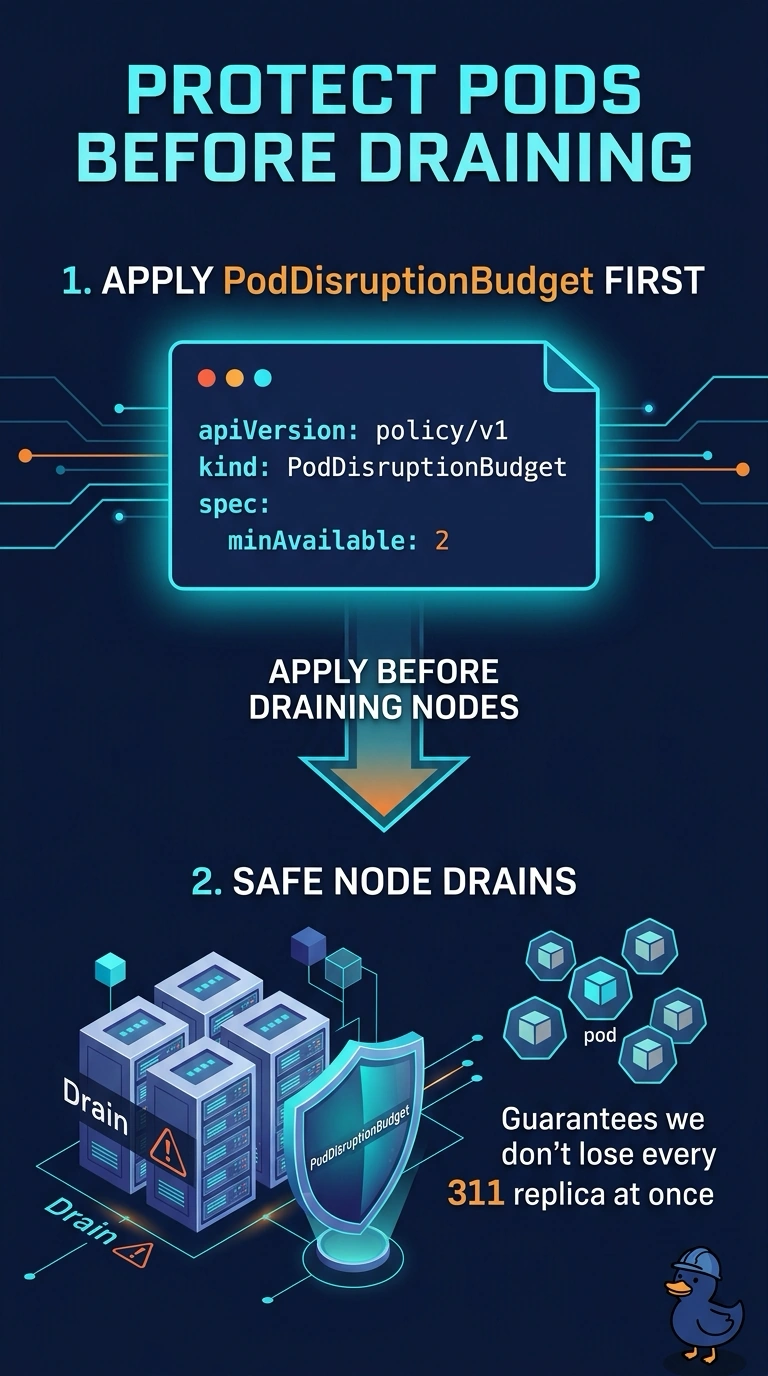
Think of a PDB like keeping one teller window open while the bank renovates—311 stays answering while nodes drain. Wiping every replica or babysitting pods by hand is how civic queues go dark.
Full Explanation
A PodDisruptionBudget (PDB) is the right availability control before draining Kubernetes nodes that host City 311 inference. A Deployment alone does not stop a drain from evicting every replica at once; the PDB declares a minimum available (or maximum unavailable) count so civic maintenance can cordon and drain nodes without taking the entire 311 queue offline. That keeps at least one healthy replica answering while capacity rolls through the cluster under change control.
Deleting all replicas when a drain starts clears the queue only by abandoning callers—the opposite of availability. Disabling the Deployment controller and hand-scheduling pods during maintenance removes reconciliation, so failed pods stay down and operators invent one-off placement that will not survive the next upgrade. Storing inference weights only on the node being drained creates a single point of failure: once that node leaves the cluster, remaining replicas have nothing to load and 311 stays dark until someone copies artifacts back.
Exam caveat: a PDB does not magically create spare capacity. If the Deployment has one replica and minAvailable is 1, drains can block forever; size replica count and PDB together, and ensure the cluster has room to reschedule. Voluntary disruptions honor PDBs; force deletes and some node failures do not, so still plan for involuntary loss.
Operational check: before any civic drain window, confirm the PDB exists for the 311 Deployment, that current Ready replicas exceed the disruption budget, and that a dry-run drain reports allowed evictions without violating minAvailable. After drain, verify the Service endpoints still list healthy pods and that inference latency and error rates stay within the municipal SLO.