
City departments 311, public health, and transit share one Run:ai cluster. What admin setup fits?
Select an answer to reveal the explanation.
Short Explanation
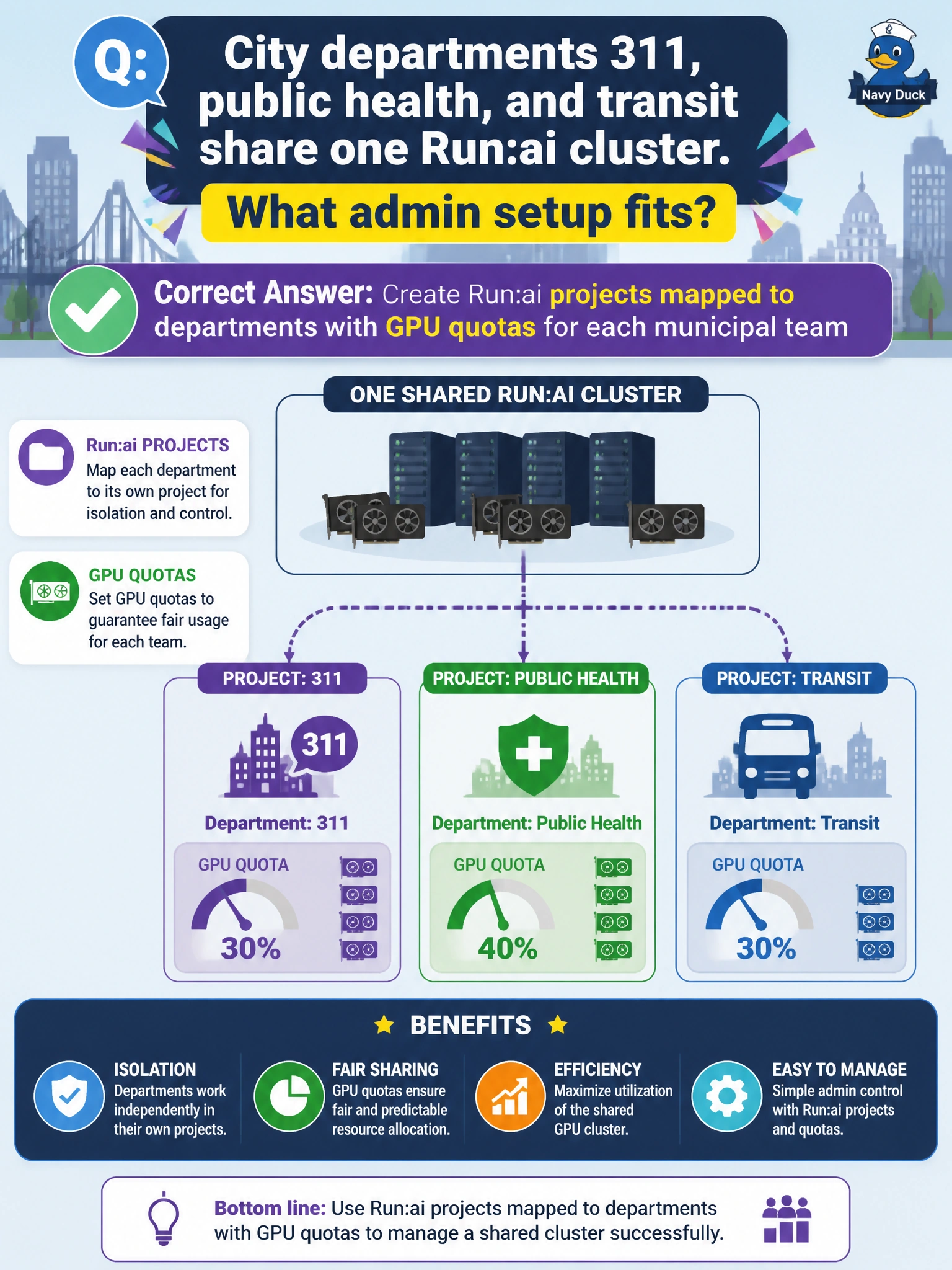
Projects and quotas are the department parking permits on the Run:ai lot—311, health, and transit each get a share. One unlimited free-for-all or everyone-as-admin is chaos.
Full Explanation
When 311, public health, and transit share one Run:ai cluster, administration should create Run:ai projects mapped to those departments with GPU quotas per municipal team. Projects provide tenancy boundaries for users, jobs, and budgets; quotas stop one department from starving the others on the shared civic accelerator pool. One shared project with unlimited GPUs and no quotas invites noisy-neighbor monopolization. Disabling projects so every user submits as cluster-admin destroys least privilege and auditability. Mapping all departments to a single anonymous service account erases attribution and makes quota or RBAC meaningless. Exam caveat: quotas should reflect peak vs guaranteed amounts and align with node pools—project quotas alone do not isolate PHI if network/storage zones are still flat. Operational check: create department projects with finite GPU quotas, submit competing jobs from 311 and transit, confirm enforcement when a project hits its limit, and verify users are not cluster-admin by default. Map IdP groups for 311, public health, and transit into those Run:ai projects so onboarding is group-driven, and set quota alerts before hard exhaustion so department leads can request temporary boosts instead of silently failing jobs. Multi-department municipal clusters stay civil when tenancy, quota, and identity move together.