
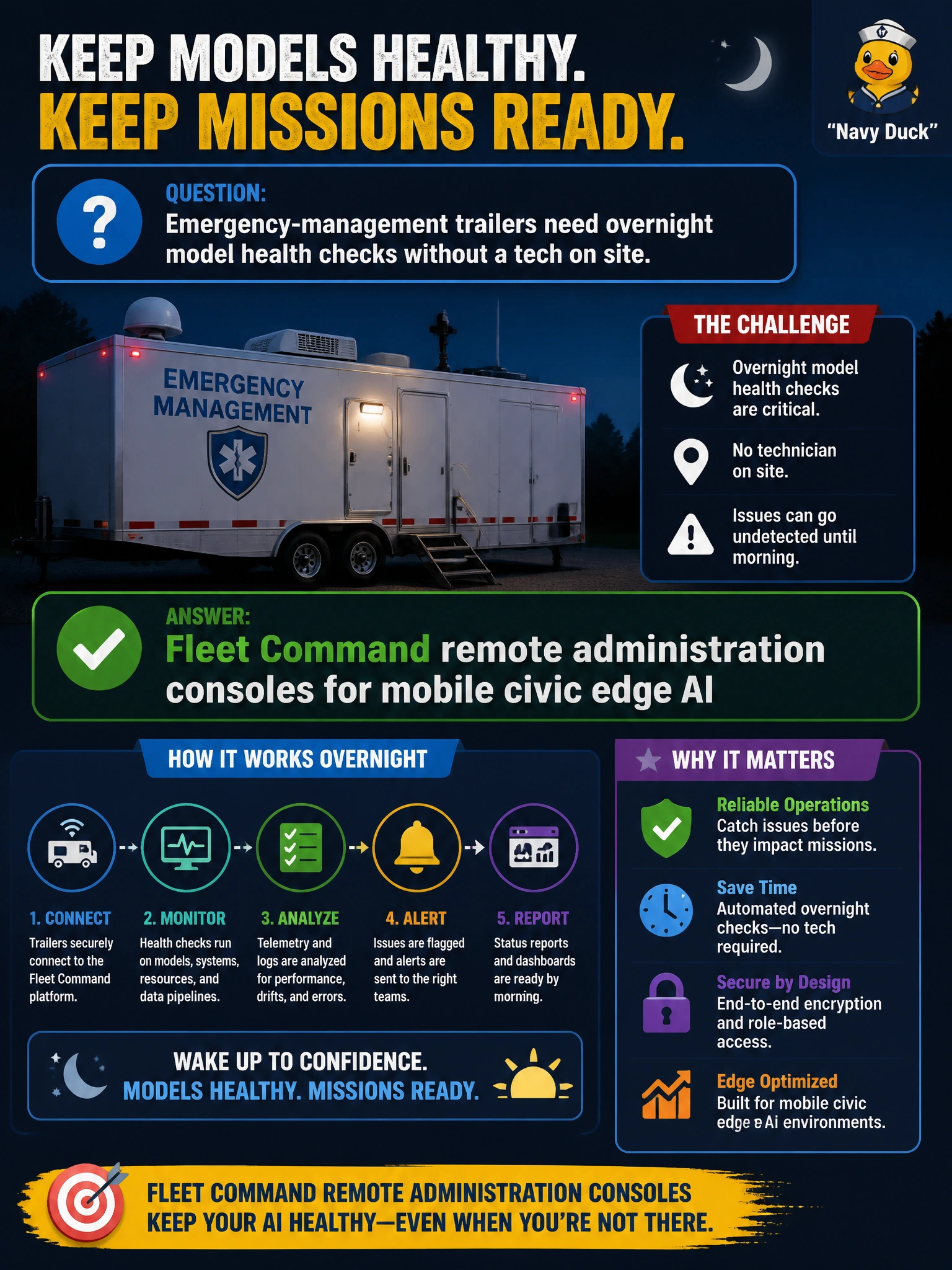
Emergency-management trailers need overnight model health checks without a tech on site. What should ops use?
Select an answer to reveal the explanation.
Short Explanation
Trailer edges need Fleet Command remote console—ops in the NOC, trailers in the field. Walk-up keyboards and quarterly paper books miss overnight failures. Killing telemetry hides the patient.
Full Explanation
Fleet Command remote administration consoles for mobile civic edge AI let emergency-management trailers receive overnight model health checks without a technician on site. Remote consoles expose inventory, health, and update controls from the NOC while trailers move between incidents. For overnight assurance, telemetry and remote admin beat any plan that requires someone to unlock a trailer to look at a keyboard.
Only walk-up keyboards left inside locked trailers fail by concept because physical presence cannot scale overnight multi-trailer monitoring and locked trailers block access when something fails at 02:00. Disabling telemetry so no one can see model health fails because it hides the patient from the NOC. Paper logbooks reviewed once per quarter fail because quarterly paper cannot catch overnight model or device failures in time to matter for emergency response.
Exam caveat: mobile edge items emphasize remote fleet administration and telemetry continuity, including intermittent connectivity planning. Remote console access assumes enrollment, credentials, and enough backhaul to report health—trailers still need a connectivity pattern (cellular/satellite) documented for municipal emergency use.
Operational check: enroll trailer edges, confirm health heartbeats reach Fleet Command on the trailer’s field network profile, schedule overnight health views/alerts for model and device status, and run a drill where NOC operators diagnose a simulated trailer fault without traveling to the vehicle.