
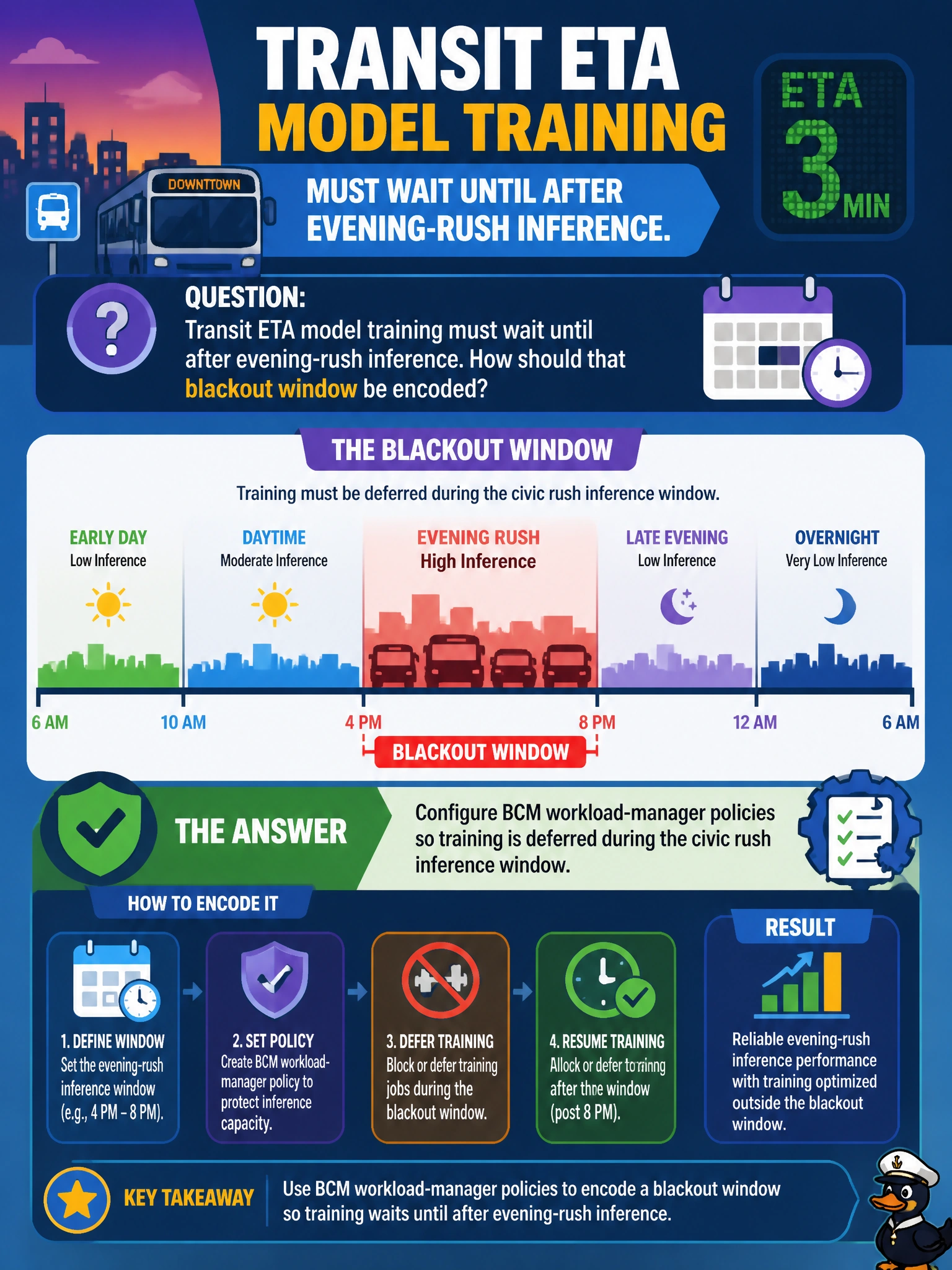
Transit ETA model training must wait until after evening-rush inference. How should that blackout window be encoded?
Select an answer to reveal the explanation.
Short Explanation
You can protect evening-rush inference by using a real scheduling gate, rather than relying on a reminder. BCM workload-manager policies make that blackout enforceable, so training waits until the rush has passed; powering off the cluster or disguising training jobs would undermine operations, not help them. Policy gives you the control the window needs.
Full Explanation
Transit ETA training that must wait until after evening-rush inference needs an enforceable scheduling gate. Configure BCM workload-manager policies to defer training during the civic rush inference window, preserving capacity for inference while the rush is underway. Emailing the data science team a reminder and hoping they comply is not a control: deadline pressure can lead someone to submit training anyway, and the reminder does not enforce or audit the blackout. Powering off the entire cluster at 16:00 every weekday is an overly broad response that also stops inference, maintenance paths, and legitimate after-hours civic work. Renaming training jobs to “inference” to bypass controls is policy evasion; it lets training consume capacity during the very window reserved for rider ETAs. Exam caveat: the blackout must be configured in the BCM workload manager; recording it in a document or relying on a reminder does not make the scheduler enforce it. Practical check: submit a training job during the rush window and confirm it is deferred, verify inference can still schedule, then confirm training becomes eligible after the window ends.