
A school-district lab is developing Ansible for Spectrum RoCE and VLAN tasks. What safety practice should students use first?
Select an answer to reveal the explanation.
Short Explanation
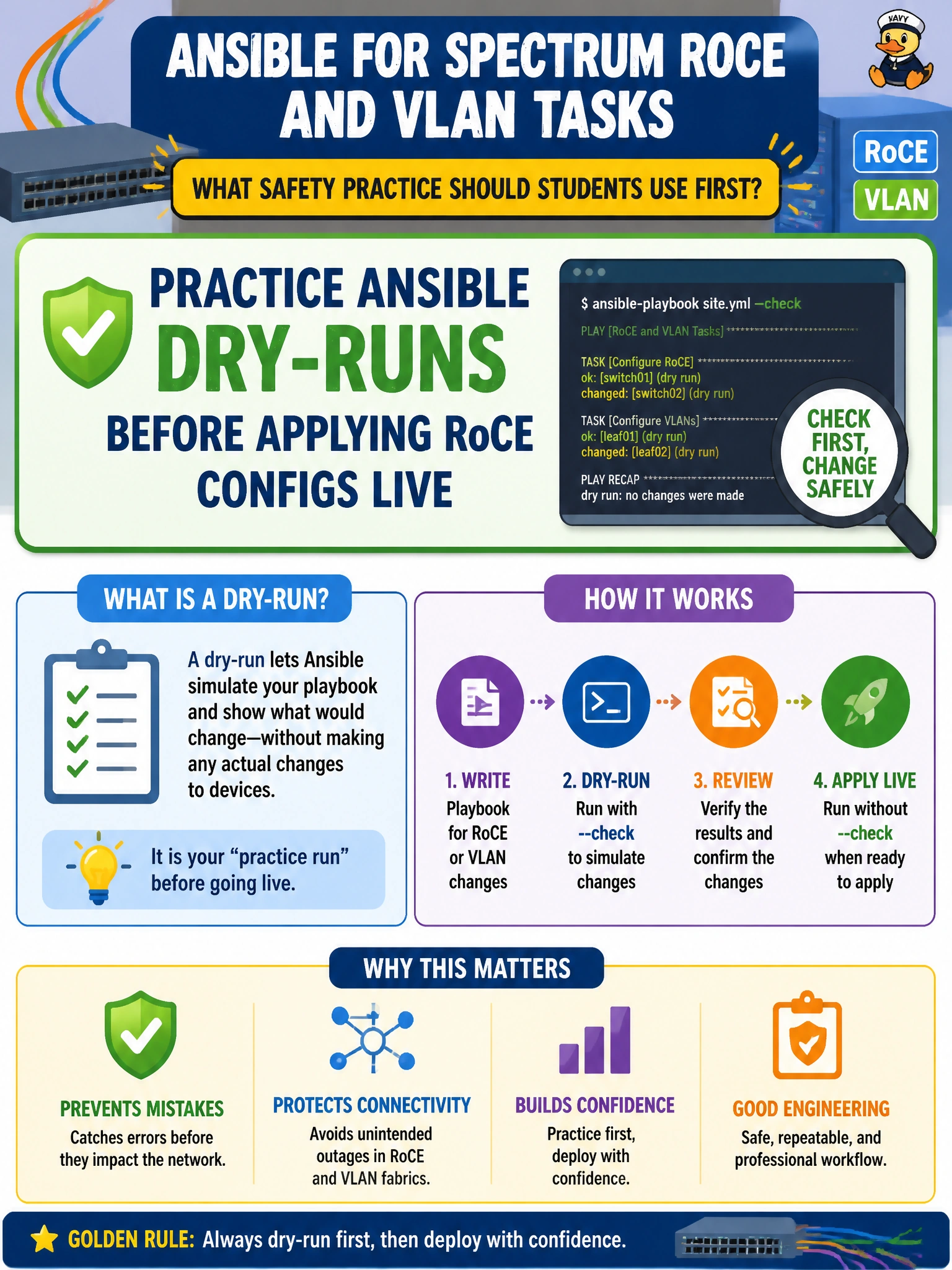
Pushing configs straight to live leafs or saving untested changes to startup is how you turn a typo into an outage. Dry-run those RoCE playbooks in check mode first, then apply once you're sure of the diff.
Full Explanation
A school-district lab developing Ansible for Spectrum RoCE and VLAN tasks should teach safety before live impact. Practicing Ansible dry-runs (check mode) before applying RoCE configs live lets students see intended changes without mutating production-like Spectrum leafs, catching inventory mistakes, bad tasks, and unexpected diffs early in the municipal lab curriculum. That safety-first habit transfers directly to civic production change windows. Pushing RoCE configs to peer leafs then validating PFC counters applies changes to multiple live devices before any safety check, which can propagate mistakes across the fabric and is inappropriate for instructional labs that may share civic infrastructure. Saving Spectrum running configs to startup after live testing persists potentially untested changes to the startup configuration, making mistakes harder to roll back and failing to act as a first safety step. Synchronizing VLAN databases across leafs before dry-run validation applies a fabric-wide change without first checking it in check mode, risking VLAN mismatches or outages across the Spectrum-X fabric. Exam caveat: dry-run support varies by module—some Spectrum/network modules may not fully simulate; still use check mode where available and prefer staging leafs for first real apply. Operational check: run the Spectrum RoCE/VLAN playbooks with Ansible check/dry-run against school-district lab inventory, review the reported changes, fix issues, then apply live only after instructor approval.