
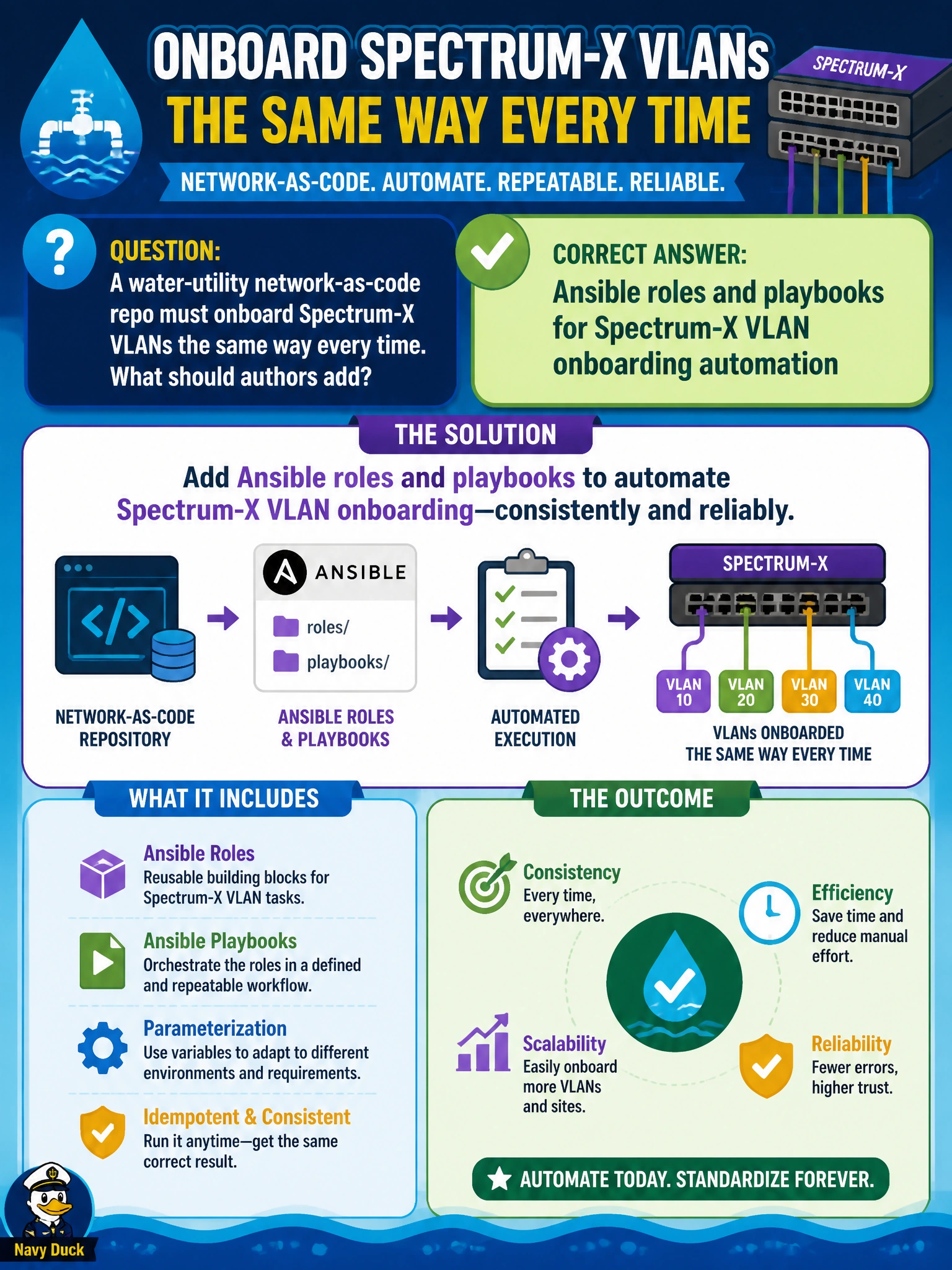
A water-utility network-as-code repo must onboard Spectrum-X VLANs the same way every time. What should authors add?
Select an answer to reveal the explanation.
Short Explanation
Water utilities love repeatable pipes — networks too. Add Ansible roles and playbooks to the network-as-code repo so Spectrum-X VLAN onboarding is automatic and consistent.
Full Explanation
A water-utility network-as-code repository should onboard Spectrum-X VLANs the same way every time by encoding onboarding as Ansible roles and playbooks. Those artifacts live in source control, accept inventory parameters, and automate Spectrum-X VLAN creation so civic onboarding does not depend on Terraform plans for Spectrum-X RoCE congestion tuning profiles, which tune traffic rather than onboard VLANs. Roles keep reusable VLAN logic separate from site vars, which fits multi-plant water-utility estates. Terraform plans for Spectrum-X RoCE congestion tuning profiles are the wrong artifact for VLAN onboarding because they configure RoCE congestion tuning instead of encoding repeatable VLAN creation, even if they are versioned. Ansible roles and playbooks for Spectrum-X telemetry collection workflows are not a real automation pattern for VLAN onboarding and provide no reusable VLAN onboarding workflow for Spectrum-X because they collect telemetry instead of creating VLANs. Versioned Jinja templates for Spectrum-X management interface addressing contradict the network-as-code goal for VLAN onboarding because they address management interfaces rather than onboard VLANs, leaving the repeatable VLAN work undone. Exam caveat: roles should separate reusable VLAN logic from environment-specific vars (utility plant vs lab) so the same role serves multiple water-utility sites safely. Operational check: add Ansible roles/playbooks for Spectrum-X VLAN onboarding to the repo, run them via CI or a controlled pipeline against staging, verify VLAN state, and require merge review before production use.