
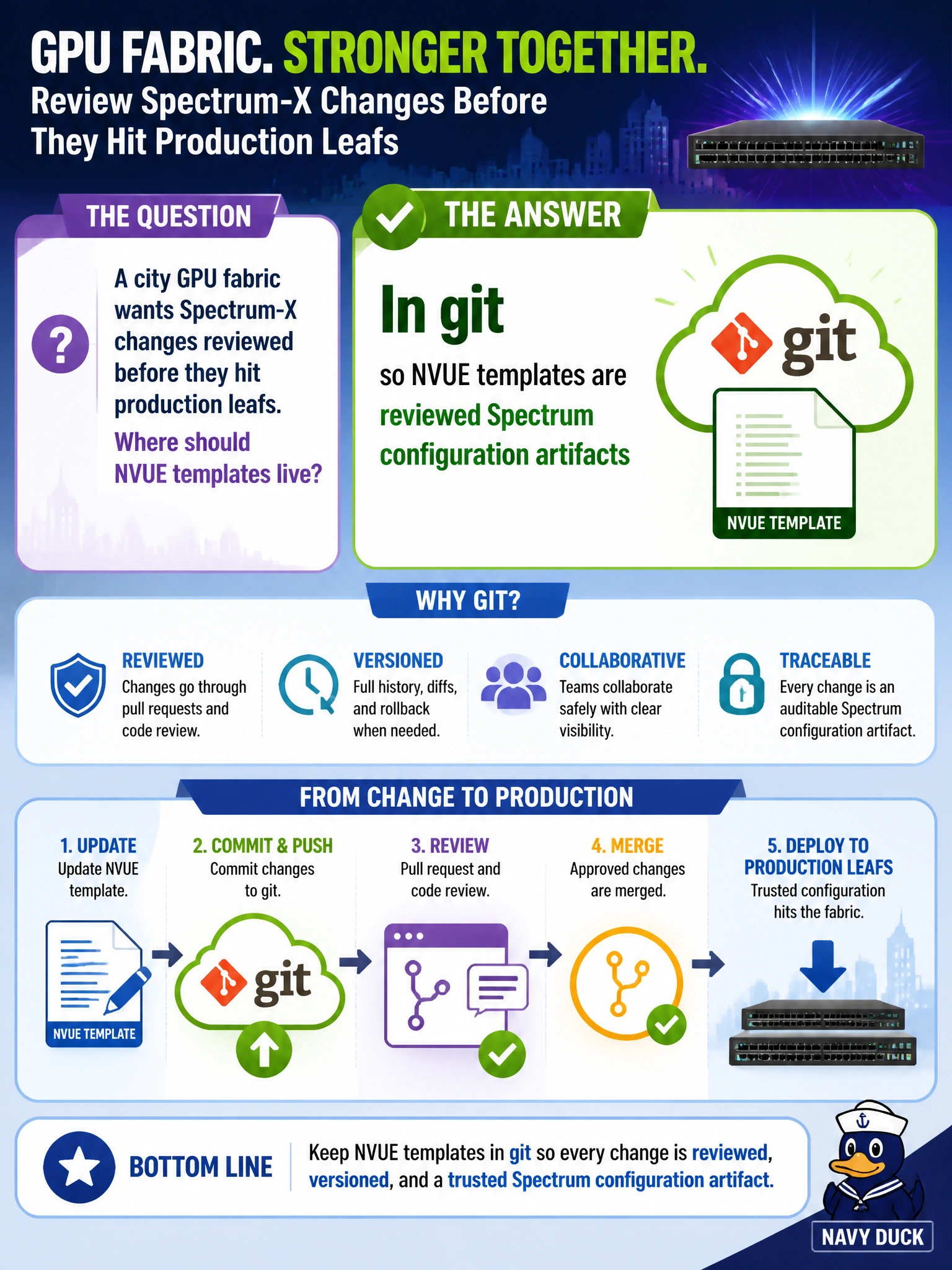
A city GPU fabric wants Spectrum-X changes reviewed before they hit production leafs. Where should NVUE templates live?
Select an answer to reveal the explanation.
Short Explanation
If Spectrum changes matter to the city, put NVUE templates in git. That turns them into reviewed artifacts instead of files you edit directly on production leafs, so you won't get review before a mistake goes live.
Full Explanation
A city GPU fabric that wants Spectrum-X changes reviewed before production must treat NVUE templates as durable configuration artifacts. Placing those templates in git provides version history, pull-request review, blame, and rollback semantics so municipal engineers can scrutinize Spectrum configuration before it hits leafs. That matches change-control expectations for civic AI Ethernet fabrics and turns Spectrum-X intent into auditable code rather than tribal CLI. Storing templates on production Spectrum-X leafs as local NVUE files for direct editing lets changes skip review and go straight to live fabric, so a bad edit can break production with no pull-request trail to roll back. Keeping templates in NVUE revision checkpoints on leaf switches pulled before maintenance windows puts the source of truth on the switches themselves rather than in a reviewed repo, so changes are not vetted before they hit production. Keeping templates in shared Ansible playbooks copied from a team drive for Spectrum leaf deployment means the files are unmanaged copies without version history or peer review, so changes can drift and cannot be audited before deployment. Exam caveat: git alone does not apply config—pair repository review with staged NVUE apply and post-change verification on Spectrum-X leafs. Operational check: commit NVUE template changes to the city GPU fabric repo, require peer review, merge only after approval, apply to staging leafs, then promote to production with a recorded commit SHA tied to the change ticket.