
Emergency-management Spectrum-X breaks after a failed manual change. What is the best recovery path?
Select an answer to reveal the explanation.
Short Explanation
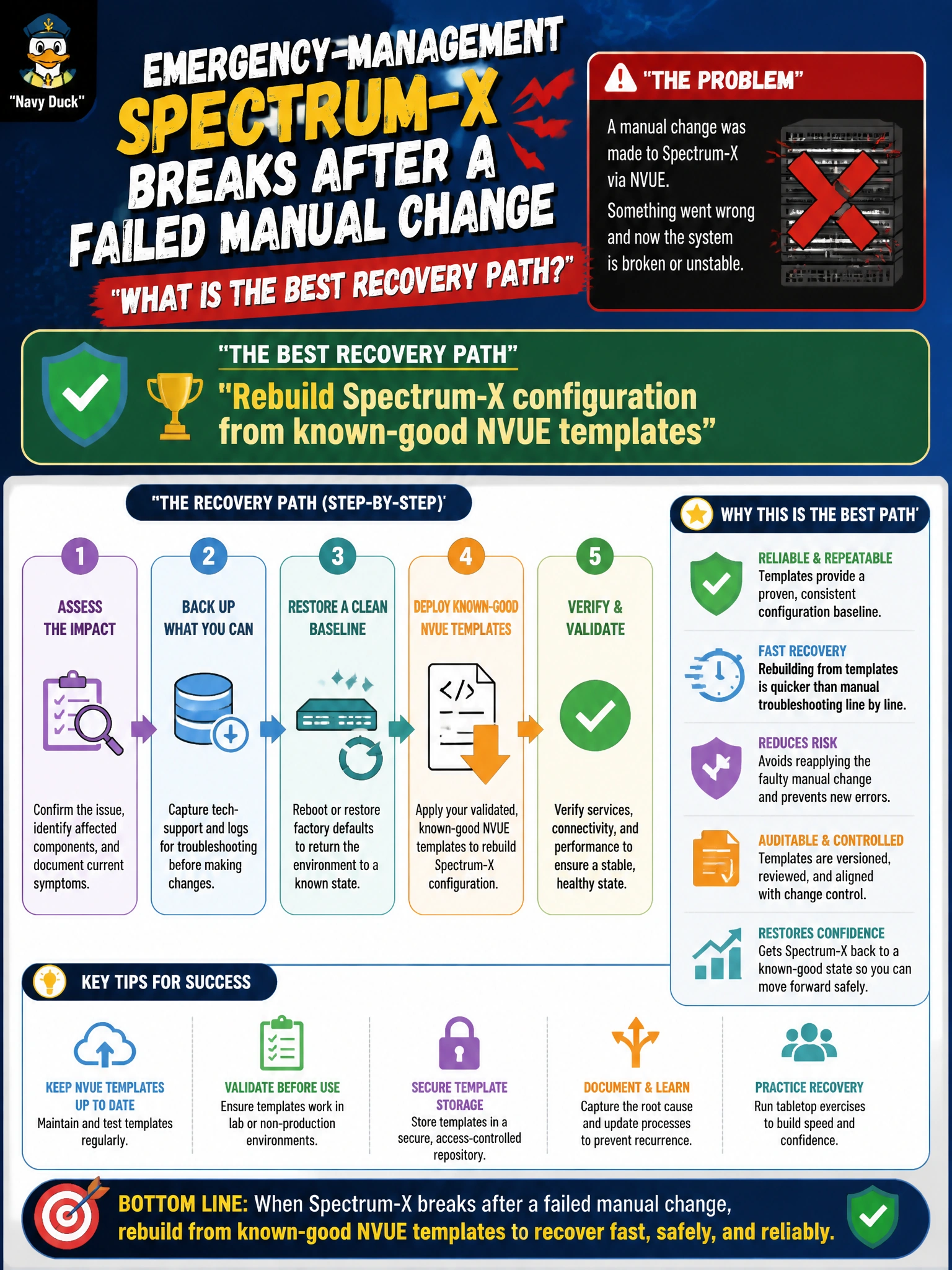
Interactive CLI modifications just reapply the broken manual change that caused the outage. Rebuild from known-good NVUE templates — that’s how you get the leafs back to a trusted Spectrum-X state.
Full Explanation
When emergency-management Spectrum-X breaks after a failed manual change, the best recovery path restores a known-good Ethernet Spectrum state rather than reconfiguring the fabric through interactive CLI modifications or restoring from outdated local switch backups. Rebuilding Spectrum-X configuration from known-good NVUE templates returns leafs to the last trusted municipal baseline for interfaces, EVPN, RoCE, and QoS, and supports auditable recovery during incident response. Reconfiguring the Spectrum-X fabric using interactive CLI modifications reapplies the same unstructured manual approach that caused the failure and risks reintroducing undocumented, inconsistent state across the leafs. Restoring Spectrum-X from outdated local switch backups reintroduces stale configuration that may not match the current software train or emergency overrides and can undo validated fixes. Rolling back Spectrum-X with the last unvalidated switch snapshot restores an unverified state that may still contain the failed change or introduce unknown defects, and it bypasses the auditable rebuild needed for incident response. Exam caveat: ensure the “known-good” templates match the current Spectrum-X software train and any emergency overrides; applying stale templates can reintroduce old defects. Operational check: identify the last reviewed NVUE template set, rebuild the affected emergency-management Spectrum leafs from those templates, verify control-plane and RoCE-related settings, and re-enable or confirm telemetry before closing the incident.