
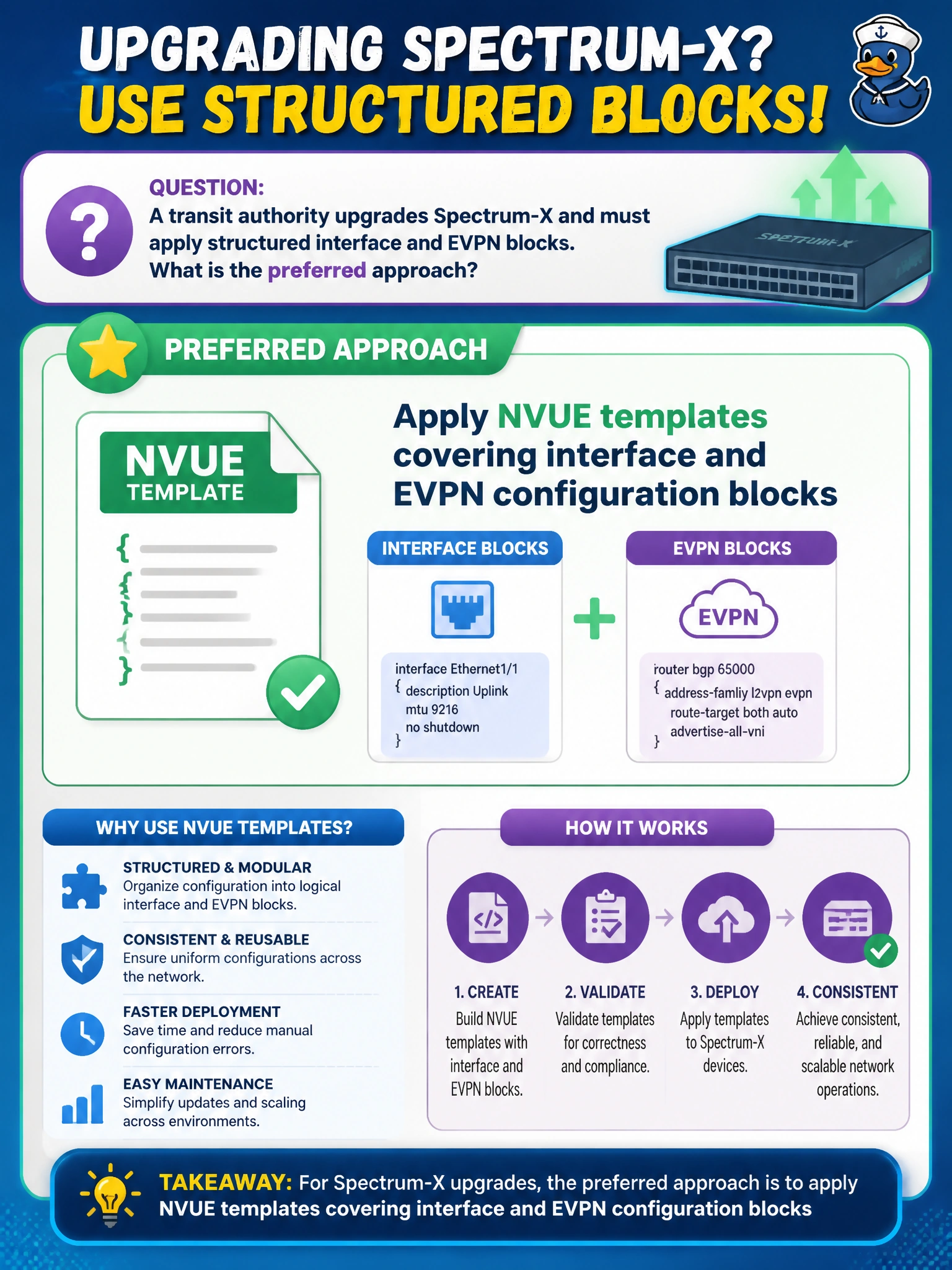
A transit authority upgrades Spectrum-X and must apply structured interface and EVPN blocks. What is the preferred approach?
Select an answer to reveal the explanation.
Short Explanation
Transit Spectrum upgrades aren't the time to adapt RoCE templates for interface settings and EVPN VNI mapping. Apply NVUE templates that already define the interface and EVPN blocks so the structured config lands the same way on every switch.
Full Explanation
A transit authority upgrading Spectrum-X needs a controlled way to land structured interface and EVPN configuration blocks on Ethernet switches. Applying NVUE templates that cover those interface and EVPN blocks is the preferred approach because templates encode the municipal transit standard in a repeatable, reviewable form and reduce upgrade-time snowflake edits. Configuring interfaces with NVUE and provisioning EVPN through CLI sessions splits the work across two methods and leaves EVPN out of the structured template blocks, so it does not deliver the repeatable, reviewable interface-and-EVPN configuration the upgrade requires. Distributing interface addressing via Ansible playbooks and defining EVPN overlays splits the configuration across separate tools rather than applying the structured NVUE interface and EVPN blocks together, so it does not provide the single repeatable, reviewable change the upgrade requires. Adapting RoCE templates for interface settings and EVPN VNI mapping misapplies RoCE constructs to general Ethernet interface and EVPN configuration and does not produce the required structured NVUE blocks. Exam caveat: templates must be version-matched to the post-upgrade Spectrum-X/NVUE capabilities; validate rendered output against the new software release before mass apply. Operational check: stage NVUE templates with the required interface and EVPN blocks in a transit lab, apply after the Spectrum-X upgrade on a pilot leaf, verify EVPN adjacencies and interface state, then roll out to remaining leafs.