
Water-utility nodes pass GPU fabric tests but still miss latency budgets. What distinction matters?
Select an answer to reveal the explanation.
Short Explanation
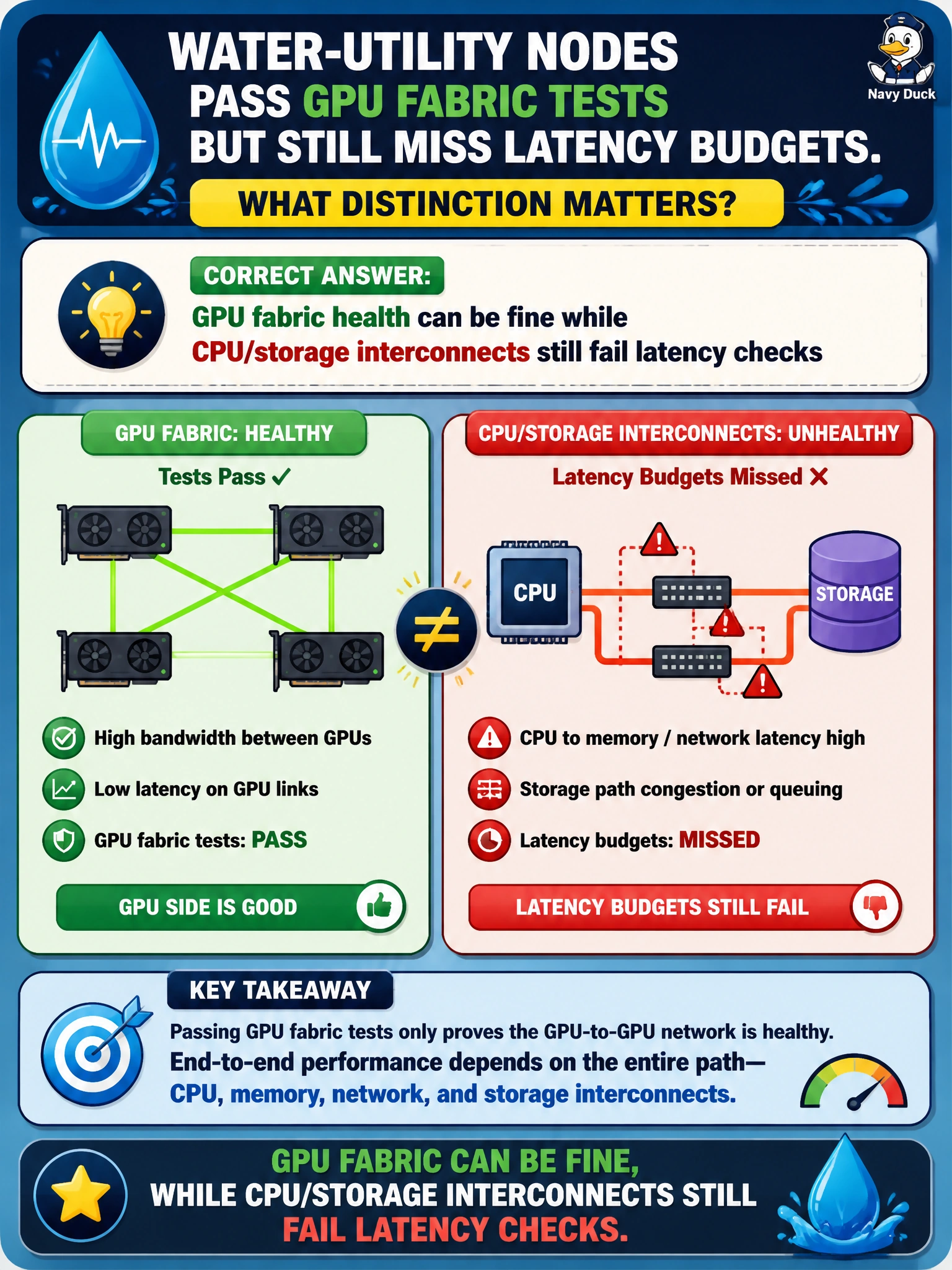
Passing the GPU quiz does not mean the storage essay is done. Water-utility nodes can have a healthy GPU fabric and still fail CPU or storage interconnect latency checks.
Full Explanation
Water-utility nodes that pass GPU fabric tests but still miss latency budgets illustrate a critical distinction: GPU fabric health can be fine while CPU or storage interconnects still fail latency checks. Municipal AI training depends on more than GPU peer paths; host and storage interconnects remain first-class budget citizens.
Why the other options fail by concept: claiming that passing GPU fabric tests indicates the CPU-to-storage RDMA path meets latency budgets conflates separate interconnect domains. Assuming tuning GPU NVLink bandwidth compensates for elevated CPU/storage interconnect latency shortfalls misattributes the fix and leaves the real interconnect problem unaddressed. Claiming water-utility scheduling performance follows GPU fabric latency more directly than storage path latency fails because the SLO is end-to-end; storage path latency can still breach budget even when GPU fabric looks healthy.
Exam caveat: “passed GPU fabric test” on a change ticket is insufficient closure when the SLO is end-to-end. Define which test covers which path class, and require the failing class’s evidence before blaming applications or GPUs.
Operational check: when water-utility latency budgets fail despite green GPU fabric results, run CPU-facing and storage interconnect latency checks next, isolate the failing domain, and remediate that path—do not assume tuning GPU NVLink bandwidth will compensate for the shortfall.