
Public-health Spectrum drops need the exact discard reason in real time. What should operators use?
Select an answer to reveal the explanation.
Short Explanation
Five-minute SNMP polls hide the crime; events name it. Use WJH so public-health Spectrum drops show the real-time discard reason.
Full Explanation
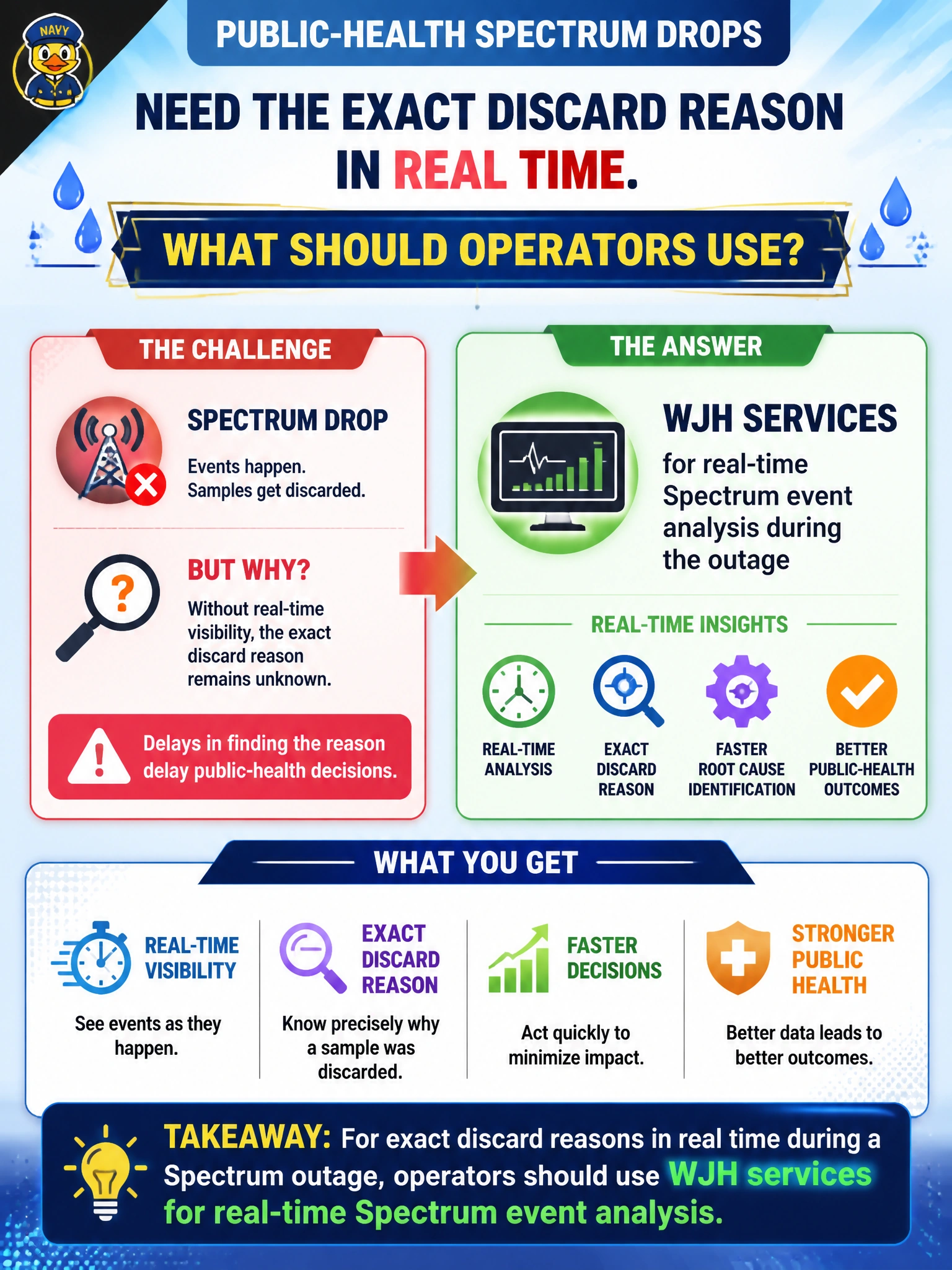
When public-health Spectrum drops need the exact discard reason in real time, operators should use WJH services for real-time Spectrum event analysis during the outage. What Just Happened (WJH) provides event-level visibility into why Spectrum switches drop or punt traffic—ACL drops, routing exceptions, congestion-related events—as they occur. That fidelity lets municipal public-health NOCs name the discard cause while the incident is live instead of inferring from five-minute SNMP polls meant for drop trending.
Relying only on SNMP interface counters polled every five minutes for drop trending fails because periodic polling smears short-lived drops and lacks per-event discard reasons. Using sFlow sampled telemetry forwarded to a collector for historical analysis fails because sampled data is historical and cannot give the exact, live Spectrum discard reason. Checking Spectrum ASIC buffer counters manually after outage recovery fails as slow, error-prone, and incomplete compared with structured real-time WJH event streams; recovery is too late to capture the exact discard reason.
Exam caveat: WJH is the Spectrum real-time event analysis tool for discard reasons; it complements—not replaces—capacity tools like cl-resource-query and broader NetQ workflows. Use WJH when the stem asks for exact discard reasons or real-time Spectrum events.
Operational check: Ensure WJH is enabled on public-health Spectrum switches, stream or query events during a controlled drop scenario, confirm the discard reason appears in WJH, and wire critical WJH event types into the municipal NOC paging path for production incidents.